Not on view
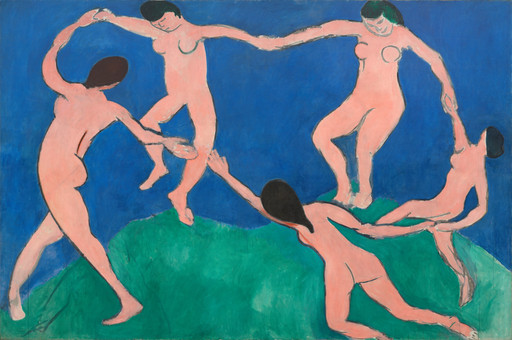
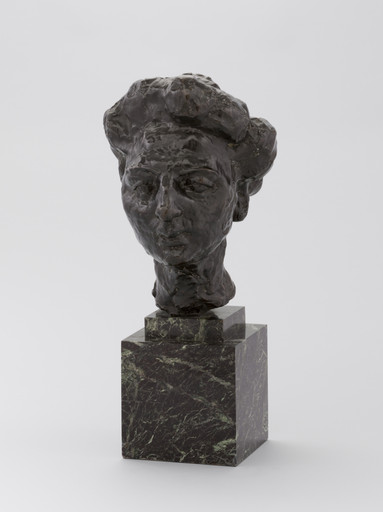
Henri Matisse, one of the greatest painters of the twentieth century, was involved with printmaking for more than fifty years. From 1900 until his death in 1954 he completed more than eight hundred intaglios, lithographs, woodcuts, linoleum cuts, and monotypes. His attitude toward printmaking was a somewhat unconventional one in that for him it was a personal process, an extension of drawing, and a means of unwinding after long and intense periods of painting. As such, there were several distinct times during which Matisse was particularly active in the medium: 1906, 1914, and during the 1920s. In 1929 alone he made more than one hundred etchings and drypoints.
The intimate nature of Matisse's printmaking is visible in his working process. Unlike many artists who depended on close relationships with master printers in their workshops, Matisse spent more time on an etching press installed in his studio that allowed him to print when and as he liked. This intimacy is also evident in his choice of subjects, which were mostly portraits of friends, family, and fellow artists, as well as images of female figures and nudes, including a great number of odalisques made after a trip to North Africa.
Matisse's etchings and drypoints were executed on a small scale with linear fluidity, giving them a sense of immediacy and spontaneity, like pages in a sketchbook. Alternately, his lithographs were on a larger scale and made grander statements. These lithographs exploited the tonal possibilities of the medium that allowed Matisse to achieve effects of volume and depth.
Illustrated books also form a significant part of Matisse's oeuvre. He collaborated on thirty-eight such projects over the course of his career. His first book, Poésies, of 1932, included mythologically inspired images based on texts by Stéphane Mallarmé, while his Jazz of 1947, known for its brightly colored pochoirs, is widely considered one of the most important illustrated books of the modern period.
an essay by Sarah Suzuki, in Deborah Wye, Artists and Prints: Masterworks from The Museum of Modern Art, New York: The Museum of Modern Art, 2004, p. 106.
Explore more
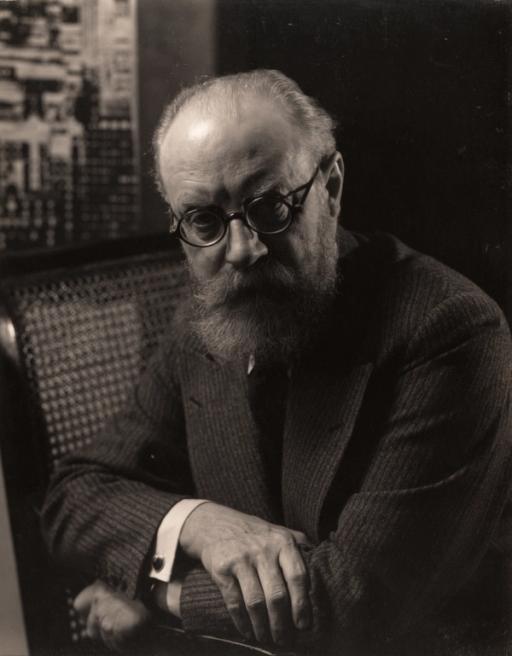
Henri Matisse
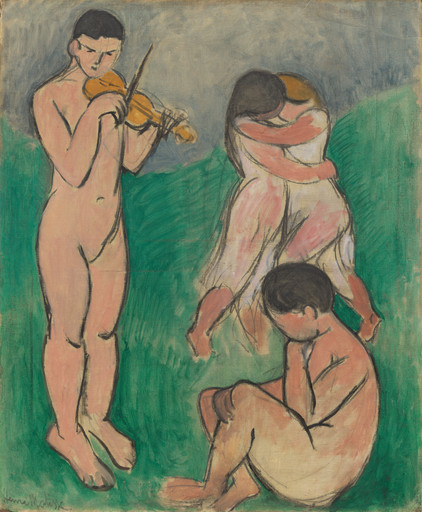
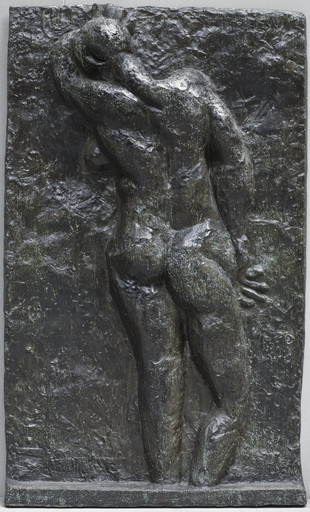
French, 1869–1954 429 works onlineThroughout his decades-long career as a painter, sculptor, draftsman, and printmaker, Henri Matisse continuously searched, in his own words, “for the same things, which I have perhaps realized by different means.
Learn more →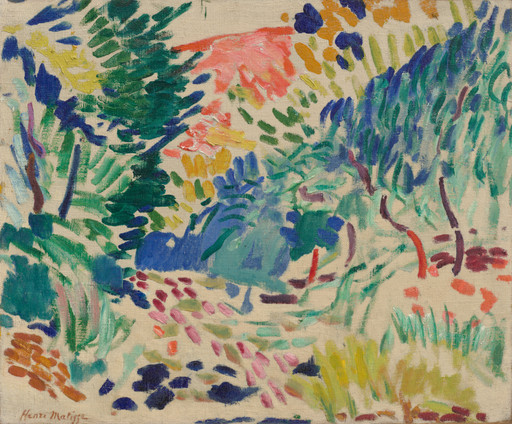
Edition
A set of identical prints made from the same printing surface. Editions may be limited or unlimited in number. Often a certain number of prints—including artist’s proofs, printer’s proofs, and hors commerce (not for sale)—are made at the same time but kept apart from the numbered edition.
Learn more →
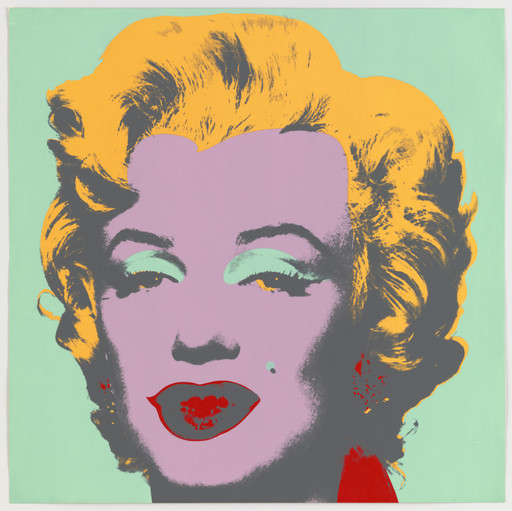
Lithography
A printmaking technique that involves drawing with greasy crayons or a liquid called tusche, on a polished slab of limestone; aluminum plates, which are less cumbersome to handle, may also be used.
Learn more →

From MoMA Design Store


Installation views
We have identified this work in the following photos from our exhibition history.
Licensing
Artwork or archival images
If you would like to reproduce an image of a work of art in MoMA's collection, or an image of a MoMA publication or archival material (including installation views, checklists, and press releases), please contact Art Resource (publication in North America) or Scala Archives (publication in all other geographic locations).
Audio and film clips
MoMA licenses archival audio and select out of copyright film clips from our film collection. At this time, MoMA produced video cannot be licensed by MoMA/Scala. All requests to license archival audio or out of copyright film clips should be addressed to Scala Archives at [email protected]. Motion picture film stills cannot be licensed by MoMA/Scala. For access to motion picture film stills for research purposes, please contact the Film Study Center at [email protected]. For more information about film loans and our Circulating Film and Video Library, please visit Circulating Film and Video Library.
Text from a publication or the archives
If you would like to reproduce text from a MoMA publication, please email [email protected]. If you would like to publish text from MoMA's archival materials, please fill out this permission form and send to [email protected].
Feedback
This record is a work in progress. If you have additional information or spotted an error, please fill out this feedback form.