Henri de Toulouse-Lautrec
Mademoiselle Cha-u-kao, The Seated Clowness (Mademoiselle Cha-u-kao, La Clownesse assise) from Elles
1896
Not on view
Women are the focus of the portfolio Elles, one of Lautrec’s greatest achievements in lithography. This series of carefully observed brothel scenes thwarts the expectation of the titillating or the tawdry, instead presenting quiet moments of mundane intimacy between a lesbian couple, possibly the Moulin Rouge clown Cha-U-Kao and her partner Gabrielle, who both appear in other works by Lautrec. Likely inspired by an eighteenth-century Japanese precedent, Elles proved to be a commercial failure for its publisher—Gustave Pellet, who specialized in erotica—because it delivered not an exotic fantasy, but rather an intimate portrayal of women Lautrec knew firsthand and the milieu in which they lived and worked.
The Paris of Toulouse-Lautrec: Prints and Posters, July 26, 2014–March 22, 2015.
Publication excerpt from Deborah Wye, Artists and Prints: Masterworks from The Museum of Modern Art , New York: The Museum of Modern Art, 2004, p. 36.
Henri de Toulouse-Lautrec, whose large, colorful posters were a familiar sight in Paris in the 1890s and remain popular to this day, has become a symbol of the Belle Epoque. A man of aristocratic background, he was a constant presence in the popular cafés, concert halls, and brothels of Montmartre as he sought escape from the despair brought on by physical handicaps. He also circulated freely among artists and intellectuals of the day. His poster for La Revue blanche, an adventurous literary magazine, depicts Misia Natanson, the wife of one of the editors and a celebrated muse whose salons he frequented.
Toulouse-Lautrec took up lithography at a high point in its history, when technical advances in color printing and new possibilities for large scale led to a proliferation of posters as well as prints for the new bourgeois collector. In his short career, he created more than three hundred fifty prints and thirty posters, as well as lithographed theater programs and covers for books and sheet music, all of which brought his avant-garde visual language into a broad public arena. For technical expertise, he depended on master craftsmen to share their knowledge. One such printer, Père Cotelle of the Ancourt workshop, is seen at his printing press on the cover for the L'Estampe originale portfolio, while Toulouse-Lautrec's friend, the performer Jane Avril, inspects a fresh impression of a print.
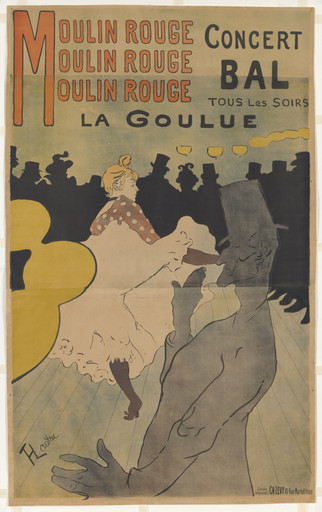
Whether advertising a product, like the new paper form of confetti, or entertainers in a well-known can-can troupe, Toulouse-Lautrec's posters were noteworthy for their highly simplified and abstracted designs. Inspired by Japanese woodblock prints, the artist incorporated diagonal perspectives, abrupt cropping, patterns of vivid, flat color, and sinuous lines to achieve an immediacy and directness that went far beyond the illustrative charm of other poster makers of the day.
Deborah Wye, Artists and Prints: Masterworks from The Museum of Modern Art, New York: The Museum of Modern Art, 2004, p. 36.
Explore more
Henri de Toulouse-Lautrec
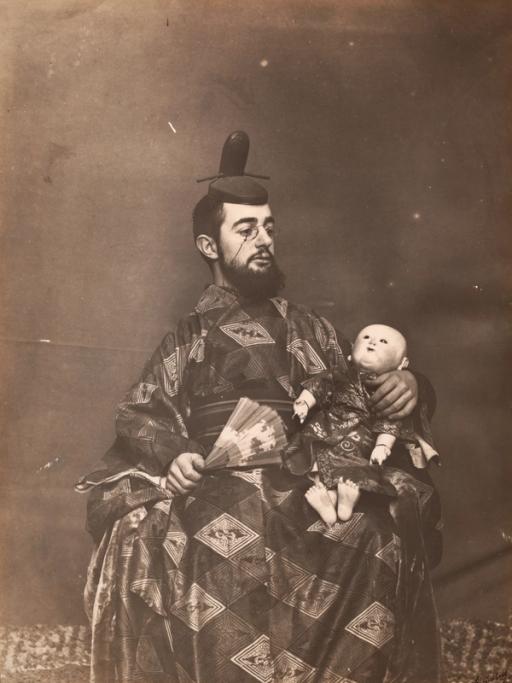
French, 1864–1901 165 works onlineDuring his brief artistic career, Henri de Toulouse-Lautrec captured the lively and often sordid atmosphere of Montmartre’s late-19th-century dance halls, cabarets, and theaters.
Learn more →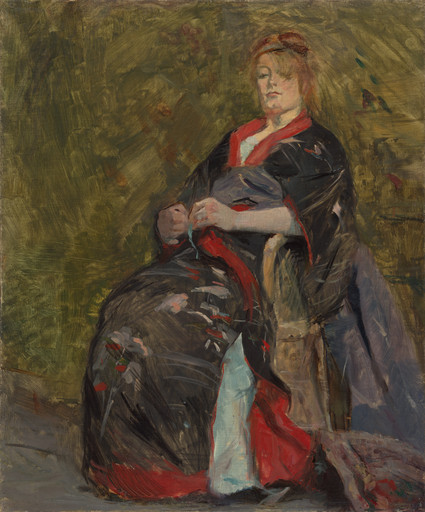
Lithography
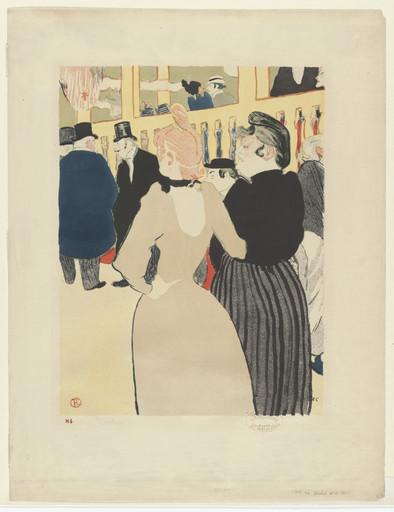
A printmaking technique that involves drawing with greasy crayons or a liquid called tusche, on a polished slab of limestone; aluminum plates, which are less cumbersome to handle, may also be used.
Learn more →

From MoMA Design Store


Installation views
We have identified this work in the following photos from our exhibition history.
Licensing
Artwork or archival images
If you would like to reproduce an image of a work of art in MoMA's collection, or an image of a MoMA publication or archival material (including installation views, checklists, and press releases), please contact Art Resource (publication in North America) or Scala Archives (publication in all other geographic locations).
Audio and film clips
MoMA licenses archival audio and select out of copyright film clips from our film collection. At this time, MoMA produced video cannot be licensed by MoMA/Scala. All requests to license archival audio or out of copyright film clips should be addressed to Scala Archives at [email protected]. Motion picture film stills cannot be licensed by MoMA/Scala. For access to motion picture film stills for research purposes, please contact the Film Study Center at [email protected]. For more information about film loans and our Circulating Film and Video Library, please visit Circulating Film and Video Library.
Text from a publication or the archives
If you would like to reproduce text from a MoMA publication, please email [email protected]. If you would like to publish text from MoMA's archival materials, please fill out this permission form and send to [email protected].
Feedback
This record is a work in progress. If you have additional information or spotted an error, please fill out this feedback form.