Explore more
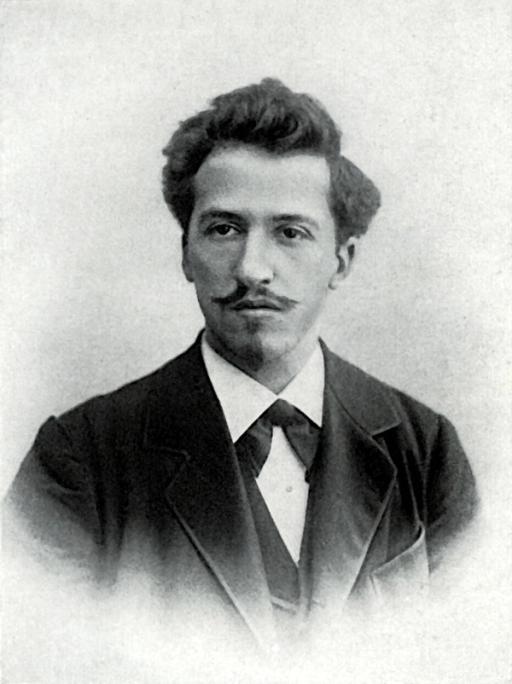
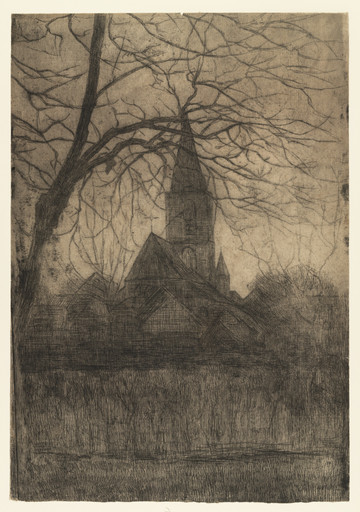
Piet Mondrian
Born 1872, the Netherlands; died 1944, United States 30 works onlineFor Piet Mondrian, abstract painting was the means of achieving an equilibrium between the “concrete” (the tangible and specific aspects of reality perceived by the senses) and the “universal” (the underlying, essential truths that he believed were constant and unchanging).
Learn more →
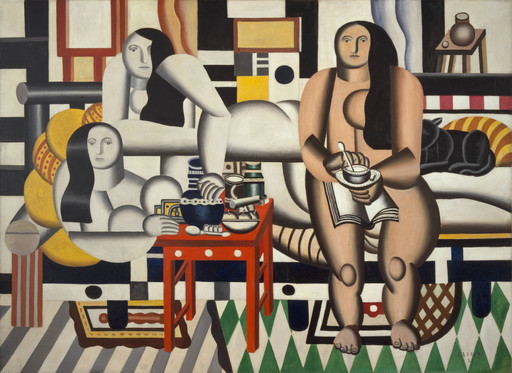
The New Spirit in Paris
Gallery 513This wide-ranging list, which appeared on the cover of the inaugural issue of the journal L’Esprit nouveau, in 1920, summarizes the energetic, boundary-crossing spirit of Paris between the two world wars.
Learn more →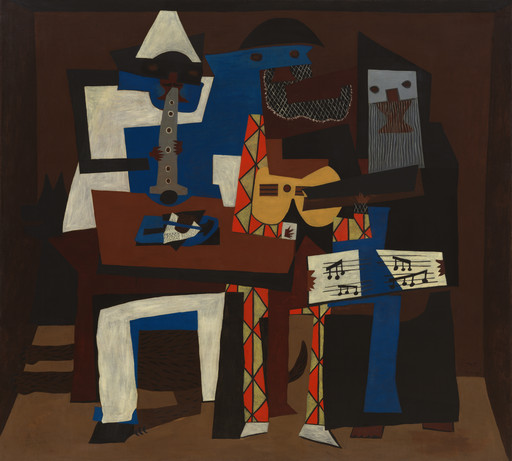
From MoMA Design Store


Installation views
We have identified this work in the following photos from our exhibition history.
Provenance Research Project
This work is included in the Provenance Research Project, which investigates the ownership history of works in MoMA's collection.
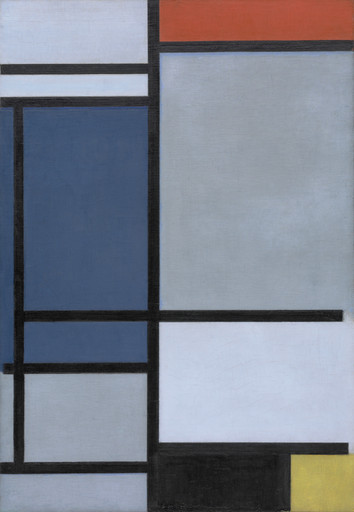
Acquired from the artist, Paris by Peter Alma (1886-1969), Amsterdam [1]; sold to Herbert Tannenbaum (1892-1958), Amsterdam/New York, by 1948 [2]; sold to Kleemann Galleries, New York [3]; The Museum of Modern Art, New York, 1948 (Acquired through the Lillie P. Bliss Bequest).
[1] See Robert P. Welsh, and Joop M. Joosten, Piet Mondrian: catalogue raisonné, New York: Harry N. Abrams, 1998, B107 (Composition C, 1920). First shown at the exhibition La Section d'Or - Paris. Kubisten en Neo-Kubisten, Rotterdamsche Kunstkring, Rotterdam, June 20-July 4, no. 36; Haagsche Kunstkring, The Hague, July 11-August 1, 1920; Stedelijk Museum, Amsterdam, October 23-November 7, 1920, no. 42. Purchased by Alma from the exhibition at the Haagsche Kunstkring, The Hague. The painting remained in the possession of Alma until at least 1946: He lent the painting to the memorial exhibition Piet Mondriaan herdenkingstententoonstelling, Stedelijk Museum, Amsterdam, November 6-December 16, 1946 (no. 90: Compositie met rood blauw zwart en groen). Reproduced in Cahiers d’art, vol. 22 (1947), p. 113: "Composition 1920, Coll. Peter Alma, Amsterdam."
[2] See Robert P. Welsh, and Joop M. Joosten, Piet Mondrian: catalogue raisonné, New York: Harry N. Abrams, 1998, B107.
[3] Collection files 257.1948, Department of Painting and Sculpture, The Museum of Modern Art, New York.
Provenance research is a work in progress, and is frequently updated with new information. If you have any questions or information to provide about the listed works, please email [email protected] or write to:
Provenance Research Project
The Museum of Modern Art
11 West 53 Street
New York, NY 10019
Licensing
Artwork or archival images
If you would like to reproduce an image of a work of art in MoMA's collection, or an image of a MoMA publication or archival material (including installation views, checklists, and press releases), please contact Art Resource (publication in North America) or Scala Archives (publication in all other geographic locations).
Audio and film clips
MoMA licenses archival audio and select out of copyright film clips from our film collection. At this time, MoMA produced video cannot be licensed by MoMA/Scala. All requests to license archival audio or out of copyright film clips should be addressed to Scala Archives at [email protected]. Motion picture film stills cannot be licensed by MoMA/Scala. For access to motion picture film stills for research purposes, please contact the Film Study Center at [email protected]. For more information about film loans and our Circulating Film and Video Library, please visit Circulating Film and Video Library.
Text from a publication or the archives
If you would like to reproduce text from a MoMA publication, please email [email protected]. If you would like to publish text from MoMA's archival materials, please fill out this permission form and send to [email protected].
Feedback
This record is a work in progress. If you have additional information or spotted an error, please fill out this feedback form.