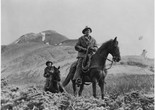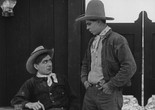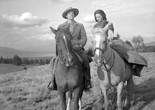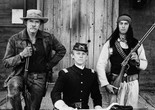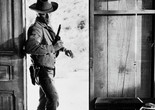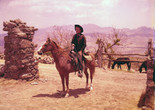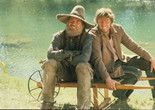
When Carl Laemmle opened Universal City in March 1915, the first standing set he built was the Western street that survives surprisingly intact today. The site itself—a converted ranch in the San Fernando Valley, ringed by hills and scrub—was purpose-built for outdoor production, and the Western was its native genre. Within two years the young John (then Jack) Ford was directing Harry Carey in the first of their 25 collaborations, beginning with Straight Shooting (1917). These early films laid out the genre’s lasting structure: the collection of stock characters, settings, and themes that would inspire endless variations. Ford left for Fox in 1920, but the B-Western factory he left behind sustained a steady output through the 1920s and ’30s, keeping Saturday matinees around the world supplied with cowboy stars like Hoot Gibson, Tim McCoy, and Buck Jones.
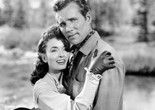
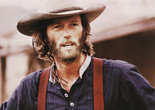
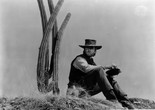
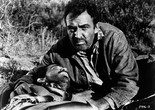
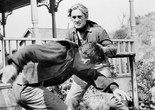
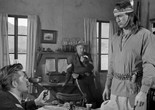
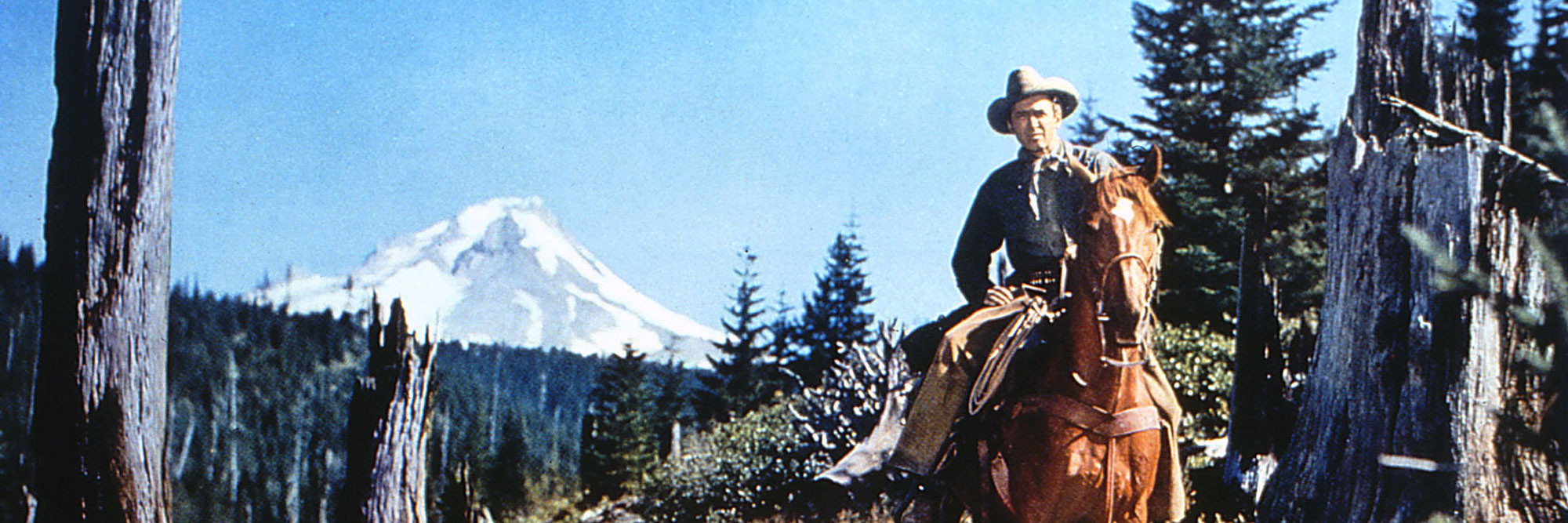
In 1946, a merger with International Pictures created Universal-International and brought a new regime determined to create a more prestigious product. The catalyst was Winchester ’73 (1950), Anthony Mann’s collaboration with James Stewart, which redefined the genre’s psychological possibilities and became the studio’s second-highest grossing film of the year. The 1950s brought a sustained flowering: Mann and Stewart, George Sherman, Budd Boetticher, and a supporting infrastructure of Technicolor programmers with Audie Murphy, Rory Calhoun, and Jeff Chandler made Universal the decade’s most prolific Western studio. By the late ’60s, the influence of the Spaghetti Western began to dominate, with Clint Eastwood taking up residence in films like Don Siegel’s Two Mules for Sister Sara (1970). But by the 1980s, the Western was in retreat everywhere; films like Fred Schepisi’s Barbarosa (1982) and Peter Fonda’s The Hired Hand (1971) feel like elegies for the form itself, made by filmmakers who understood they were working in the twilight of the genre.
This series aims to capture the sweep of Universal’s Western output, drawing on the superb restoration work of Universal’s archive.
Organized by Dave Kehr, Curator, and Steve Macfarlane, Curatorial Assistant, Department of Film. Thanks to Cassandra Moore, VP, Mastering and Archive, and Jen Hashida, Manager, Restoration and Preservation, NBCUniversal.
Film at MoMA is made possible by CHANEL.
Additional support is provided by the Annual Film Fund. Leadership support for the Annual Film Fund is provided by The Contemporary Arts Council of The Museum of Modern Art, Agnes Gund through The International Council of The Museum of Modern Art, the Association of Independent Commercial Producers (AICP), and The Young Patrons Council of The Museum of Modern Art.