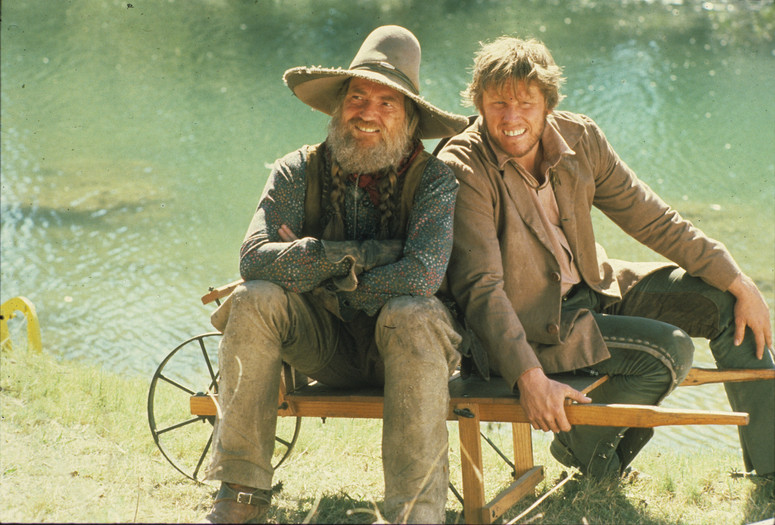
Barbarosa. 1982. USA. Directed by Fred Schepisi. Screenplay by William D. Wittliff. With Willie Nelson, Gary Busey, Isela Vega, Gilbert Roland, Danny De La Paz. DCP. 90 min.
One of the last Westerns made before the genre became self-conscious about being a genre - before Tombstone and Wyatt Earp turned it into a costume pageant - Barbarosa still inhabits the form as a living thing. Australian director Fred Schepisi, whose The Chant of Jimmie Blacksmith had shown what an outsider could do with a landscape that swallows men whole, brings his fine eye to the Big Bend country of Texas. The wide-screen photography shifts constantly between the epic and the granular, the canyon distances and the pricker bushes tearing at Gary Busey’s legs. Willie Nelson’s off-screen persona—the outlaw Red-Headed Stranger, the man too weathered for ordinary life—bleeds so completely into the title role that the casting barely feels like casting. Barbarosa is already a legend before the film begins, and Nelson plays him as a man who has made his peace with that.
William D. Wittliff’s screenplay, drawn from a story his grandfather told him, turns a revenge cycle into something closer to folklore. Gilbert Roland, in his last screen role, plays the Zavala patriarch who has spent decades dispatching his sons to kill the man who married his daughter without permission; by now, the killing has become the point, the feud a story the family tells itself about who it is. Busey’s Karl, a farm boy stumbling into his own blood feud, arrives as the film’s innocent—the audience’s way in—and his unlikely partnership with Nelson gives Barbarosa the digressive, hangout quality of the best late Westerns. The characters are already fading into myth. The landscape will outlast them either way.