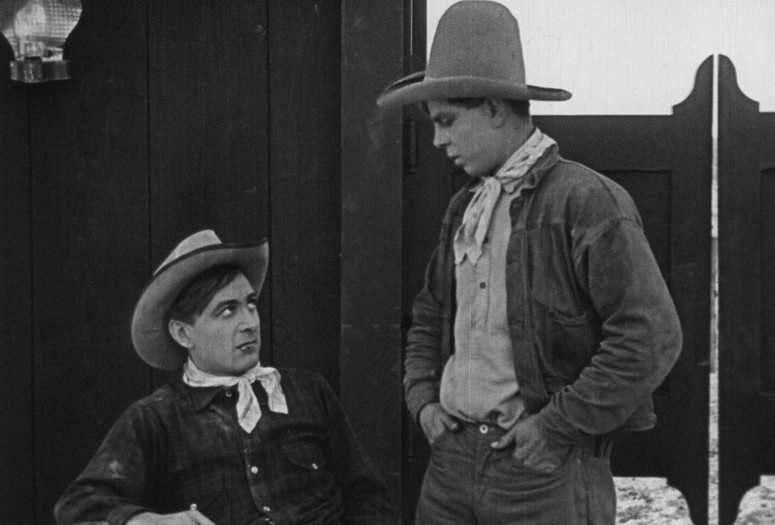
Straight Shooting. 1917. USA. Directed by John Ford. Screenplay by George Hively. With Harry Carey, Molly Malone, Duke Lee, Hoot Gibson. DCP. 57 min.
Straight Shooting is John Ford’s first surviving feature—he had directed perhaps two dozen shorts before Universal gave him a five-reel feature—and it already shows the formal qualities that would define his work across six decades. The premise is the standard range-war material of the period, cattlemen driving homesteaders off water rights, but Ford uses it to examine who deserves to stay and who must be cast out, a question that would never stop interesting him. Harry Carey’s Cheyenne Harry is initially hired to run the farmers out but, through the death of a child and the force of Molly Malone’s presence, he ends up on the other side of the dispute.
The conversion is handled without sentiment and without much explanation. Ford trusts behavior over dialogue in a way that would become instinctive. What distinguishes the film from comparable Universal products of the period is the handling of landscape: Ford composes the exteriors with the depth and deliberateness that most programmers ignored, already using the horizon and the natural light of the California locations as dramatic tools, already shooting galloping horses from below. Hoot Gibson appears in a small role, one of many Universal players who would cycle through Ford’s early pictures. The film was considered lost for decades until a print was found in a Czech archive in the 1960s.