This grant, which will be offered to MoMA and MoMA PS1 curators on a yearly basis, aims to foster new understandings of Latin American art that will inform future exhibitions, acquisitions, publications, and public programs, and will contribute to the expansion of the Museum’s curatorial perspectives.
2025 Curatorial Fellow
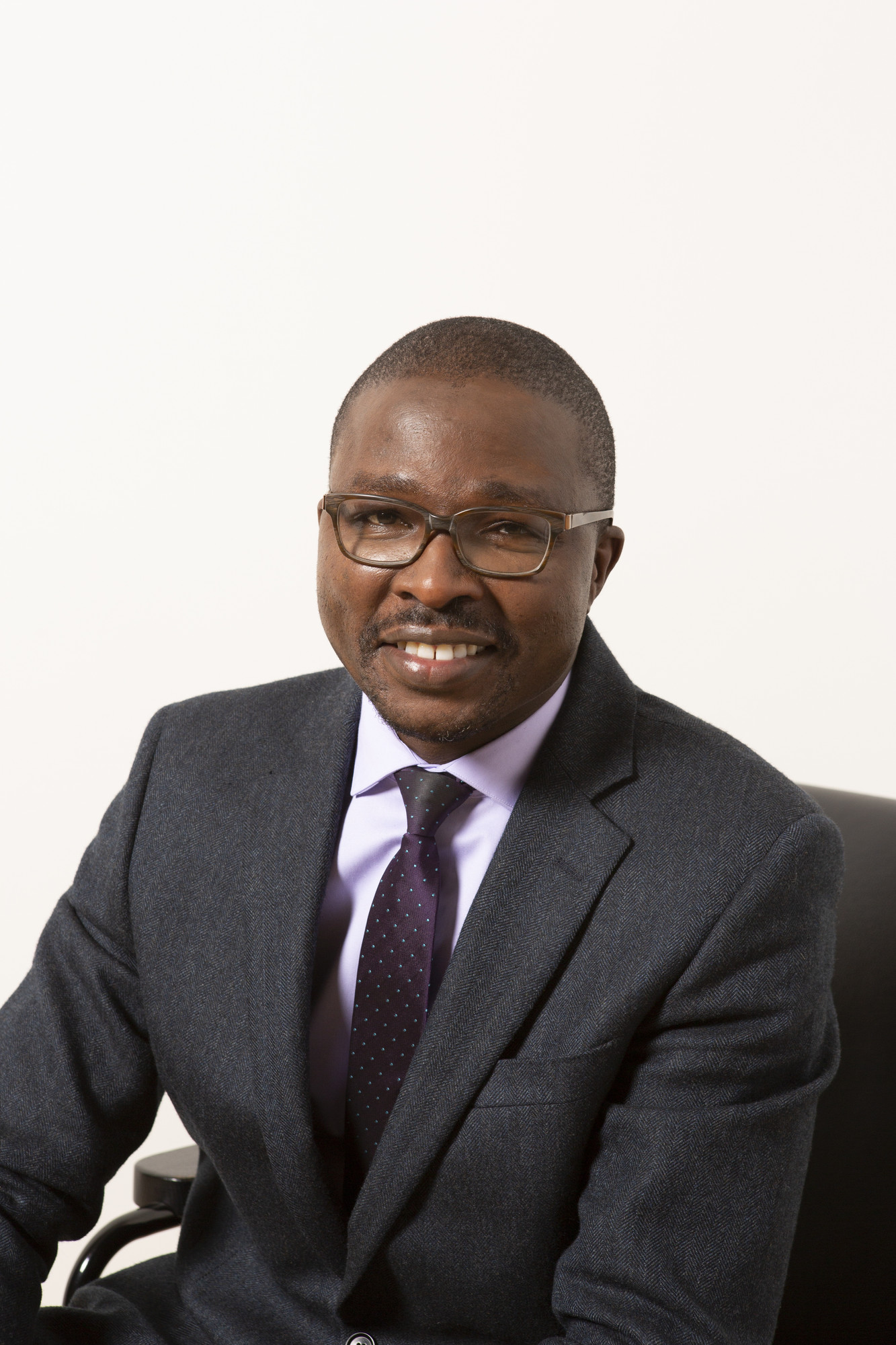
The Cisneros Institute’s 2025 curatorial research grant has been awarded to Smooth Nzewi, the Steven and Lisa Tananbaum Curator in the Department of Painting and Sculpture at the Museum of Modern Art. Nzewi will conduct exploratory research in Colombia, focusing on less-studied dimensions of African diasporic visual cultures.
His research will concentrate on predominantly Afro-diasporic communities in Colombia’s South Pacific region, particularly in the Chocó. Through immersive, site-based study, Nzewi will examine contemporary visual practices shaped by Afro-Colombian experiences, with an emphasis on aesthetic imaginaries of identity and memory. The project seeks to expand understanding of Afro-diasporic cultural production beyond music and performance, foregrounding conceptual and visually complex practices that engage the social, historical, and political realities of Afro-diasporic life in Colombia.
This research extends Nzewi’s ongoing curatorial and scholarly work at MoMA, including his leadership of the “Africa group” within the Contemporary and Modern Art Perspectives program, and aligns with the Cisneros Institute’s commitment to advancing global perspectives on art from Latin America and its African diasporas.
2024 Curatorial Fellow
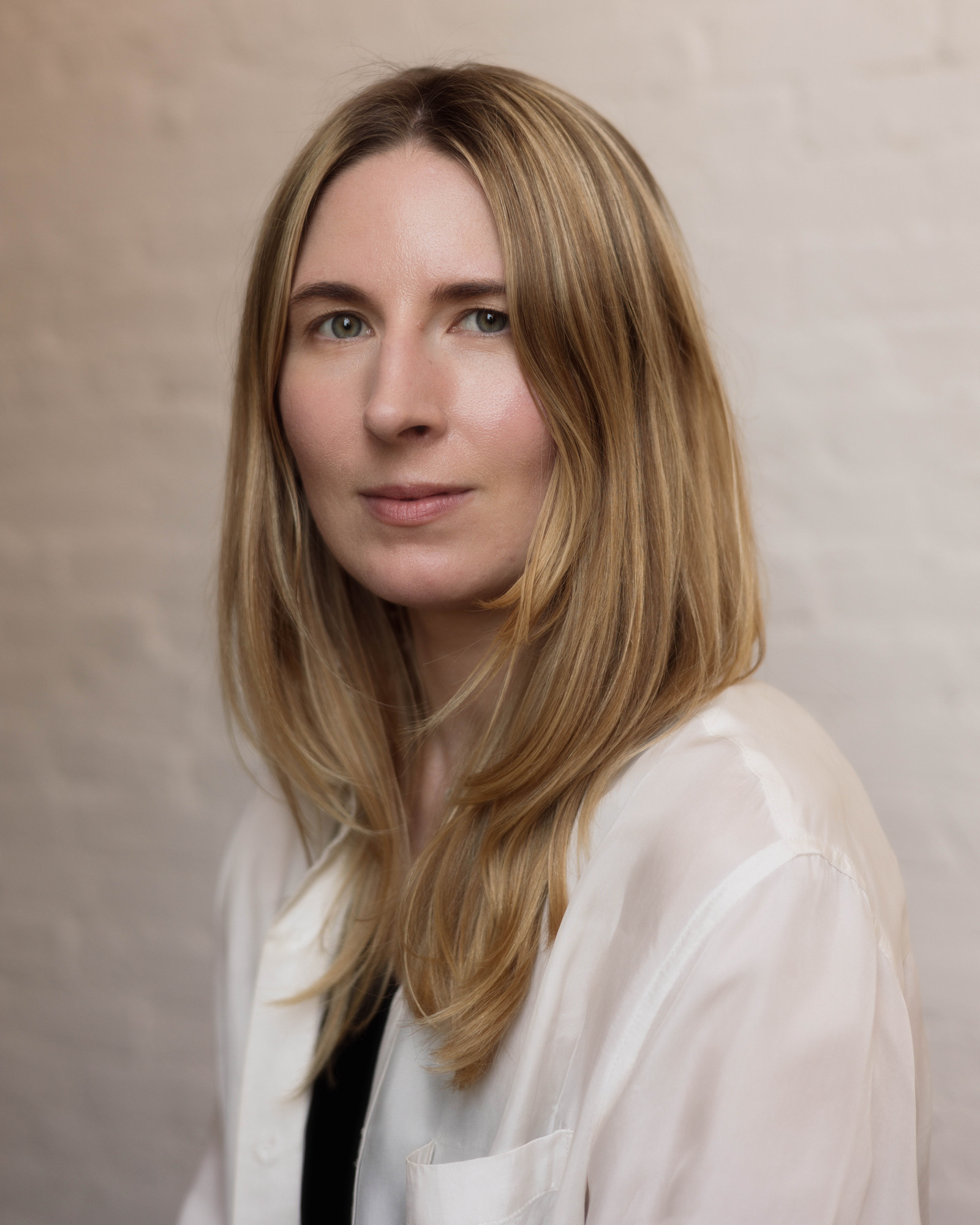
As the recipient of the Cisneros Institute Curatorial Fellowship for MoMA and MoMA PS1 curators, Jody Graf, an assistant curator at MoMA PS1, will research the practices of selected Indigenous artists and collectives in the Mexican states of Chiapas and Oaxaca. In her study, Graf will consider in particular how artists, media collectives, and printmaking shops in these regions have informed and embodied efforts toward political autonomy, land sovereignty, and the stewardship of Indigenous knowledge and languages. Through interviews with artists and collectives, Graf will also explore how these practitioners are reflecting on their intersection with a growing interest in Indigenous art within global contemporary art discourses and exhibitions.
Her project aims to situate these considerations historically, looking back to the 1990s to dig into the ways in which exhibitions and biennials have featured Indigenous artists of these regions—at times incorporating their work into art-historical canons on the basis of assumed affinities with visual lexicons of the Global North, while simultaneously fetishizing its difference through a lens of belatedness.
Graf’s research intersects with the Institute’s long-standing focus on Indigenous art, and with recent and ongoing programming at MoMA PS1 highlighting contemporary issues of land sovereignty, migrant justice, and Indigenous practices.
2023 Curatorial Fellow
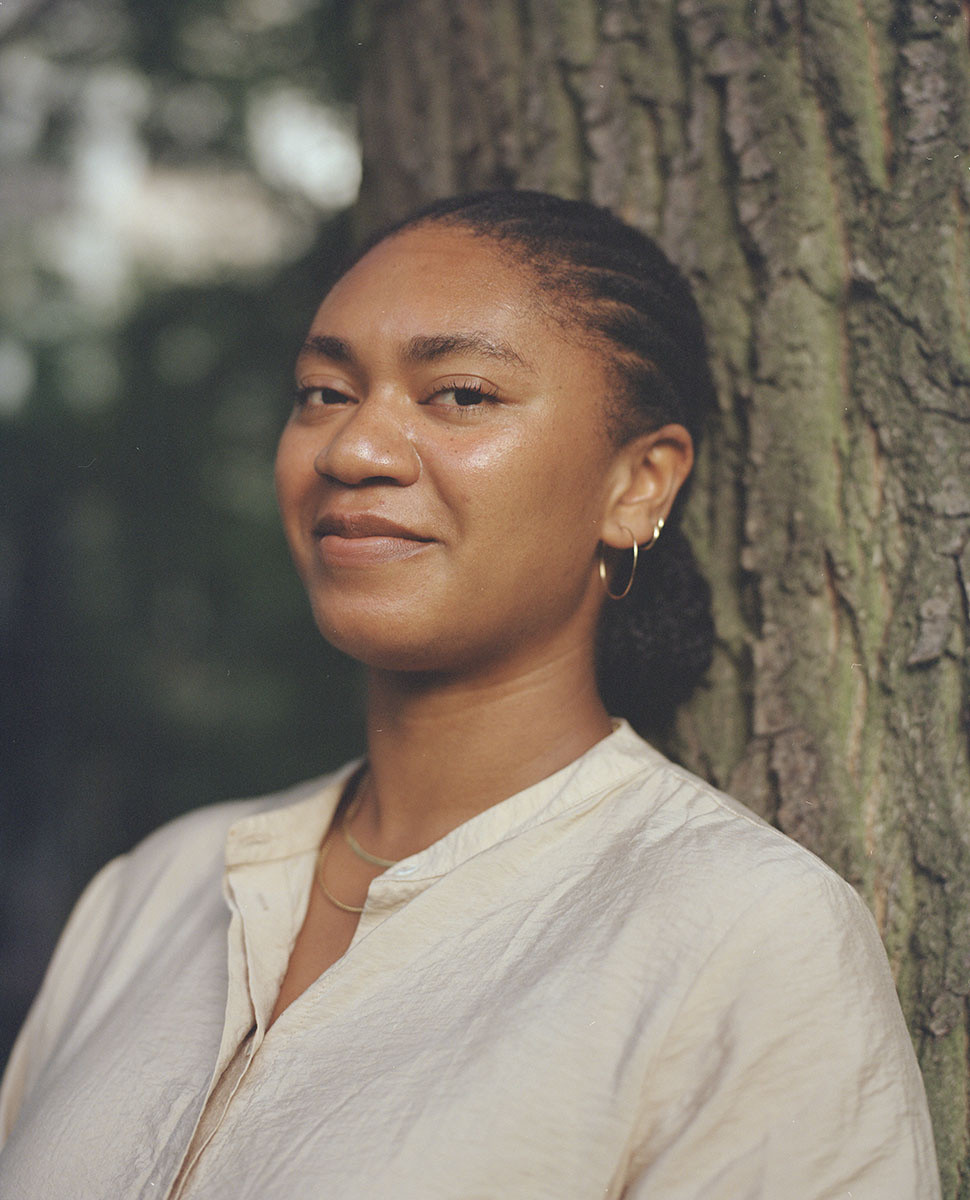
Oluremi Onabanjo, an Associate Curator in MoMA’s Department of Photography, received the 2023 Research Grant for MoMA and MoMA PS1 curators. She is currently working on the exhibitions Projects: Ming Smith and New Photography 2023. She is the author of Ming Smith: Invisible Man, Somewhere, Everywhere. Prior to joining MoMA, she was the Director of Exhibitions of Collections at The Walther Collection and served on the curatorial team for the 8th Triennial of Photography Hamburg.
Onabanjo’s project will deconstruct the legacy of 20th century photographer Pierre Verger through archival research and oral histories. She will revisit his images with a critical lens by looking at the connections with the Candomblé communities in Salvador, while interrogating the ethics of Verger’s production and ethnographic practices.
2022 Curatorial Fellow
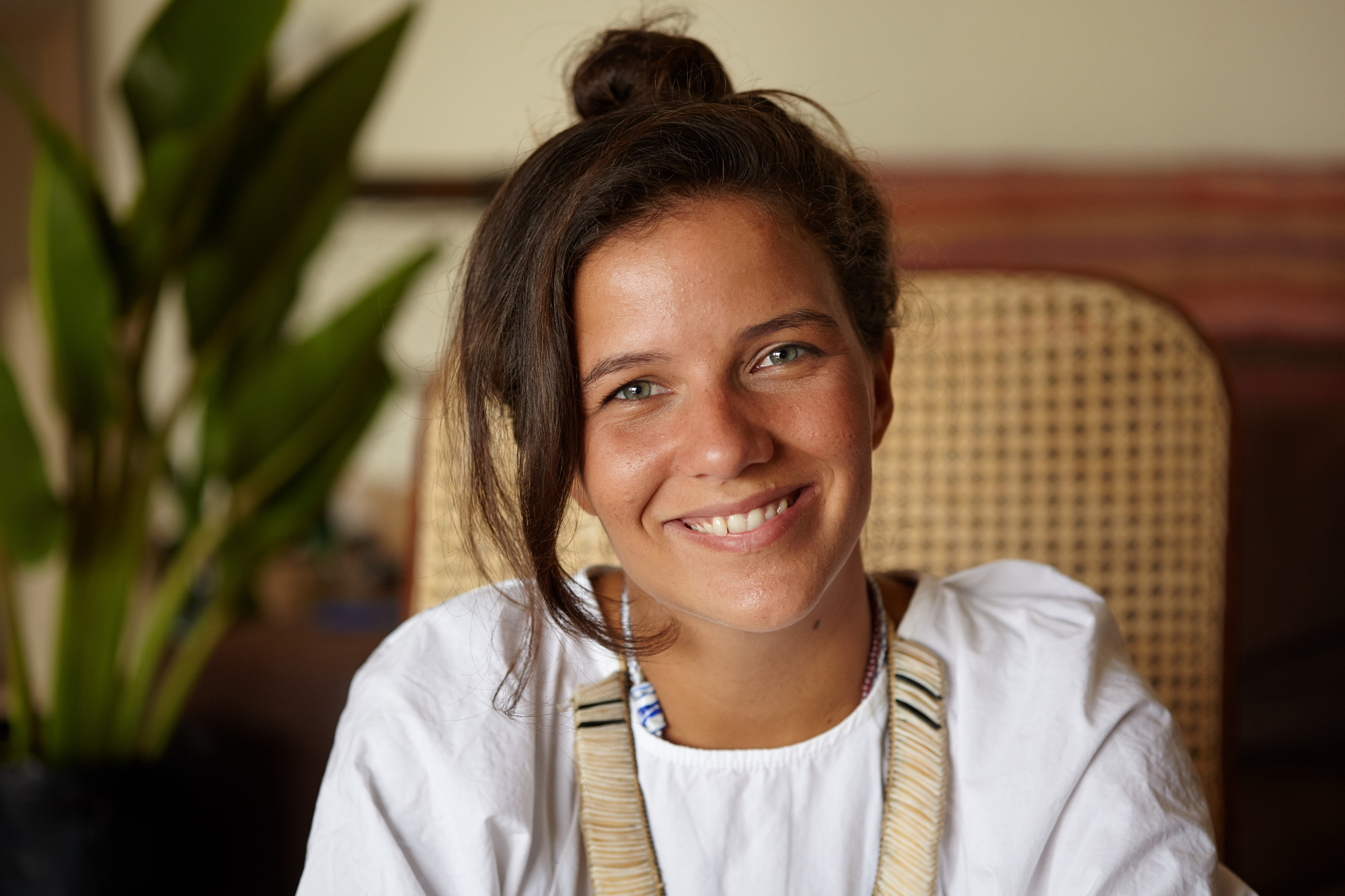
Catarina Duncan
Due to the travel bans resulting from the COVID-19 pandemic, this fellowship—normally the Research Grant for MoMA and MoMA PS1 Curators—was temporarily directed toward supporting the research of a curator based in Latin America for the year 2022.
The 2022 MoMA fellowship was awarded to independent curator Catarina Duncan, whose curatorial work focuses on Latin American cultural practices and territorial identities. Duncan’s project, “Territorial Re-connections,” consists of a study of the work of three collectives: colectivo amasijo (Mexico), Grupo Nzinga (Brazil), and Mujeres Creando (Bolivia). Communally, they developed a research process that fosters exchanges between women-led art collectives and land-rights movements in Latin America. The research project aims to promote experimental investigative tools regarding communities, territories, feminisms, resistance, and environmental conditions.
Territorial Reconnections
by Catarina Duncan
“Ancestry is the basic principle and the greatest foundation that structures the entire circulation of vital energy.” —Leda Maria Martins, Performances of Spiral Time, p. 62
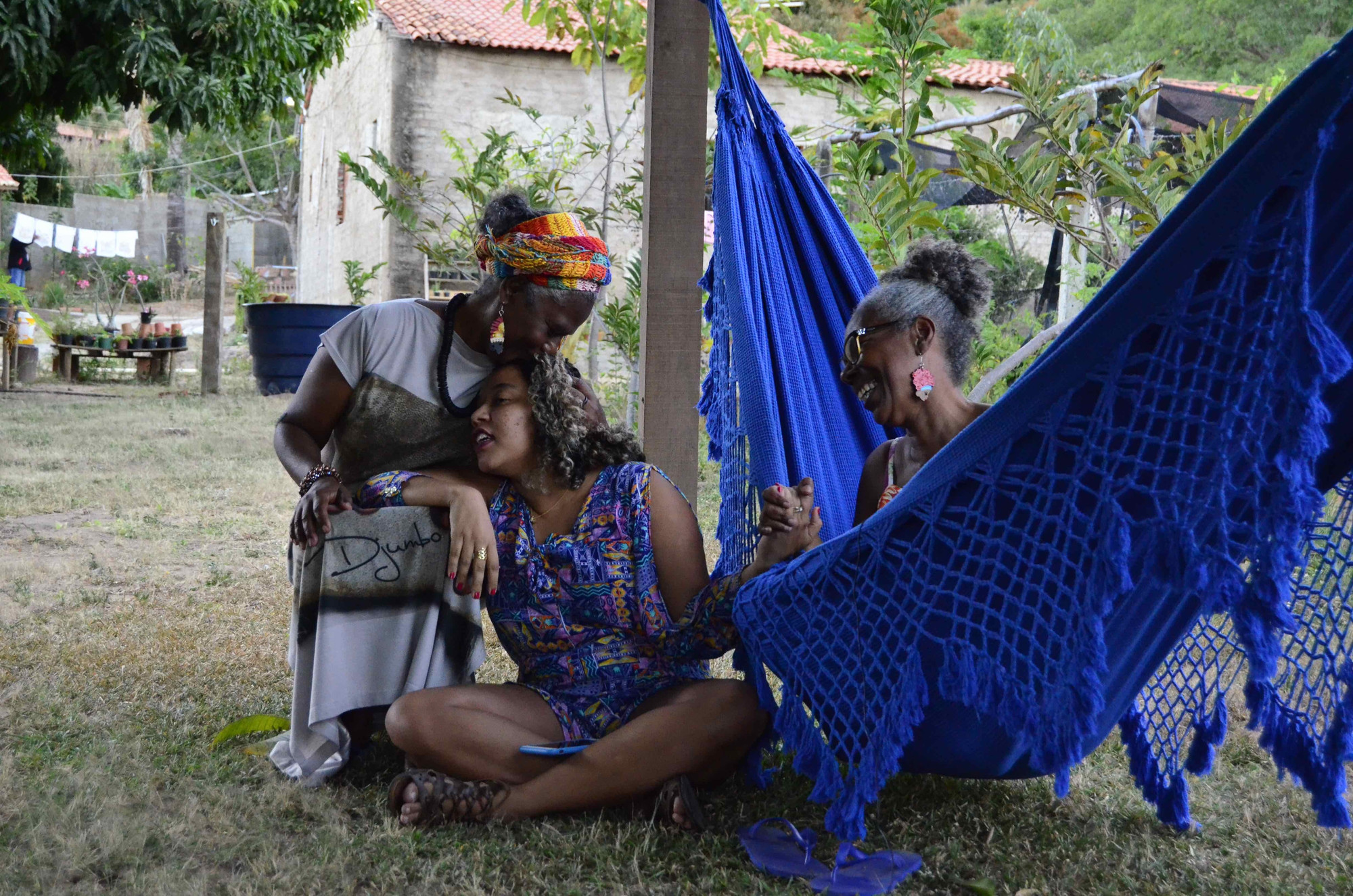
Territorial Reconnections is a network established from the exchange of knowledge and practices between three artistic collectives led by women in Latin America: colectivo amasijo (Mexico), Grupo Nzinga (Brazil), and Mujeres Creando (Bolivia). Each collective elected two or three integrants to conduct meetings in which we defined our research strategies, desires, and methodologies. In the months of June, July, and August 2021 we organized a series of encounters called acercamientos (approaches), where in different ways we produced celebrations and food, and shared oral knowledge, recipes, and practices from dancing to legal resistance strategies.
Considering the impossibility of physical presence among all the groups, we met online and registered our encounters in many ways, from videos and photographs to poems and drawings. We created a safe space of conceptual and affective encounters where listening and exchanging were facilitated through mutual respect and learning.
As a way to share the knowledge produced during these encounters, we developed an online publication containing links, recipes, chants, notes, and images from this collective research that touches upon land issues, women rights, identities, and ancestrality. Throughout our research process we constantly emphasized our differences in order to connect our similarities. We do not all have the same contexts or issues, but we met from our differences, without homogenizing our contexts or practices.
colectivo amasijo comprises seven women from Mexico City, Oaxaca, and Veracruz who relate with each other through collective cooking in order to care for the memories of their territory and practices of the land. While Mujeres Creando is an anarcho-feminist movement composed of more than 20 women from different origins who work together for social justice and artistic production against patriarchal structures, they are mostly based in urban zones of La Paz and Santa Cruz in Bolivia, where they manage two houses. Grupo Nzinga is a collective led by women, but with participants of different genders, within artistic and academic fields. The group was founded at the Regional University of Cariri, in the state of Ceará, northeast of Brazil. Their research focuses on collective memories of the territory, popular traditions, and contemporary art practices by Afro-Indigenous women in Brazil.
The material gathered here seeks to share the practices undertaken by each collective over six months of joint investigation. Links were developed to recognize the specificities of each territory, an expanded view on artistic practices, and the daily resolutions realized by women in Latin America. These women have been developing feminist, artistic, and environmental actions in multiple ways, even before being named as such.
We built this platform for presenting the immersive research carried out, which includes celebratory practices, interviews, and texts by almost 30 women involved in the process. It includes a curatorial text based on experience and a bibliography of women theorists and thinkers from Latin America. The visual identity, font and colors were thought out collectively, specifically for Territorial Reconnections.
We leave here an invitation for us to think together about propositional possibilities, understanding art making as a space of encounter, and the power of collectivity. We hope that, through this publication and its various reflections, we will open space for multiple subjectivities and ways of being in the world. It is about the elaboration of other times, values, and ways of being, leaving a ballast to open paths of understanding the breadth of artistic knowledge and diverse ways to carry out a curatorial investigation.
Download Territorial Reconnections
2021 Curatorial Fellow
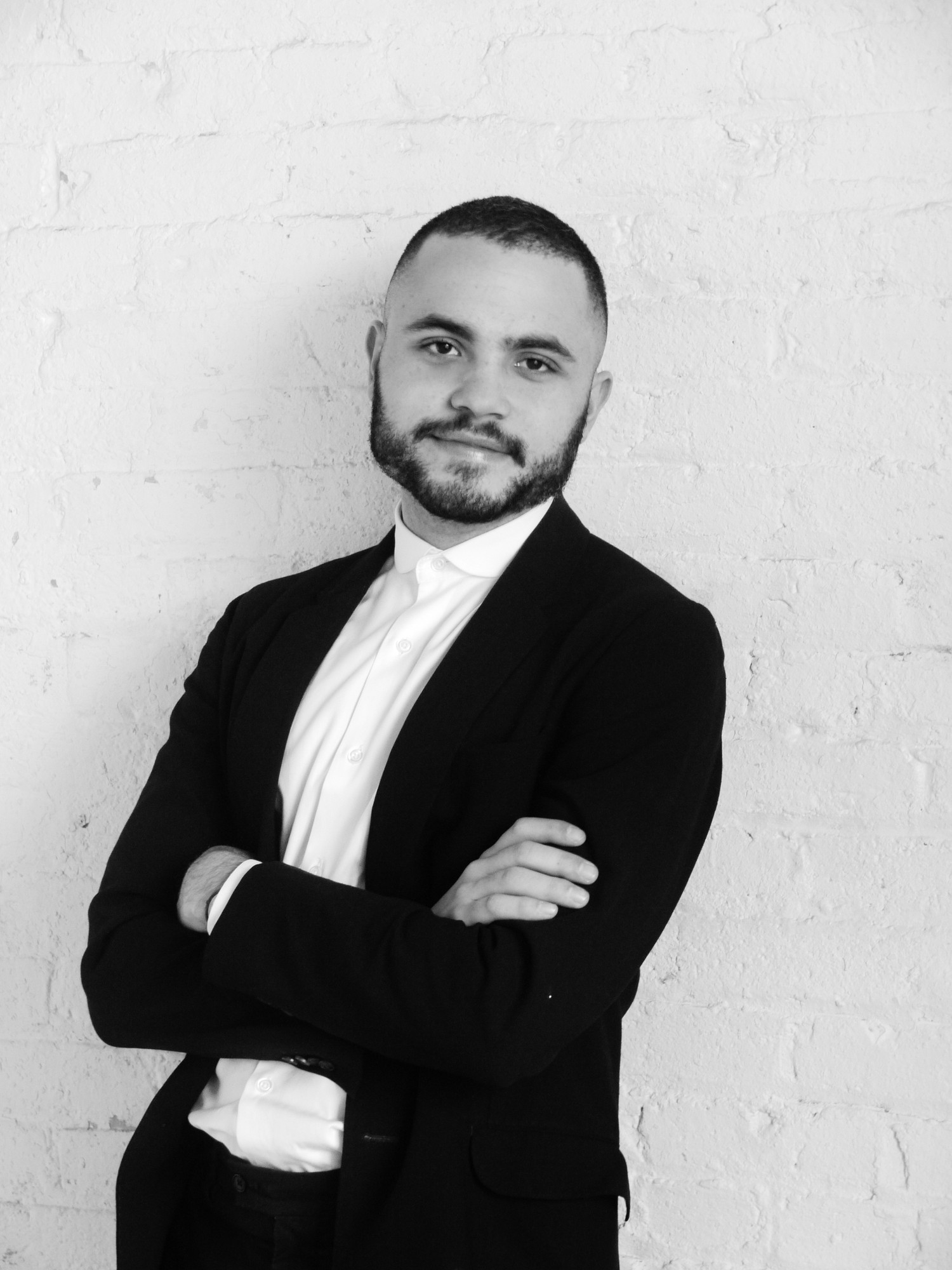
Thomas Lax
Thomas Lax, a curator in MoMA’s Department of Media and Performance, received the Institute’s 2021 Research Grant for MoMA and MoMA PS1 Curators. At MoMA, Lax has worked on Judson Dance Theater: The Work Is Never Done and the commission Maria Hassabi: Plastic, among other projects. Prior to joining MoMA he was an assistant curator at the Studio Museum in Harlem.
Lax’s project, titled “Searching for Yemanjá,” focused on two of his ongoing research interests: the figure of the ocean in the visual arts of the African diaspora, and the vexed notion of motherhood in the black radical intellectual tradition.
Black Space Part One: How to Write a Feminist History of the Recent Past
Espaço preto (Black Space) reflects on the following questions: Where is the history of recent exhibitions organized by Black and Indigenous people in Brazil within the canon of contemporary Latin American art? How might a feminist methodology account for other ways of recording art’s histories and the residue of culture? A conversation between Rossana Paulino and Diane Lima moderated by Thomas J. Lax.
Black Space Part Two: Other Foundations?
Espaço preto (Black Space) reflects on the following questions: Where is the history of recent exhibitions organized by Black and Indigenous people in Brazil within the canon of contemporary Latin American art? How might a feminist methodology account for other ways of recording art’s histories and the residue of culture?A conversation between artist Aline Motta and curator Hélio Menezes, moderated by Thomas J. Lax.