A Sensational Teacup: Meret Oppenheim’s Object (1936)
It began with a joke over lunch. In 1936, Meret Oppenheim was at a Paris café with Dora Maar and Pablo Picasso, who noticed the fur-lined, polished metal bracelet she was wearing and joked that anything could be covered with fur. “Even this cup and saucer,” Oppenheim replied and, carrying the merriment further, called out, “Waiter, a little more fur!” Her devilish imagination duly sparked, the artist went to a department store not long after this meal, bought a white teacup, saucer, and spoon, wrapped them in the speckled tan fur of a Chinese gazelle, and titled this ensemble Object. In doing so, she transformed items traditionally associated with decorum and feminine refinement into a confounding Surrealist sculpture. Object exemplifies the poet and founder of Surrealism André Breton’s argument that mundane things presented in unexpected ways had the power to challenge reason, to urge the inhibited and uninitiated (that is, the rest of society) to connect to their subconscious—whether they were ready for it or, more likely, not.
While Oppenheim was not the only artist bringing everyday things into unlikely alliance in the 1930s, her fur-covered teacup is considered to be among the quintessential Surrealist objects. It caused a sensation when it was introduced to the public in 1936, first in Paris, at the inaugural exhibition of Surrealist objects organized by Breton, and then in New York, at The Museum of Modern Art’s show Fantastic Art, Dada and Surrealism. “The fur-lined-cup school of art,” ran a headline of the day, capturing the mixture of bemusement, offense, shock, and fascination Object provoked. Though many viewers could not comprehend how or why it constituted a work of art, by 1946, The Museum of Modern Art acquired the work
“Art […] has to do with spirit, not with decoration,” Oppenheim once wrote, and a work as small and economical as Object has such outsized spirit because fur combined with a teacup evokes such a surprising mix of messages and associations. The fur may remind viewers of wild animals and nature, while the teacup could suggest manners and civilization. With its pelt, the teacup becomes soft, rounded, and highly tactile. It seems attractive to the touch, if not, on the other hand, to the taste: Imagine drinking from it, and the physical sensation of wet fur filling the mouth.
Publication excerpt from MoMA Highlights: 375 Works from The Museum of Modern Art, New York (New York: The Museum of Modern Art, 2019)
Meret Oppenheim’s fur-lined teacup is perhaps the single most notorious Object —titled Le Déjeuner en fourrure (Lunch in fur) by the Surrealist leader André Breton—is a cup-and-saucer set that was purchased at a Paris department store and lined with the pelt of a Chinese gazelle. The work highlights the specificities of sensual pleasure: fur may delight the touch, but it repels the tongue. And a cup and spoon, of course, are made to be put in the mouth.
Following his inclusion of the work in MoMA’s 1936–37 exhibition Fantastic Art, Dada, Surrealism, Alfred H. Barr, Jr., the Museum’s director, remarked, “Few works of art in recent years have so captured the popular imagination.... The ‘fur-lined tea set’ makes concretely real the most extreme, the most bizarre improbability. The tension and excitement caused by this object in the minds of tens of thousands of Americans have been expressed in rage, laughter, disgust or delight.”Surrealist object. Its subtle perversity was inspired by a conversation between Oppenheim, Pablo Picasso, and the photographer Dora Maar at a Paris café. Admiring Oppenheim’s fur-trimmed bracelets, Picasso remarked that one could cover just about anything with fur. “Even this cup and saucer,” Oppenheim replied.
In the 1930s, many Surrealist artists were arranging found objects in bizarre combinations that challenged reason and summoned unconscious and poetic associations. Object —titled Le Déjeuner en fourrure (Lunch in fur) by the Surrealist leader André Breton—is a cup-and-saucer set that was purchased at a Paris department store and lined with the pelt of a Chinese gazelle. The work highlights the specificities of sensual pleasure: fur may delight the touch, but it repels the tongue. And a cup and spoon, of course, are made to be put in the mouth.
Following his inclusion of the work in MoMA’s 1936–37 exhibition Fantastic Art, Dada, Surrealism, Alfred H. Barr, Jr., the Museum’s director, remarked, “Few works of art in recent years have so captured the popular imagination.... The ‘fur-lined tea set’ makes concretely real the most extreme, the most bizarre improbability. The tension and excitement caused by this object in the minds of tens of thousands of Americans have been expressed in rage, laughter, disgust or delight.”
MoMA Highlights: 375 Works from The Museum of Modern Art, New York (New York: The Museum of Modern Art, 2019)
Kids label from 517: Surrealist Objects , 2025
Imagine drinking from this cup!
To make this sculpture, Meret Oppenheim bought a teacup, saucer, and spoon from a store. Then, she covered them with fur. By doing this, she changed these everyday objects into a work of art.
517: Surrealist Objects, 2025
Explore more
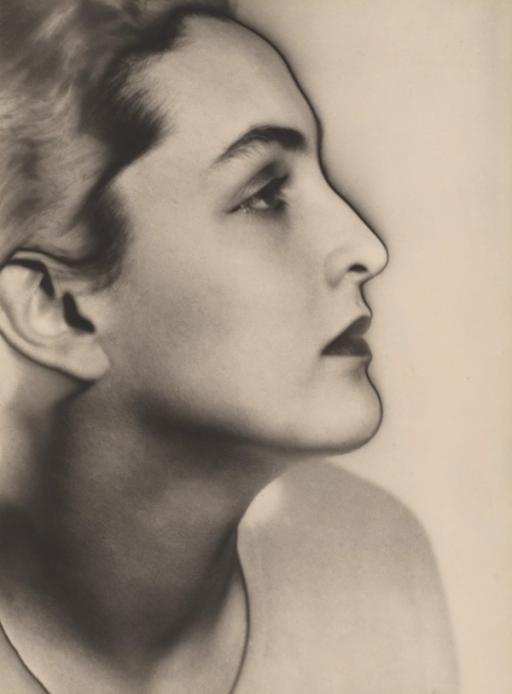
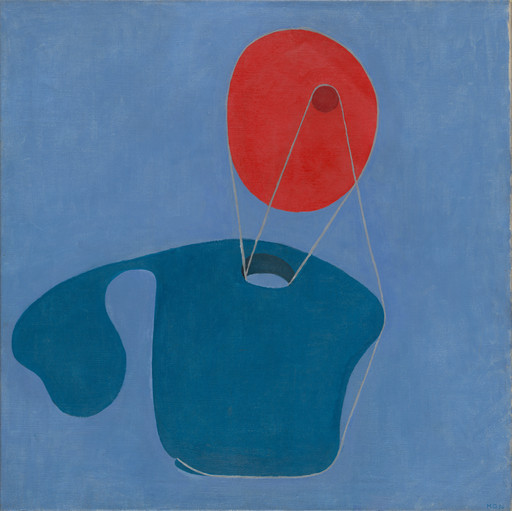
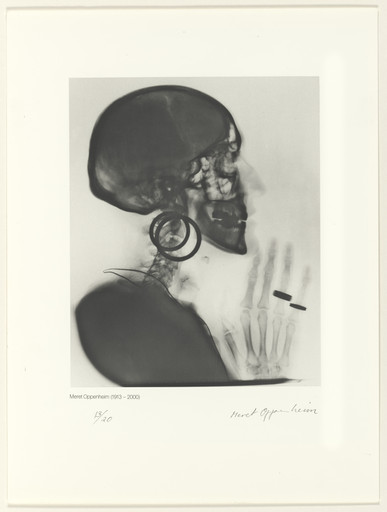
Meret Oppenheim
Swiss, 1913–1985 12 works onlineIt was spring in New York, and the Swiss artist’s latest work was on display at an uptown gallery. Meanwhile, her most famous work—about which she flatly refused to answer questions—was installed 20 blocks south, in MoMA’s galleries on 53rd Street.
Learn more →
Found object
An object—often utilitarian, manufactured, or naturally occurring—that was not originally designed for an artistic purpose, but has been repurposed in an artistic context.
Learn more →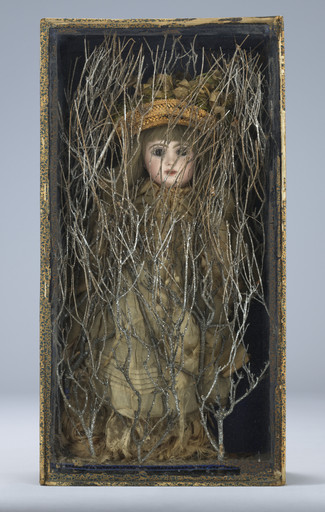
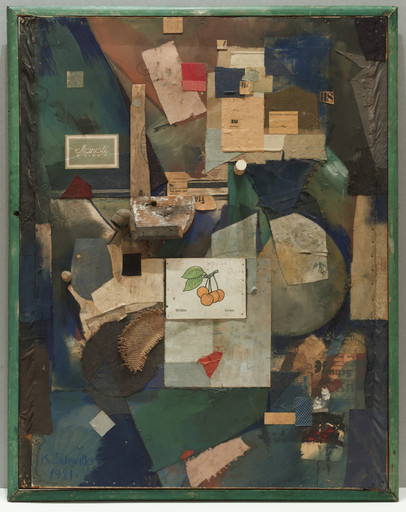
Modern art
Art made from the 1880s to the 1970s—a time marked by the growth of cities, the rise of industry, a surge in technologies, and the development of mass media.
Learn more →

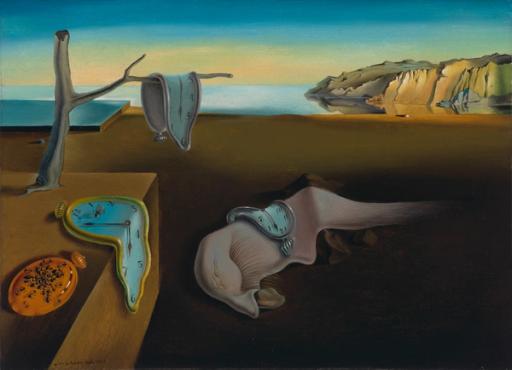
Surrealism
An artistic and literary movement led by French poet and writer André Breton from 1924 through World War II. Drawing on the psychoanalytic theories of Sigmund Freud, the Surrealists sought to overthrow what they perceived as the oppressive rationalism of modern society by accessing the sur réalisme (superior reality) of the subconscious.
Learn more →
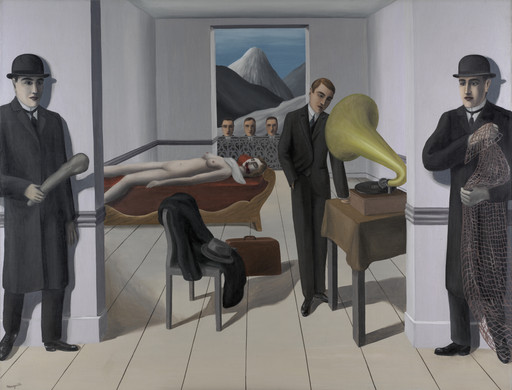
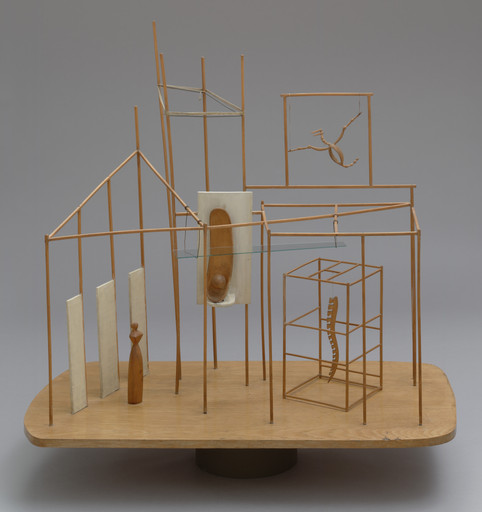
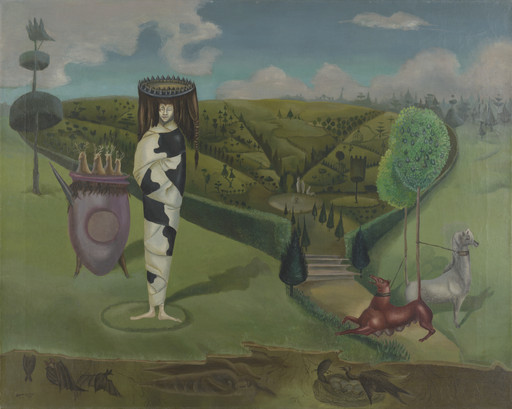
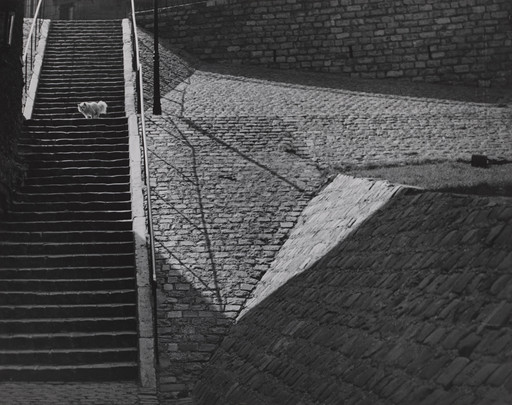
A Surreal Lens
Gallery 517In 1924, André Breton published his Manifesto of Surrealism, which, guided by Sigmund Freud’s psychoanalytic theories, declared a radical break from the rationalism of modern society in favor of imagination, erotic desire, and unconscious thought.
Learn more →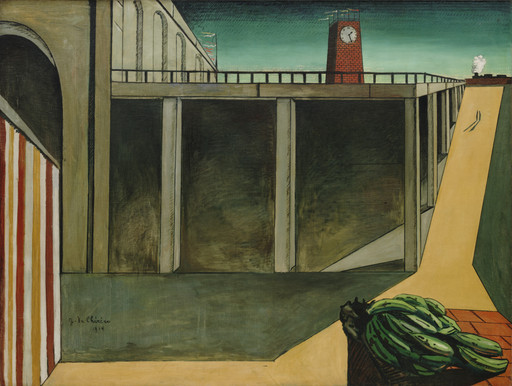
Audio
Audio from the playlist Collection 1880s–1940s
Audio from the playlist Kids
From MoMA Design Store


Installation views
We have identified this work in the following photos from our exhibition history.
Provenance Research Project
This work is included in the Provenance Research Project, which investigates the ownership history of works in MoMA's collection.
1936, The Museum of Modern Art, New York, purchased from the artist.
Provenance research is a work in progress, and is frequently updated with new information. If you have any questions or information to provide about the listed works, please email [email protected] or write to:
Provenance Research Project
The Museum of Modern Art
11 West 53 Street
New York, NY 10019
Licensing
Artwork or archival images
If you would like to reproduce an image of a work of art in MoMA's collection, or an image of a MoMA publication or archival material (including installation views, checklists, and press releases), please contact Art Resource (publication in North America) or Scala Archives (publication in all other geographic locations).
Audio and film clips
MoMA licenses archival audio and select out of copyright film clips from our film collection. At this time, MoMA produced video cannot be licensed by MoMA/Scala. All requests to license archival audio or out of copyright film clips should be addressed to Scala Archives at [email protected]. Motion picture film stills cannot be licensed by MoMA/Scala. For access to motion picture film stills for research purposes, please contact the Film Study Center at [email protected]. For more information about film loans and our Circulating Film and Video Library, please visit Circulating Film and Video Library.
Text from a publication or the archives
If you would like to reproduce text from a MoMA publication, please email [email protected]. If you would like to publish text from MoMA's archival materials, please fill out this permission form and send to [email protected].
Feedback
This record is a work in progress. If you have additional information or spotted an error, please fill out this feedback form.