Masson made Battle of Fishes by freely applying gesso to areas of the canvas, throwing sand on it, then brushing away the excess. The resulting contours suggested forms "although almost always irrational ones," according to the artist around which he rapidly sketched and applied paint directly from the tube. The image that emerged suggests a savage underwater battle between sharp–toothed fish. Masson, who was physically and spiritually wounded during World War I, joined the Surrealist group in 1924. He believed that, if left to chance, pictorial compositions would reveal the sadism of all living creatures.
2007.
Explore more
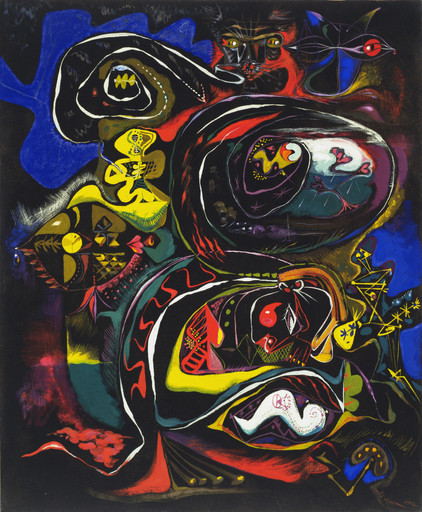
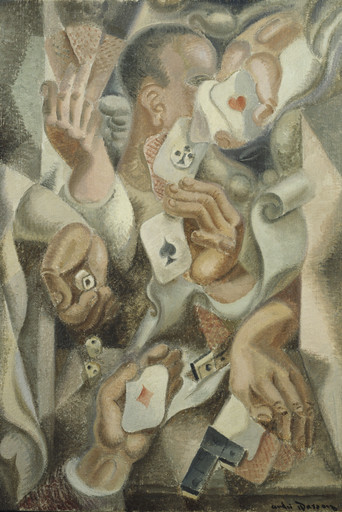
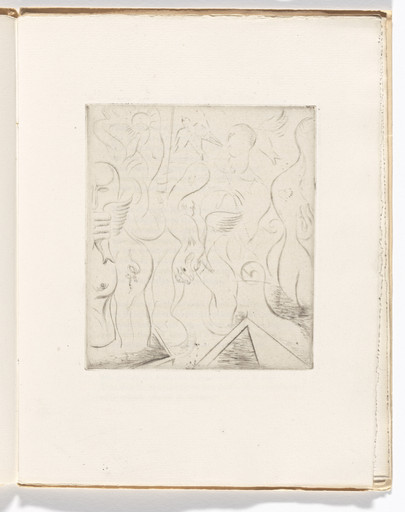
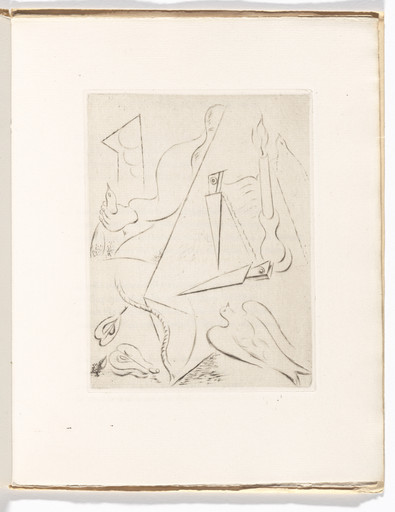
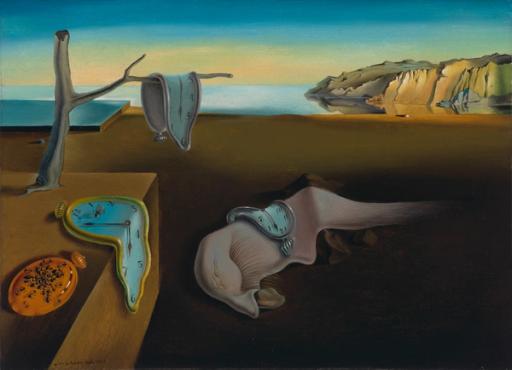
Surrealism
An artistic and literary movement led by French poet and writer André Breton from 1924 through World War II. Drawing on the psychoanalytic theories of Sigmund Freud, the Surrealists sought to overthrow what they perceived as the oppressive rationalism of modern society by accessing the sur réalisme (superior reality) of the subconscious.
Learn more →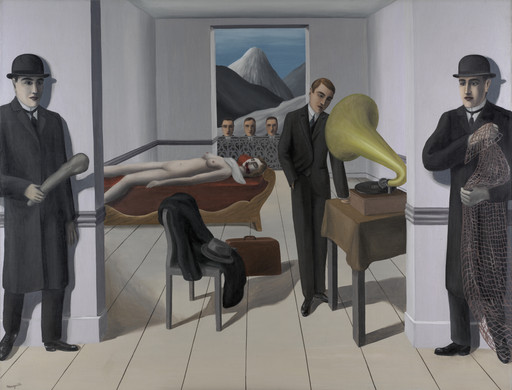
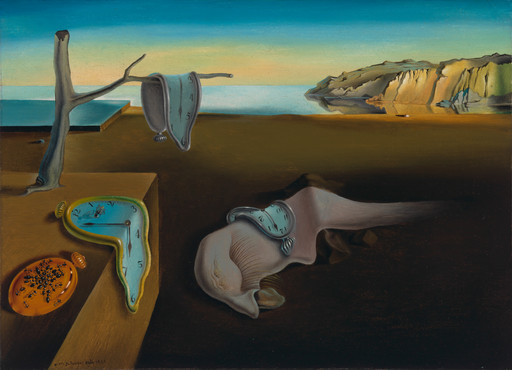
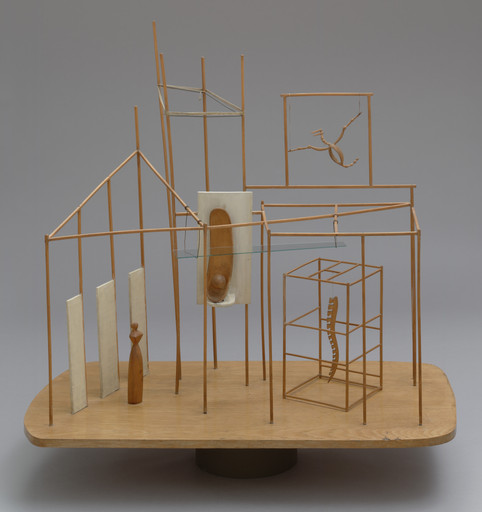
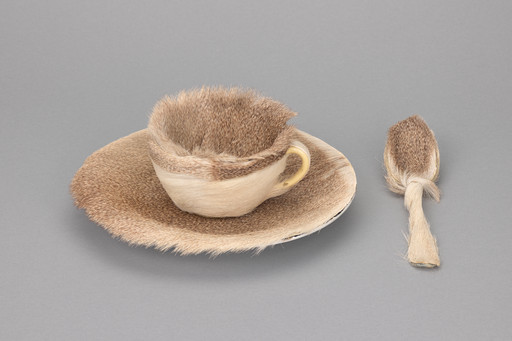
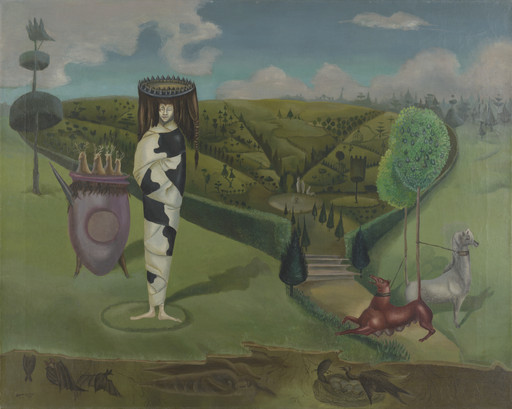
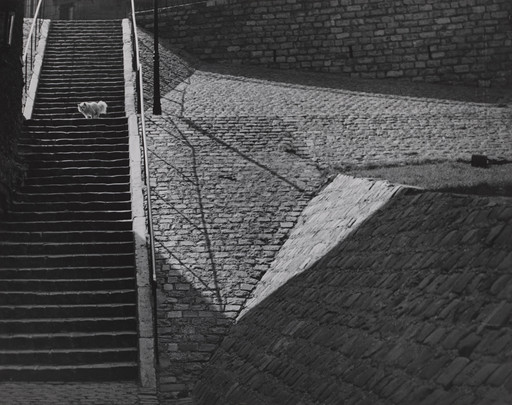
A Surreal Lens
Gallery 517In 1924, André Breton published his Manifesto of Surrealism, which, guided by Sigmund Freud’s psychoanalytic theories, declared a radical break from the rationalism of modern society in favor of imagination, erotic desire, and unconscious thought.
Learn more →

From MoMA Design Store


Installation views
We have identified this work in the following photos from our exhibition history.
Provenance Research Project
This work is included in the Provenance Research Project, which investigates the ownership history of works in MoMA's collection.
The artist. Until 1927
Daniel-Henry Kahnweiler/Galerie Simon, Paris. Purchased from the artist, 1927
Galerie Jeanne Bucher-Myrbor, Paris. Purchased from Daniel-Henry Kahnweiler/Galerie Simon, 1930 – 1937
The Museum of Modern Art, New York. Purchased from Galerie Jeanne Bucher-Myrbor, Paris, October 1937
Provenance research is a work in progress, and is frequently updated with new information. If you have any questions or information to provide about the listed works, please email [email protected] or write to:
Provenance Research Project
The Museum of Modern Art
11 West 53 Street
New York, NY 10019
Licensing
Artwork or archival images
If you would like to reproduce an image of a work of art in MoMA's collection, or an image of a MoMA publication or archival material (including installation views, checklists, and press releases), please contact Art Resource (publication in North America) or Scala Archives (publication in all other geographic locations).
Audio and film clips
MoMA licenses archival audio and select out of copyright film clips from our film collection. At this time, MoMA produced video cannot be licensed by MoMA/Scala. All requests to license archival audio or out of copyright film clips should be addressed to Scala Archives at [email protected]. Motion picture film stills cannot be licensed by MoMA/Scala. For access to motion picture film stills for research purposes, please contact the Film Study Center at [email protected]. For more information about film loans and our Circulating Film and Video Library, please visit Circulating Film and Video Library.
Text from a publication or the archives
If you would like to reproduce text from a MoMA publication, please email [email protected]. If you would like to publish text from MoMA's archival materials, please fill out this permission form and send to [email protected].
Feedback
This record is a work in progress. If you have additional information or spotted an error, please fill out this feedback form.