According to Giacometti, The Palace at 4 a.m. relates to "a period of six months passed in the presence of a woman who, concentrating all life in herself, transported my every moment into a state of enchantment. We constructed a fantastical palace in the night—a very fragile palace of matches. At the least false movement a whole section would collapse. We always began it again." The woman in question is often identified as one of Giacometti's lovers, known only by her first name, Denise. In the summer of 1933 Giacometti told André Breton, the leader of the Surrealist movement, that he was incapable of making anything that did not have something to do with her.
The Erotic Object: Surrealist Sculpture from the Collection, June 24, 2009–January 4, 2010.
Publication excerpt from MoMA Highlights: 375 Works from The Museum of Modern Art, New York (New York: The Museum of Modern Art, 2019)
In the Surrealist periodical Minotaure, Giacometti described the process that brought into being this fragile, air-filled sculpture. “This object formed little by little toward the end of summer 1932,” Giacometti recalled; “it gradually became clearer to me, the various parts taking their exact form and their particular place in the ensemble. Come autumn it had attained such a reality that its execution did not take me more than one day.” By privileging an interior mental image over the physical act of making, Giacometti affirmed his commitment to Surrealism’s call for the near-automatic recording of visions achieved in a dreamlike state.
Within his palace’s spindly, tenuously defined spaces, a slender sheet of suspended glass connects its rooms from left to right, adding to the structure’s vulnerable appearance. At right a delicate bird skeleton and sinuously curving vertebrae float, suspended, in space-frames or cages; at left a chess piece–like figure of a woman stands before three panels; at center is an enigmatic elliptical shape that the artist identified with himself. In the Minotaure account, Giacometti compared the whole to a “fragile palace of matches” that he and a woman he loved would build every night, only to watch it repeatedly collapse. His words give voice to key Surrealist preoccupations, including all-consuming desire, the power of memory, and the relationship between Eros and Thanatos—love and death.
MoMA Highlights: 375 Works from The Museum of Modern Art, New York (New York: The Museum of Modern Art, 2019)
Gallery label from 2006.
In 1933, Giacometti published a statement describing his artistic process, referring specifically to works like The Palace at 4 A.M. "For many years I have executed only sculptures that have presented themselves to my mind entirely completed. I have limited myself to reproducing them in space without changing anything, without asking myself what they could mean.... The attempts to which I have sometimes given way, of conscious realization of a picture or even a sculpture, have always failed." This work with its spindly wood scaffolding, sheet of glass, and delicate skeletons is a vertical, immaterial drawing in space.
2006.
Explore more
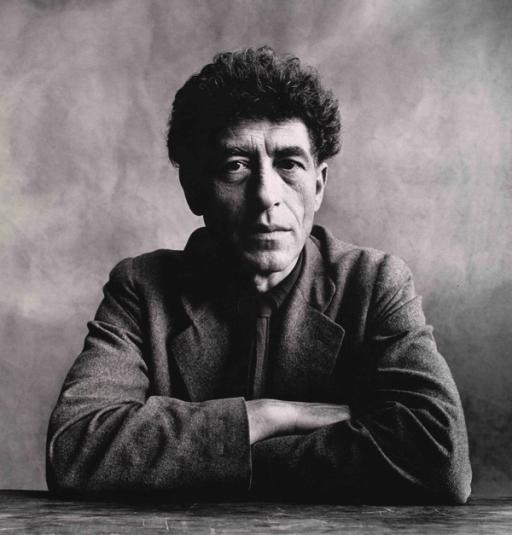
Alberto Giacometti
Swiss, 1901–1966 86 works onlineIn the winter of 1947, Alberto Giacometti wrote a letter to Pierre Matisse, a gallerist in New York who was organizing an exhibition of his works.
Learn more →
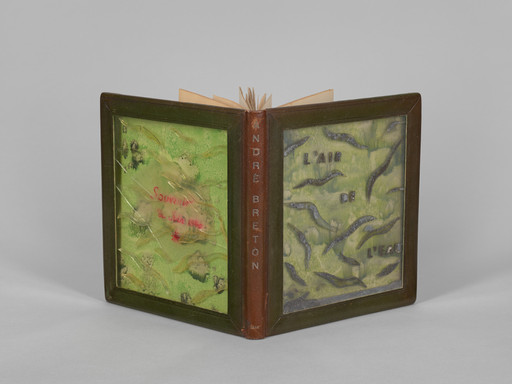

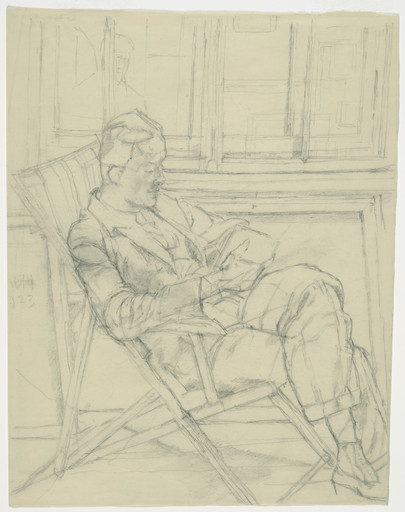
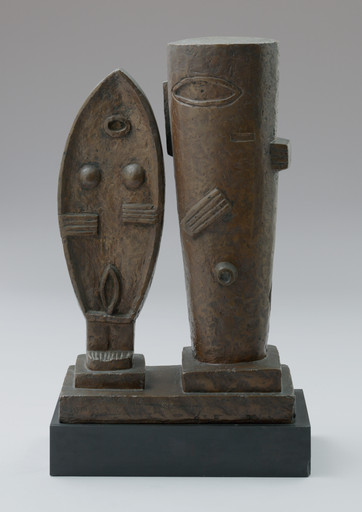
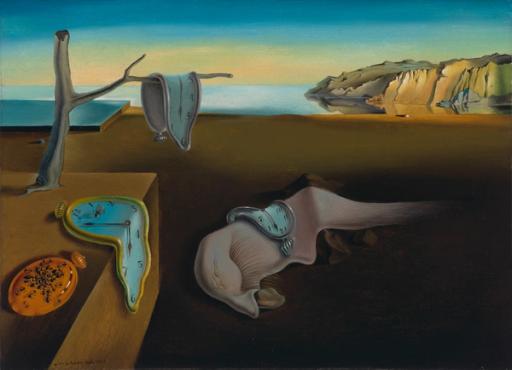
Surrealism
An artistic and literary movement led by French poet and writer André Breton from 1924 through World War II. Drawing on the psychoanalytic theories of Sigmund Freud, the Surrealists sought to overthrow what they perceived as the oppressive rationalism of modern society by accessing the sur réalisme (superior reality) of the subconscious.
Learn more →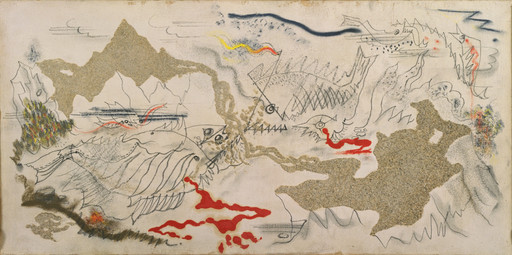
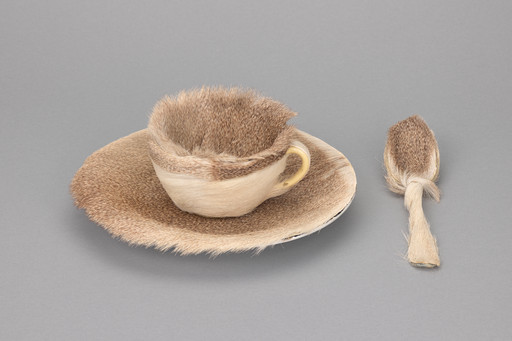
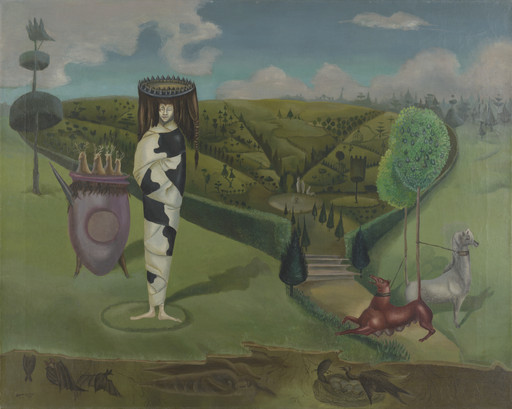
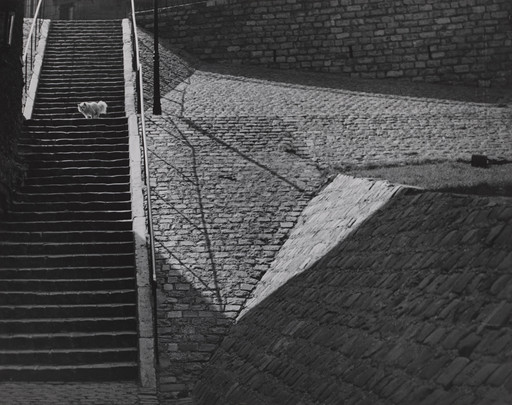
A Surreal Lens
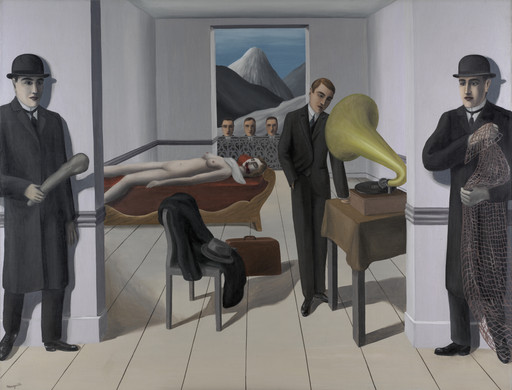
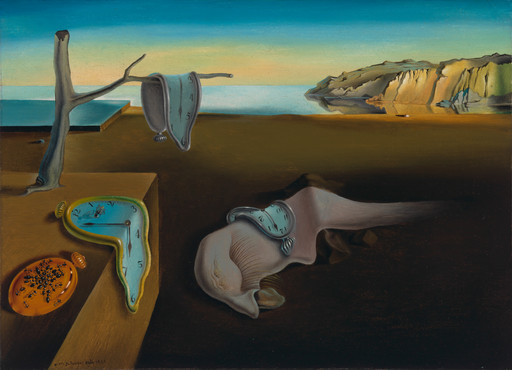
Gallery 517In 1924, André Breton published his Manifesto of Surrealism, which, guided by Sigmund Freud’s psychoanalytic theories, declared a radical break from the rationalism of modern society in favor of imagination, erotic desire, and unconscious thought.
Learn more →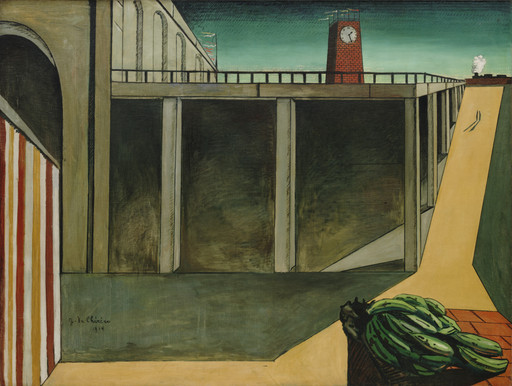
Audio
Audio from the playlist Collection 1880s–1940s
Audio from the playlist Verbal Descriptions
From MoMA Design Store


Installation views
We have identified this work in the following photos from our exhibition history.
Provenance Research Project
This work is included in the Provenance Research Project, which investigates the ownership history of works in MoMA's collection.
The artist
The Museum of Modern Art, New York. Purchased from the artist, 1936.
Provenance research is a work in progress, and is frequently updated with new information. If you have any questions or information to provide about the listed works, please email [email protected] or write to:
Provenance Research Project
The Museum of Modern Art
11 West 53 Street
New York, NY 10019
Licensing
Artwork or archival images
If you would like to reproduce an image of a work of art in MoMA's collection, or an image of a MoMA publication or archival material (including installation views, checklists, and press releases), please contact Art Resource (publication in North America) or Scala Archives (publication in all other geographic locations).
Audio and film clips
MoMA licenses archival audio and select out of copyright film clips from our film collection. At this time, MoMA produced video cannot be licensed by MoMA/Scala. All requests to license archival audio or out of copyright film clips should be addressed to Scala Archives at [email protected]. Motion picture film stills cannot be licensed by MoMA/Scala. For access to motion picture film stills for research purposes, please contact the Film Study Center at [email protected]. For more information about film loans and our Circulating Film and Video Library, please visit Circulating Film and Video Library.
Text from a publication or the archives
If you would like to reproduce text from a MoMA publication, please email [email protected]. If you would like to publish text from MoMA's archival materials, please fill out this permission form and send to [email protected].
Feedback
This record is a work in progress. If you have additional information or spotted an error, please fill out this feedback form.