Not on view
An artist who excelled in a variety of mediums, Alberto Giacometti stated that he had developed his mature style as a sculptor, in part, through the process of drawing. His best-known works are elongated bronze figures either standing or striding. Their isolation and often haunting qualities have been interpreted in Existential terms, most notably by the philosopher Jean-Paul Sartre. The figures in his signature paintings and drawings, rendered within dense webs of sketchy lines, are also enigmatic.
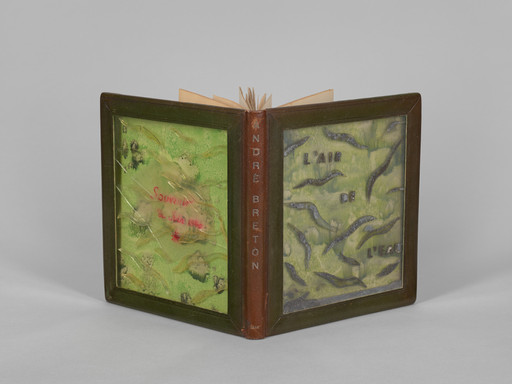
Giacometti created more than three hundred fifty prints, two-thirds of which appear in illustrated books and are collaborations with such friends as André Breton, Georges Bataille, and René Char. He worked in etching and lithography, mainly depicting people close to him or recording studio views of his own sculptures and paintings. His most active period as a printmaker coincided with his renewed focus on painting in the 1950s, when he received invitations from a variety of publishers, including Aimé Maeght of Paris, and Kornfeld and Klipstein of Bern.
His introduction to intaglio printmaking occurred in the early 1930s during a brief stay at Stanley William Hayter's Atelier 17 in Paris, an experimental workshop and celebrated meeting place for artists. The result was two highly distinctive and rare engravings related directly to his sculpture of the period. To make Cubist Head, Giacometti gouged sharp angles and parallel lines into a copperplate, creating in two dimensions a fractured and faceted face similar to that of his sculpture of the same title, issued in marble and in bronze in 1934. In the print Hands Holding a Void, Giacometti comments on another of his sculptures, here surrounding it in an atmospheric field of ink tone that reads as an isolating void, made even more eerie by the random markings left from pits and scratches on the copperplate.
an essay by Jennifer Roberts, in Deborah Wye, Artists and Prints: Masterworks from The Museum of Modern Art, New York: The Museum of Modern Art, 2004, p. 69.
Explore more
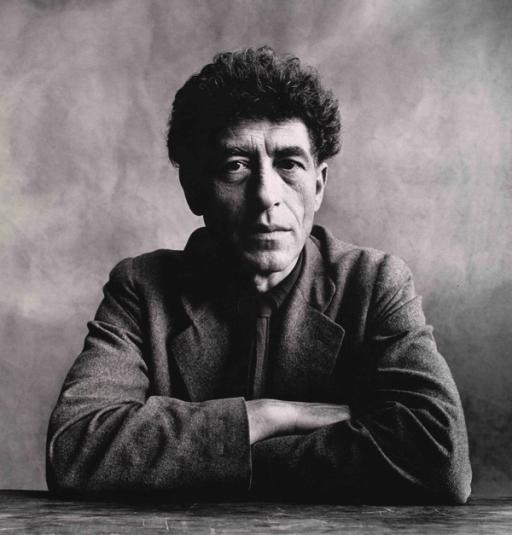
Alberto Giacometti
Swiss, 1901–1966 86 works onlineIn the winter of 1947, Alberto Giacometti wrote a letter to Pierre Matisse, a gallerist in New York who was organizing an exhibition of his works.
Learn more →

Engraving
An intaglio printmaking technique that creates a crisp, precise line that swells in the middle and tapers at the end.
Learn more →



From MoMA Design Store


Installation views
We have identified this work in the following photos from our exhibition history.
Licensing
Artwork or archival images
If you would like to reproduce an image of a work of art in MoMA's collection, or an image of a MoMA publication or archival material (including installation views, checklists, and press releases), please contact Art Resource (publication in North America) or Scala Archives (publication in all other geographic locations).
Audio and film clips
MoMA licenses archival audio and select out of copyright film clips from our film collection. At this time, MoMA produced video cannot be licensed by MoMA/Scala. All requests to license archival audio or out of copyright film clips should be addressed to Scala Archives at [email protected]. Motion picture film stills cannot be licensed by MoMA/Scala. For access to motion picture film stills for research purposes, please contact the Film Study Center at [email protected]. For more information about film loans and our Circulating Film and Video Library, please visit Circulating Film and Video Library.
Text from a publication or the archives
If you would like to reproduce text from a MoMA publication, please email [email protected]. If you would like to publish text from MoMA's archival materials, please fill out this permission form and send to [email protected].
Feedback
This record is a work in progress. If you have additional information or spotted an error, please fill out this feedback form.