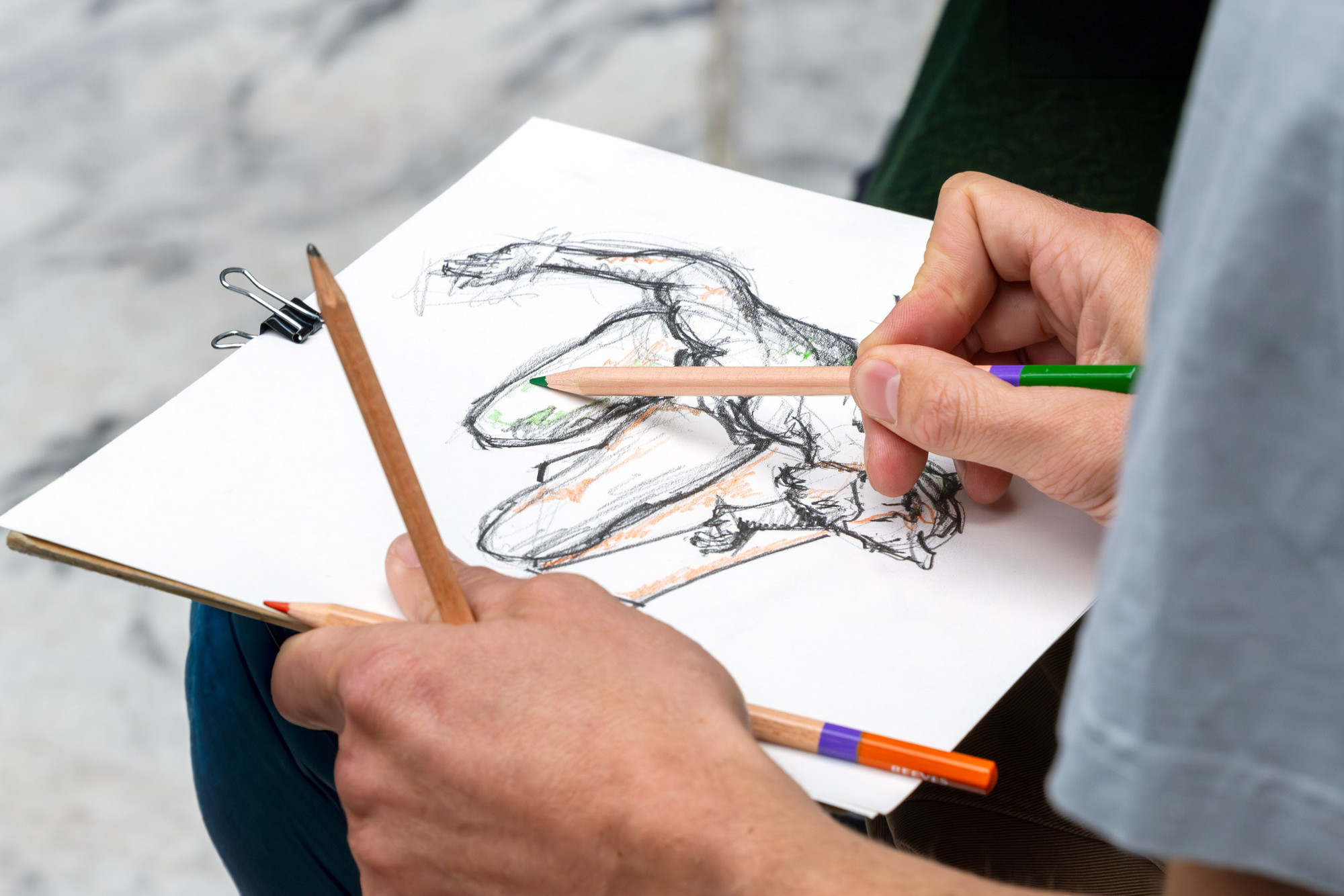
Inspired by our Drop-In Drawing and Writing Club programs, this itinerary invites you to find art on view that will help you create your own artwork.
Sculpture Garden 🌿⛲

Floor 1, Sculpture Garden
Since its opening in 1939, the Abby Aldrich Rockefeller Sculpture Garden has served as a respite from the frenzy of Midtown Manhattan. It was established as an outdoor gallery for changing installations that unite nature, architecture, and art.
Perspective 👀
Find a sculpture and draw it from an unusual angle. Experiment with your viewpoint—kneel, stand on your tiptoes, or sit down to see how your perspective changes. Discover how changing your position can transform what you see and inspire some fun drawings.
Sound 👂🐦🚕
Sit quietly and take in the sounds around you. This could be birds chirping, leaves rustling, cars honking, or people chatting. Create a visual representation of the sounds you hear using lines, shapes, and words. Try drawing with your eyes closed to heighten the sounds around you. How does the rhythm and tone of the sounds influence the mood of your drawing?
Nature 🌳🗿
Draw a sculpture interacting with natural elements—flowers, trees, water—in the Sculpture Garden. Pay attention to whether their colors and shapes complement or contrast with the sculpture.
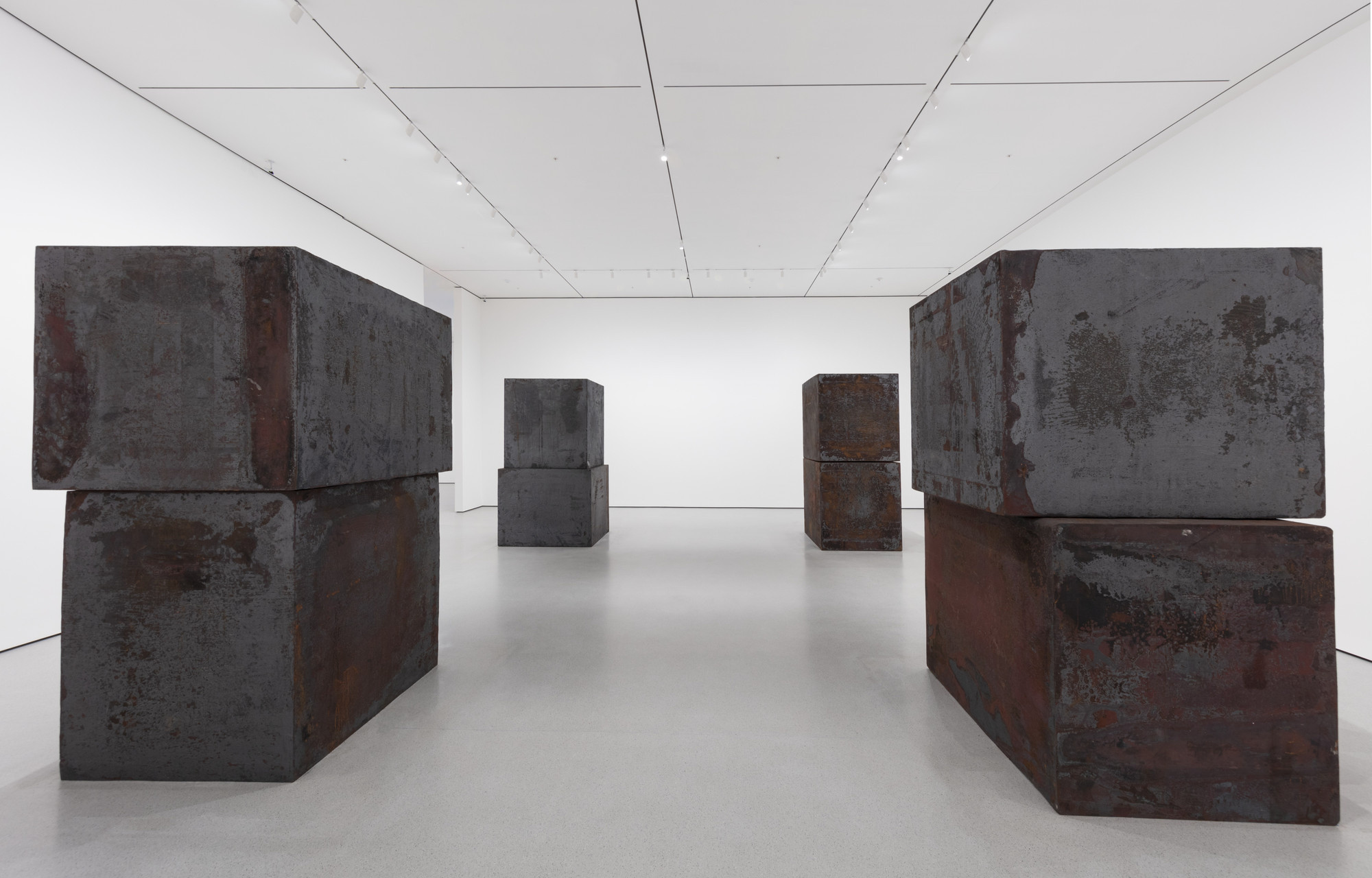
Richard Serra’s Equal 📦
Floor 2, Gallery 210
Drawing weight ✍️
Equal consists of eight forged-steel boxes stacked in pairs. Draw the artwork as you see it and try to convey the weight and mass of these structures. Make as many sketches as you can and use these techniques to help guide you:
—Use the weight of your pencil
—Use the heaviness of your hand
—Use the thickness of the pencil line
Textures✏️
Notice the varied textures on the surfaces of these sculptures. Use different techniques to draw what you notice, including hatching (close parallel lines) or cross-hatching (intersecting parallel lines), quick scribbles, and stippling (small dots to create a difference in tone). You’ll start to see your cube drawing come to life.
Scale 📐
Experiment with scale by adding elements around the cube that emphasize its size and mass. You could sketch someone standing next to the sculpture. Play with perspective by drawing the sculptures in the back of the gallery smaller than the sculptures closest to you. This will add depth and dimension to your page.
Joel Shapiro’s ARK
Floor 4, Gallery 400
Falling apart, coming together
Shapiro’s sculptures often resemble objects or figures breaking apart and reforming. Divide a piece of paper into three parts (either by folding or by drawing lines).
- In the first part, sketch the entire artwork.
- In the next part, draw the sculpture broken into separate shapes.
- In the last part, redraw the shapes into a new arrangement.
One Thing After Another 🎨
Floor 4, Gallery 413
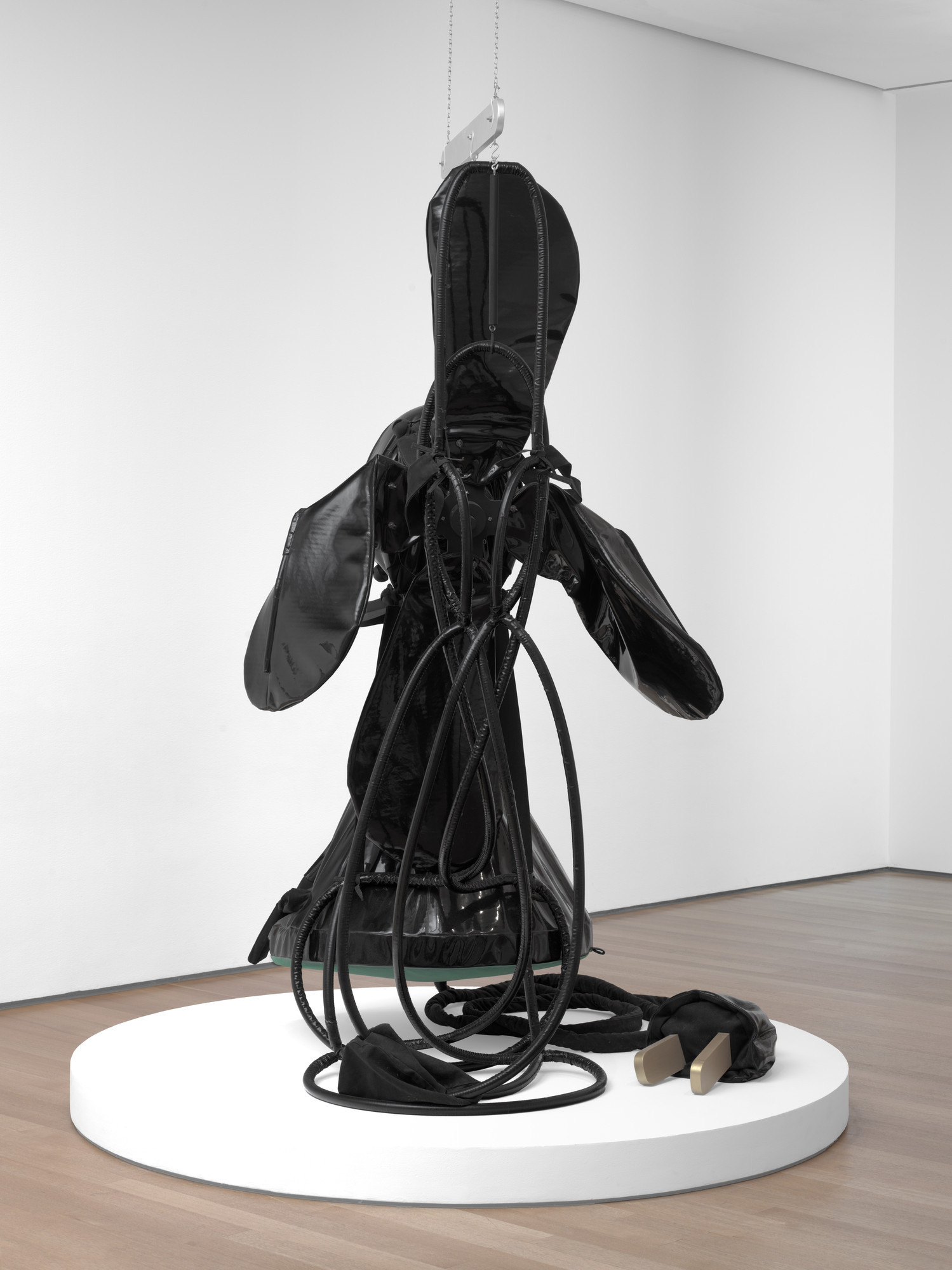
Size and scale inspired by Claes Oldenburg’s Giant Soft Fan🔌
Look closely at Claes Oldenburg’s Giant Soft Fan and notice its massive scale. Draw the sculpture, focusing on its size and texture. Try adding people or other objects to convey its towering presence.
Figure drawings inspired by Yvonne Rainer’s Trio A
Trio A is a dance made of continuous, everyday movements like walking, reaching, turning, or bending. Create a drawing of a figure at some point in motion. Start with a simple pose and repeat the figure across the page in different positions. The figures may overlap, appear in sequence, or spread across the page. Your drawing does not need to be realistic—think about flow, rhythm, and sequence.
Placement and imagination inspired by André Cadere’s Round Bar of Wood
André Cadere’s handcrafted sculptures were designed to be portable. Cadere carried them through city streets, leaned them against walls in galleries, and moved with them through public space as a form of performance. Draw the Round Bar of Wood as you see it here. Then imagine a setting where Cadere might have placed it and draw that setting around the object.
Body Constructs 🦵💪
Floor 4, Gallery 417
What a body needs 🧠
Explore the gallery and reflect on what your body needs today by writing a list.
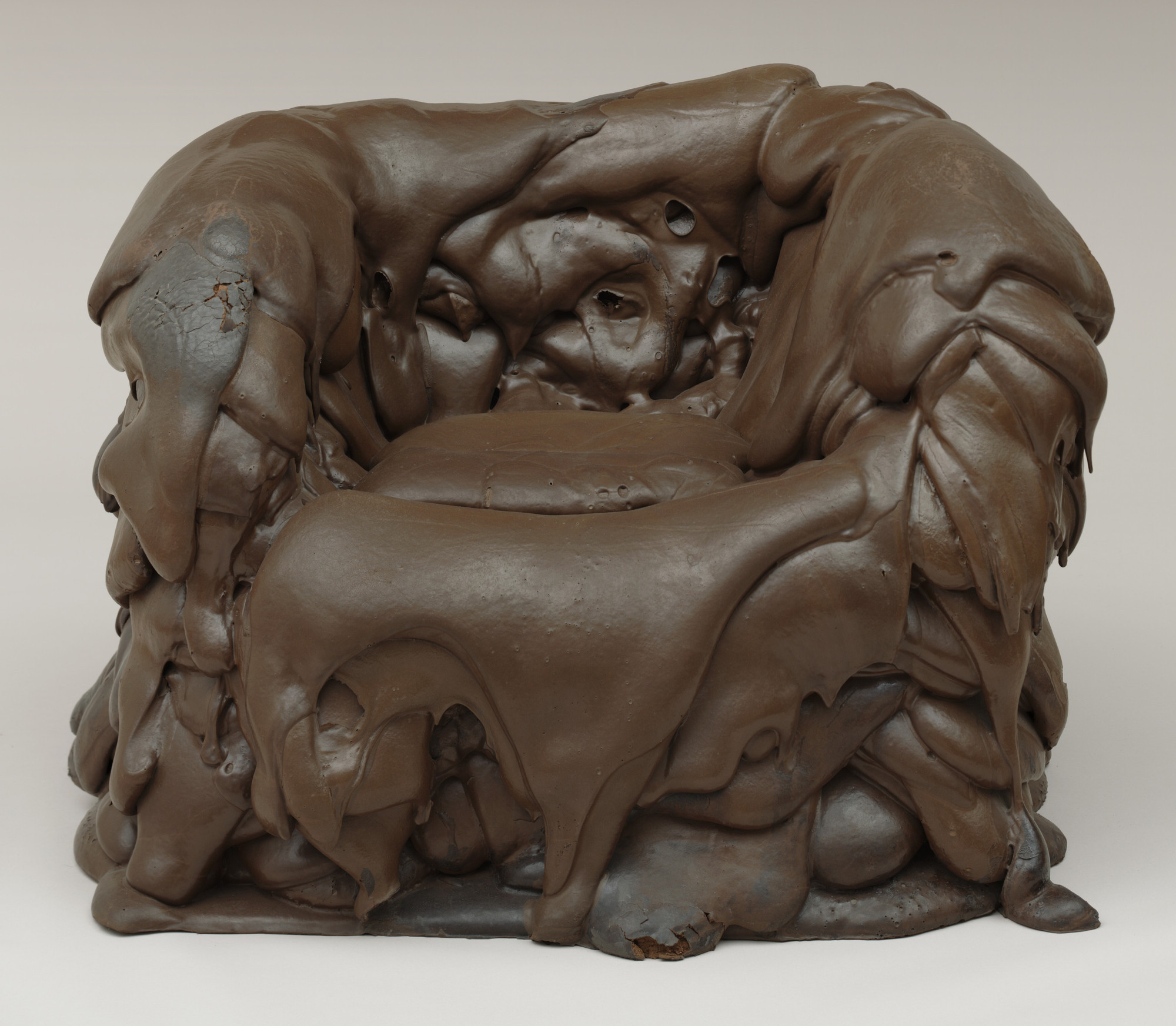
Gunnar Aagard Andersen’s Armchair and Kazuo Kawazaki’s Carna Folding Wheelchair 🪑🦽
Looking at the list you made, think about some of the ways a chair or seat might represent your idea of “what a body needs.” Make a sketch of your imagined chair.
This could describe the physical qualities of a chair design, or its style, its materials, or how it might feel.
Sophie Calle’s The Sleepers
Floor 4, Gallery 419
Photographic narratives
Pick one photograph you are curious about. Why did you choose this photograph? What does it evoke for you? What does it remind you of? Describe the photograph. Take two minutes to write a short story based on this photograph. Who is this person? What happened before they came to this bed? What might happen after they leave?
Join us every Friday night for Drop-In Drawing to explore artworks through drawing in a relaxed all-ages environment. In addition to self-guided drawing prompts, each session features artist-led demos throughout the evening. Materials and seating are provided. Participation is open to all, with no experience, ability, or reservations required. Drawing prompts will be available in English and Spanish.
Writing Club is offered on a monthly basis and offers opportunities for visitors to experience art through writing. We offer a calm, supportive, and welcoming environment for anyone interested in writing in response to art.
Inspired to try more at home? Watch our In the Studio videos for step-by-step instructions on how to work with clay, watercolor, collage, and other materials and methods. Share your work with us! We want to see the incredible work you make while traversing MoMA’s galleries with these prompts. Email your drawings to [email protected].