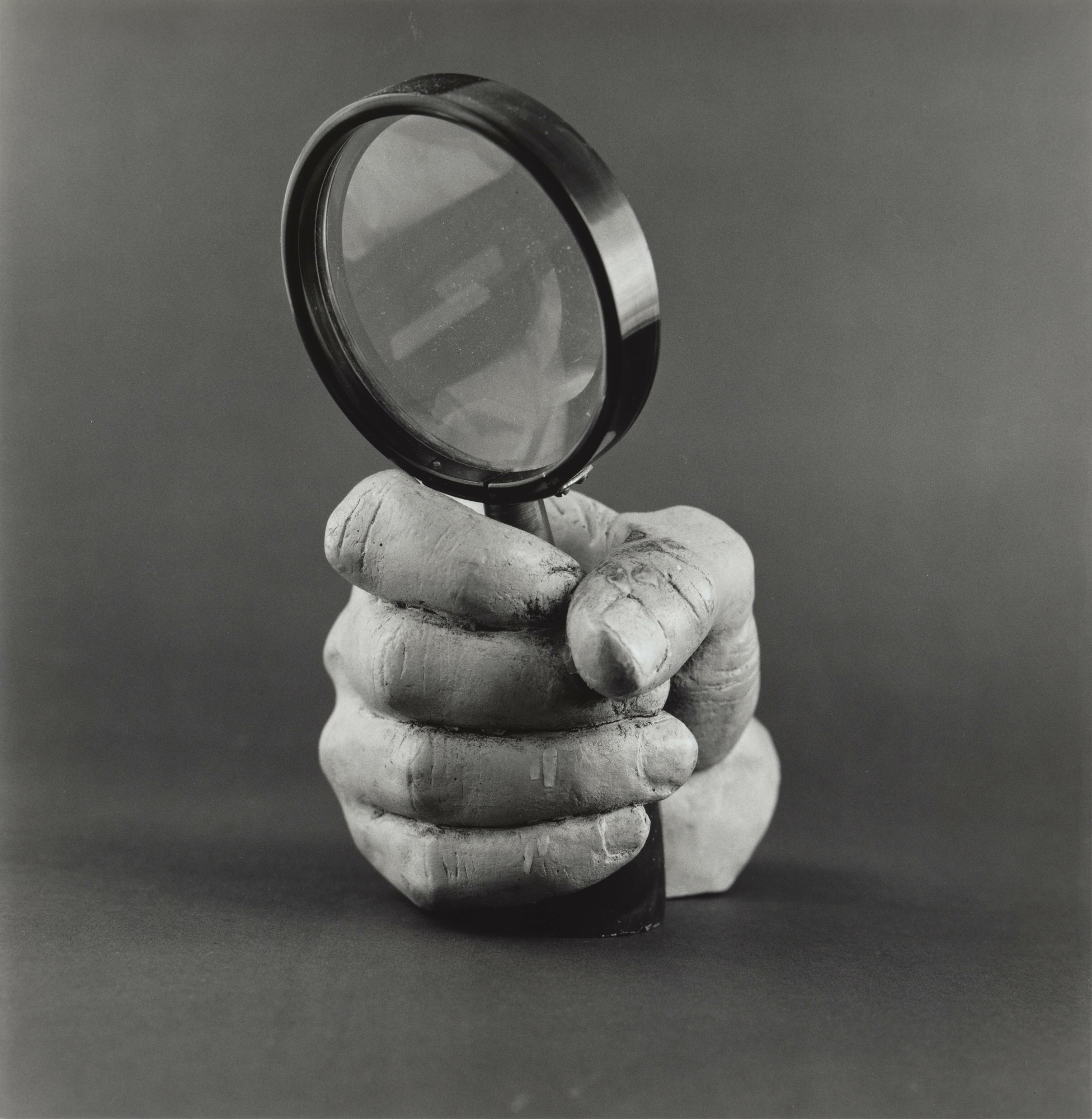
In an effort to engage in an in-depth study of MoMA’s Latin American holdings, the Cisneros Institute is initiating an annual seminar series, each iteration of which will approach the collection from a distinct and focused critical position.
Soto: Flickering Modernity
.jpg)
Oct 15, 2025
Soto: Flickering Modernity presented new insights into the work of Venezuelan kinetic artist Jesús Rafael Soto, positioning it within contemporary discussions about virtuality. Throughout his career, Soto experimented with optical illusions—ranging from the vibratory effects and movement of color and form in his early multilayered compositions, to the optical mirages and virtual volumes found in his large-scale sculptures. His work reflects the era’s developmentalist optimism and the captivating allure of technological modernity.
The seminar featured curators Dan Cameron, Paola Santoscoy, and Michelle Kuo, who examined Soto’s oeuvre and explored the sensory dimensions of his visual experiments. The speakers discussed Pre-penetrable (1957), and Double Transparency (1956), among other works. Key questions for discussion included: How might Soto’s work be reinterpreted in light of recent developments in virtual reality? What sensory possibilities—and ethical dilemmas—emerge from an art form grounded in illusion?
The session was moderated by art historian Sean Nesselrode Moncada.
Speakers
Dan Cameron has been a pioneer in presenting Latin American art since his historic exhibition Cocido y Crudo at the Museo Reina Sofia in Madrid (1994). Since then, he has organized survey exhibitions of the work of Cildo Meireles, Doris Salcedo, Jose Antonio Hernández-Diez, and Eugenio Dittborn for the New Museum; Luis Criz Azaceta for the CAC New Orleans; and Leandro Erlich for the Pérez Museum in Miami. He also organized Impermanencia, the 2016 Bienal de Cuenca in Ecuador, and Kinesthesia: Latin-American Kinetic Art 1954–1969 for the Palm Springs Art Museum (2017), and he is the founder of Prospect New Orleans, for which he organized the first two editions in 2008 and 2011. Cameron has written numerous museum catalogue texts on artists such as Alexandre Arrechea, Rosângela Rennó, Flavio Cerqueira, Meyer Vaisman, Jorge Tacla, Rigoberto Torres, Arturo Duclos, Pepón Osorio, Vik Muniz, Arturo Vega, Sigredo Chacón, Pedro Reyes, Gianfranco Foschino, Raul Cordero, Luis Frangella, and Dario Escobar. He is currently developing a retrospective of the Mexican artist Paulo Friedeberg, and he is cofounder and serves as executive director of Capilla Azul, an independent exhibition space on the Chilean island of Chiloé.
Paola Santos Coy is a curator and researcher based in Mexico City. From 2013 to 2023 she was director of Museo Experimental El Eco at UNAM, where she developed a curatorial program focused on spatial practices, site-specific commissions, and the intersection of modern legacy and contemporary art. Her prior roles include associate curator at Museo Tamayo and curator at Museo de Arte Carrillo Gil. She holds an MA in visual and critical studies from California College of the Arts and a BA in art history from Universidad Iberoamericana. Her independent curatorial projects include The Nature of Things (Biennial of the Americas, Denver), adjunct curator to José Roca’s artist direction of Ensayos de Geopoética (8th Bienal do Mercosul), Jesús Rafael Soto: The Instability of the Real, together with Tatiana Cuevas (Galería RGR), and estar-los-unos-con-los-otros, which she co-directed with Marcio Harum as part of the SITAC (International Symposium on Contemporary Art Theory) in Mexico City. Her practice often engages with questions of experimentation, architecture, and the social dimension of artistic production.
Michelle Kuo was appointed chief curator at large and publisher at MoMA in 2024. She leads innovative, interdisciplinary work on temporary and collection exhibitions, digital initiatives, research and scholarship, and acquisitions for the Museum’s collection, and she directs MoMA’s ambitious global publications program. Kuo joined MoMA in 2018 as the Marlene Hess Curator of Painting and Sculpture. Her exhibitions and collaborations include Jack Whitten: The Messenger (2025), Otobong Nkanga: Cadence (2024–25), New Order: Art and Technology in the Twenty-First Century (2019), Artist’s Choice: Amy Sillman—The Shape of Shape (2020), Amanda Williams: Embodied Sensations (2021), Refik Anadol: Unsupervised (2022), Signals: How Video Transformed the World (2023), Artist’s Choice: Grace Wales Bonner—Spirit Movers (2024), and Montien Boonma: House of Hope (2024). She has written and lectured widely; her publications include Sensing the Future: Experiments in Art and Technology (2024), More than Real: Art in the Digital Age (2018), and numerous essays and articles on the work of Robert Rauschenberg, Fluxus, Jack Whitten, Anicka Yi, and others. Kuo has taught at Harvard and Yale universities and serves on the advisory board of the Museum Brandhorst, Munich, and the journal October. From 2010 to 2017, she was editor-in-chief of Artforum International. Kuo earned her PhD in the history of art and architecture from Harvard University and her BA from Stanford University. From 2005 to 2007 she was the Wyeth Fellow at the Center for Advanced Study in the Visual Arts at the National Gallery of Art.
Moderator
Sean Nesselrode Moncada is an associate professor of theory and history of art and design at the Rhode Island School of Design. He is the author of Refined Material: Petroculture and Modernity in Venezuela (2023), which received the ALAA–Arvey Foundation Book Award; the Fernando Coronil Prize for Best Book on Venezuela; and the Visual Culture Studies Book Award, Latin American Studies Association. His writings and reviews have appeared in journals including Architectural Theory Review, Latin American and Latinx Visual Culture, and Caiana, and in the exhibition catalogues El Dorado: A Reader (2024) and Gego: Measuring Infinity (2023). His current book project is titled Maruja Rolando: On-Site and is supported by an Andy Warhol Foundation Arts Writers Grant.
Hands On: Artisanal Attitudes in Latin American Art
May 1, 2024
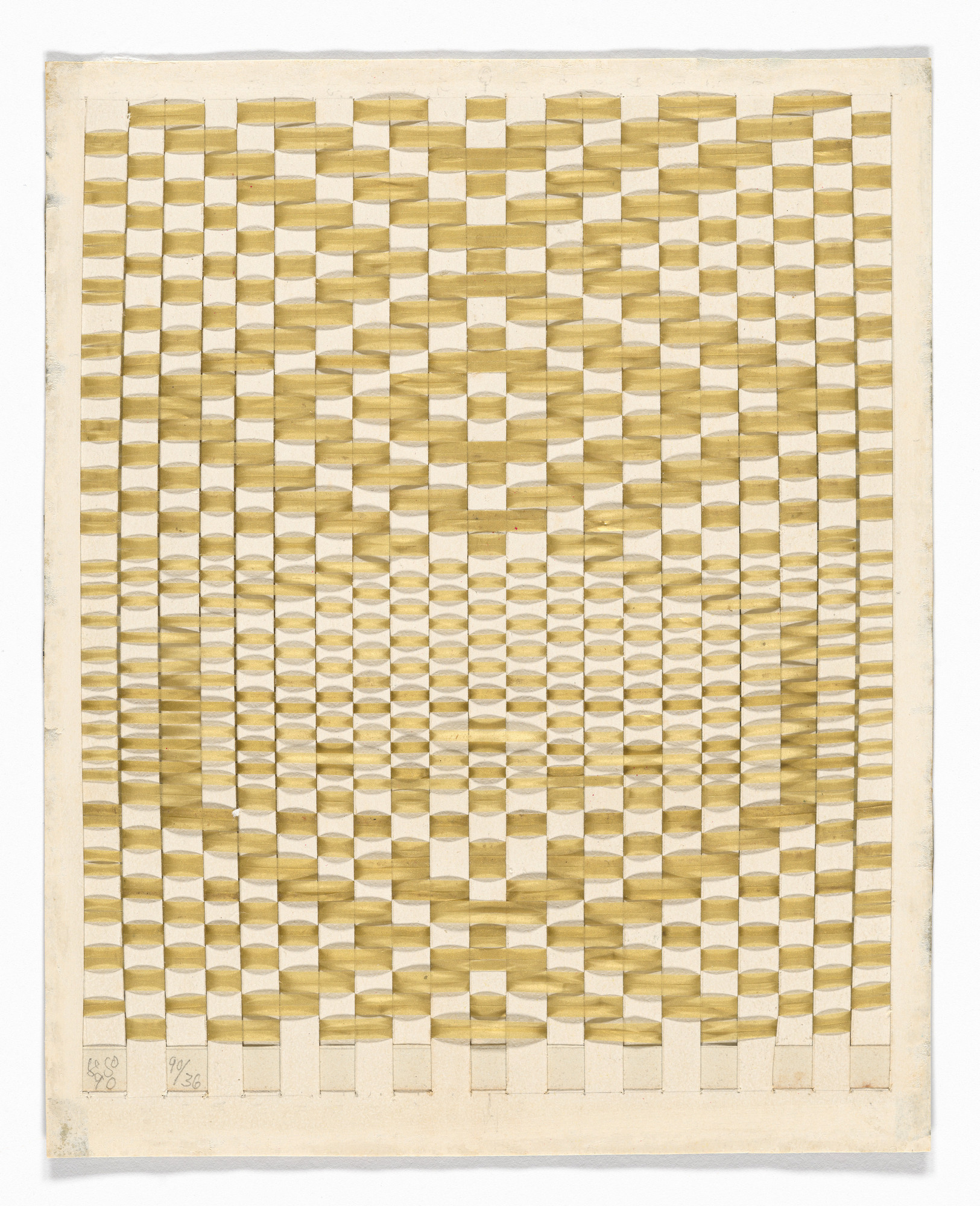
Hands On explored the inspiration some Latin American artists drew from non-academic trades and crafts. The seminar closely examined three works from the collection: Articulated Mobile Sculpture (1948) by Gyula Kosice (Fernando Fallik, Argentine, 1924–2016), Tapestry no. 6 (1958) by Yente (Eugenia Crenovich, Argentine, 1905–1990), and Weaving 90/36, 1990 (1990) by Gego (Gertrud Goldschmidt, Venezuelan, 1912–1994).
The panel brought together scholars María Amalia García, Santiago Villanueva, and Jorge F. Rivas to examine these works while exploring the relationships (whether direct or imagined, continuous or fractured) of modern art with trades usually associated with female labor and the working classes. By centering works in which sculpture intersects with leatherworking tools, painting with embroidery, or drawing with handweaving, this session seek to highlight the nuanced ways in which artists have troubled the boundaries between high art and non-academic practices.
While Latin American art history has emphasized the sensory and conceptual innovations that artists developed in the latter half of the 20th century, the integration of artisanal know-how represents a vital yet understudied aspect of the art from the region. As Jorge F. Rivas has pointed out, an “artisanal attitude” permeated the creative endeavors of modern artists in the postwar period. In addition to highlighting the significance of craftsmanship within MoMA’s Latin American holdings, this session also prompted reflection on what is at stake when artists engage with cultural practices that have been excluded from avant-garde narratives due to their associations with popular culture, working-class trades, femininity, or tradition.
The discussion was moderated by Josefina de la Maza and conducted in Spanish with live English subtitles.
Speakers
María Amalia García is chief curator of Malba, the Buenos Aires Museum of Latin American Art. She holds doctoral and bachelor’s degrees in art history from the Faculty of Philosophy and Letters of the University of Buenos Aires (FFyL-UBA). She teaches courses in the program of Arts (FFyL-UBA) and is an independent researcher at CONICET (currently on leave). Among her books are El arte abstracto. Intercambios culturales entre Argentina y Brasil (2011), translated into English as Abstract Crossings: Cultural Exchange between Argentina and Brazil (2019). In 2019, she was a consulting curator of the exhibition Sur moderno: Journeys of Abstraction—The Patricia Phelps de Cisneros Gift, organized by Inés Katzenstein at The Museum of Modern Art, New York, and in 2021 she co-curated, together with Marcelo E. Pacheco and Javier Villa, Alberto Greco ¡Qué grande sos! at the Buenos Aires Museo de Arte Moderno. For Malba, she organized Yente Del Prete: Vida venturosa (2022) and Tercer ojo: Colección Costantini (2023).
Jorge F. Rivas Pérez, PhD, is the Frederick and Jan Mayer Curator of Latin American Art and department head at the Denver Art Museum. He previously served as the curator of Spanish Colonial art at the Colección Patricia Phelps de Cisneros in Venezuela, and as the associate curator of Latin American art at the Los Angeles County Museum of Art. Since joining the Denver Art Museum in 2016, Rivas Pérez has focused on reimagining the Latin American art department and reinstalling the permanent collection galleries. His recent curatorial projects at the museum include The Light Show, ReVisión: Art in the Americas, The Skeletal World of José Guadalupe Posada, and the forthcoming Have a Seat: Mexican Chair Design Today. He is the Latin American art editor and organizer of the Mayer Center Symposium program and publications and has contributed essays to publications on a wide range of Latin American art, design, decorative arts, architecture, and material culture topics. He was born in Caracas, Venezuela, and received a degree in architecture from the Universidad Central de Venezuela in Caracas, an MA from the University of Florence, Italy, and an MA and PhD from the Bard Graduate Center in New York City.
Santiago Villanueva is an artist and curator. He was part of the Nuevo Museo Energía de Arte Contemporáneo (2011–18). Between 2016 and 2017, he was the coordinator of education at the Buenos Aires Museo de Arte Moderno, and during 2021 he was the curator of public programs and education at the Malba (Buenos Aires Museum of Latin American Art). He has curated numerous exhibitions, among them Huyamos a Buenos Aires nadie podrá encontrarnos. Roberto Jacoby (Mexico City, Museo Universitario del Chopo, 2023), Todo es mucho (Buenos Aires, Universidad Torcuato Di Tella, 2022), Terapia (Buenos Aires, Museo de Arte Latinoamericano de Buenos Aires, 2021), and Las relaciones mentales. Eduardo Costa (Mexico City, Museo Tamayo, 2017). He is the author of the book El surrealismo rosa de hoy (2021).
Respondent and moderator
Josefina de la Maza is an art historian. She is an assistant professor in the History Department of the Faculty of Liberal Arts of the Universidad Adolfo Ibáñez in Santiago, Chile. Her academic interests center on the development of 19th- and 20th-century art in Chile and Latin America, with particular emphasis on the founding of museums and academies of fine art, dialogues between different pictorial genres, and the links between art and the applied arts. She is currently studying textile art in Chile from the first half of the 20th century and the connections between the arts, popular arts, crafts, and trades. She curated the exhibition Tejido social: arte textil y compromiso político en el Museo de la Solidaridad (Santiago, 2019) and has developed research projects on the Chilean artist and artisan Paulina Brugnoli, the weavers of Isla Negra, and political arpilleras. She has received grants from the Fundación Coimbra, the Social Sciences Research Council, the Fulbright Foundation, FONDART, and ANID.
July 18, 2023
The canonical figures of Latin American landscape as we know them today were historically constructed through images created by European explorers, scientists, and photographers who traveled in order to learn about the “New World.” This history of the stereotypical construction of landscapes is reconsidered by artists Elena Damiani, Gilda Mantilla and Raimond Chaves, and José Alejandro Restrepo through travel, but above all from the study of photographs, engravings, and narrations from historical archives. Focusing on these materials, their works aim to propose new strategies and experiences of landscape: a critical use of documentary sources together with new modes of territorial exploration.
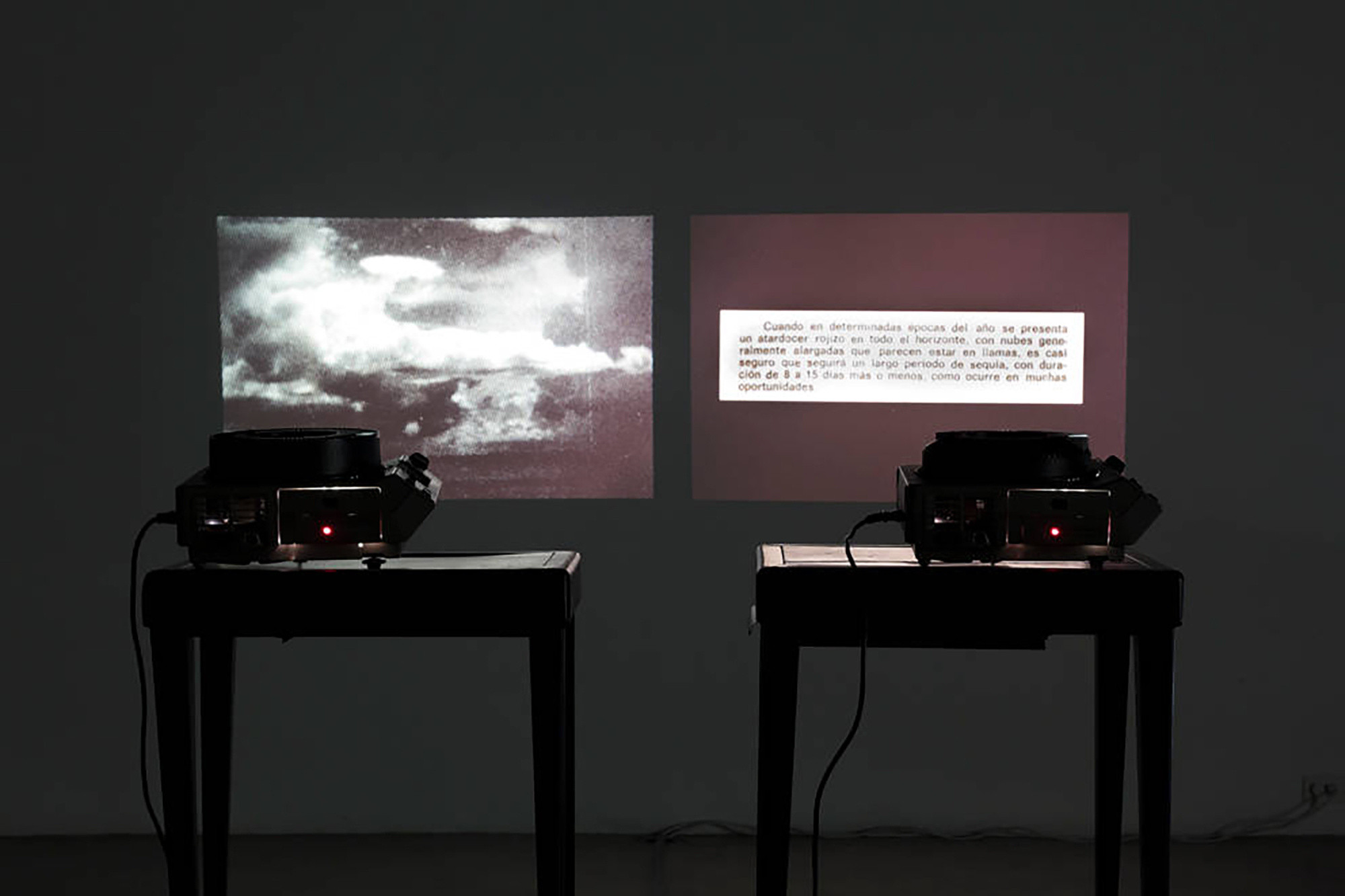
In this online seminar, three scholar/curators will analyze the complexity of three major works in the exhibition Chosen Memories: Contemporary Latin American Art from the Patricia Phelps de Cisneros Gift and Beyond: Gilda Mantilla and Raimond Chaves’s double slide projection Secrets of the Amazon (2011), José Alejandro Restrepo’s video installation El paso del Quindío I (1992), and Elena Damiani’s sculpture Fading Field No. 1 (2012). Sofía Hernández Chong Cuy, Jens Andermann, and Florencia Portocarrero will analyze the aforementioned works by delving into the following questions: Is it possible to reverse the romantic and exoticizing gazes on South America through the critical use of precisely those materials that helped create these conceptions? What is the role of the artist’s corporeal experience of territories in works otherwise based on the use of existing images and narratives? And, related to this topic, what implications does exploratory travel have for present-day artists? And, finally, have these works been contributing to a kind of contemporary “anti-landscape art,” according to the definition of the artistic duo of Gilda Mantilla and Raimond Chaves?
Writer Graciela Speranza will act as respondent.
As part of the series of online seminars devoted to the study of the Cisneros donation that the Institute has been holding since 2021, this session will attempt to throw light on essential questions for thinking about new ways of relating to history and the land.
Speakers
Jens Andermann is professor of Spanish and Portuguese at New York University and an editor of the Journal of Latin American Cultural Studies. His most recent books are Jardín (2023), Entranced Earth: Art, Extractivism, and the End of Landscape (2023; Spanish ed. 2018), Handbook of Latin American Environmental Aesthetics (with Gabriel Giorgi and Victoria Saramago, 2023), and Natura: Environmental Aesthetics After Landscape (with Lisa Blackmore and Dayron Carrillo Morell, 2018). He writes about Latin American and Luso-African art, film, and literature created between the 19th and 21st centuries.
| Since 2018, Sofía Hernández Chong Cuy has been director at Kunstinstituut Melly in Rotterdam, the institution formerly known as Witte de With Center for Contemporary Art. Previously she had a seven-year tenure as the curator of contemporary art at Colección Patricia Phelps de Cisneros. Over the past two decades, she has worked at various other institutions and has guest-curated numerous projects internationally, including exhibitions for the Bronx Museum of the Arts, Kadist Art Foundation in Paris, and the Center for Contemporary Art in Vilnius, as well as the 9a Bienal do Mercosul | Porto Alegre in Brazil. |
Florencia Portocarrero is an interdependent curator. Within and outside of institutions, her cultural practice intertwines writing, lecturing, teaching, and the organization of both exhibitions and public programs. Her research interests are focused on how to rewrite art history from a feminist perspective and the questioning of hegemonic forms of knowledge. She has participated in several international conferences and her writings on art and culture appear regularly in specialized magazines and publications. In Lima, she has worked as a public program curator at Proyecto AMIL (2015–19) and was a curatorial advisor of the Museo de Arte de Lima–MALI Contemporary Art Acquisitions Committee (2018–20). Since 2014 she has been co-director of Bisagra, an art collective in which she has worked collaboratively with artists and professionals from different fields and backgrounds to pursue politically engaged and socially sensitive artistic projects.
Moderator
Graciela Speranza is an essayist, fiction writer, and screenwriter. She received her doctorate in literature from the University of Buenos Aires, where she taught Argentine literature. Since 2009, she has been a professor in the Art Department at the Torcuato Di Tella University. Among other books, she has published the nonfiction studies Manuel Puig: Después del fin de la literatura, Fuera de campo: Literatura y arte argentinos después de Duchamp, Atlas portátil de América Latina (a finalist for the Premio Anagrama de Ensayo), Cronografías: Arte y ficciones de un tiempo sin tiempo, Lo que no vemos, lo que el arte ve, and two novels, Oficios ingleses and En el aire. In 2002 she received a Guggenheim grant, and in 2012 she edited, with Rita Eder and Dawn Ades, an anthology published by the Getty Research Institute, Surrealism in Latin America: Vivísimo muerto. In 2014 she was the Tinker Visiting Professor at Columbia University, and in 2019 she was a visiting professor at Cornell University. As a cultural critic, she has contributed to Crisis, Babel, Página 12, Clarín, La Nación, and the Spanish daily El País. Since 2003, she has co-edited, with Marcelo Cohen, the journal of arts and letters Otra parte.
This event accompanies Chosen Memories: Contemporary Latin American Art from the Patricia Phelps de Cisneros Gift and Beyond.
September 14, 2022
In an effort to engage in an in-depth study of MoMA’s Latin American holdings, the Cisneros Institute holds an annual seminar. Each year, we approach the collection from a distinct and focused critical position.
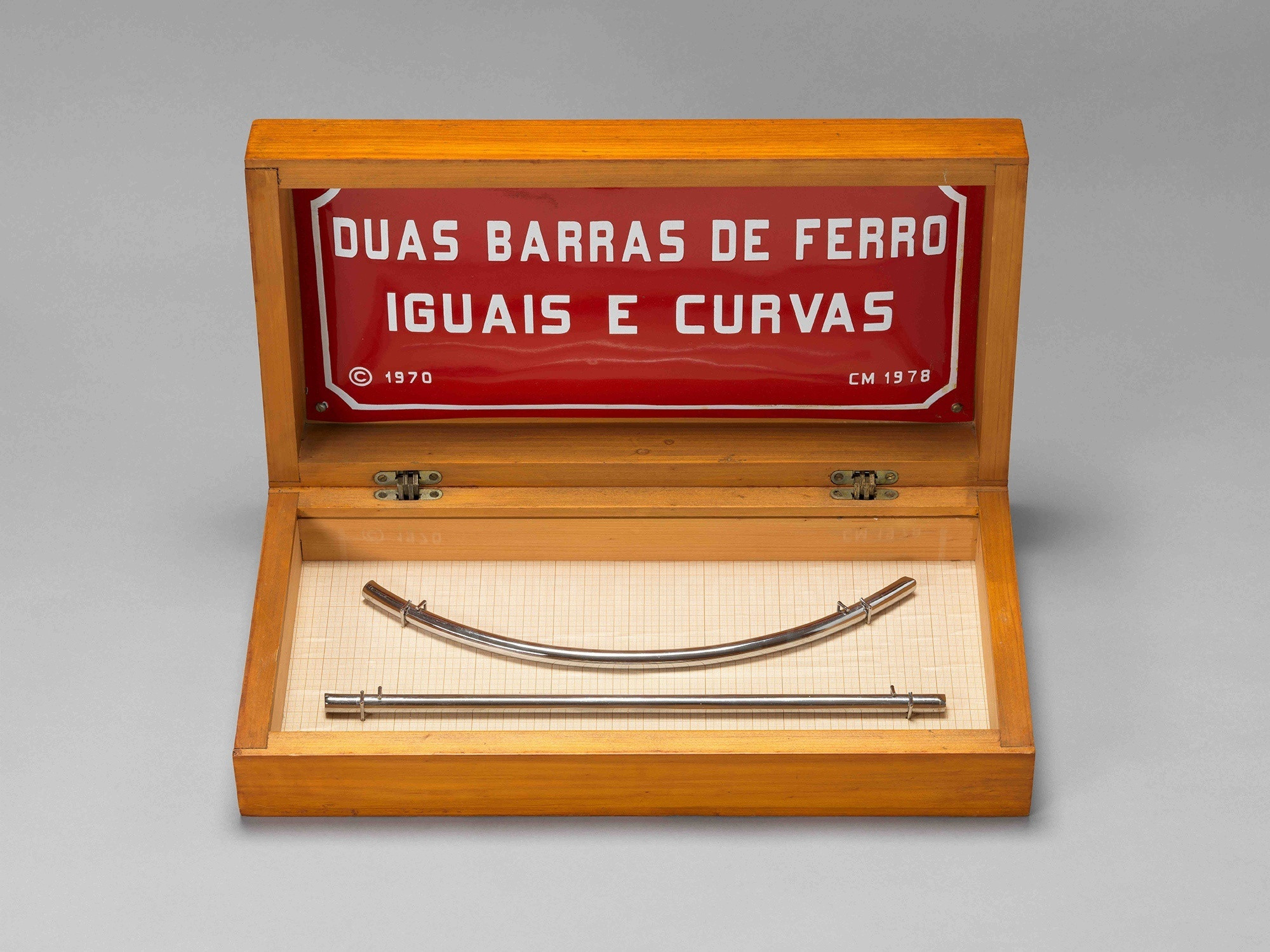
This year’s seminar, Ambivalent Relations, explores the relationship between Marcel Duchamp and key figures of Conceptualism in Latin America by closely examining three works in the collection produced between 1967 and 1978: To Be Curved with the Eyes (1970/78), by Cildo Meireles, Haute Couture (1967–68), by Claudio Perna, and Interrogations sur la Femme (Interrogations about Woman) (1978), by Lea Lublin.
The panel will bring together scholars Sérgio B. Martins, Sean Nesselrode Moncada, Andrea Giunta, and Kaira M. Cabañas to study how these works generate new understandings of Latin American artists’ myriad and productive responses to Duchamp. As is well known, Duchamp spent nine months in Buenos Aires in 1918, during which time he reconceived of his practice of making Readymades as a trans-Atlantic endeavor. It is also well known that, although Duchamp had no contact with local artists during his stay, decades later his work became a touchstone for a select number of Latin American artists experimenting with Conceptualism. And yet the specific nature of his reception in the region requires further study. This panel will explore a number of ways in which artists in Latin America encountered and responded to Duchamp’s work and ideas by focusing on individual artists and objects. It will also, in the process, call into question the very authority of his legacy in the region.
Conceived by Harper Montgomery with Kaira M. Cabañas as respondent, the panel will consider the following questions: How can we trace the nature of Latin American artists’ encounters with Duchamp? In addition to direct encounters with artworks, how can we account for the roles that rumor, reproductions in the art press, transmission through the work of other artists, and other conduits may have played? What were artists’ responses to Duchamp and how did these responses continue, redirect, or reject his proposals? Considering Duchamp’s role in charting histories of avant-gardism, how do Latin American artists’ responses to and reconfigurations of Duchamp shift the role his work has played in art history? How is our understanding of Conceptualism adjusted by Latin American artists’ uses of Duchamp? And, finally, should Duchamp be struck from the historical record entirely?
Speakers
Andrea Giunta is a writer and curator, principal researcher at CONICET, Argentina, and a professor at the Universidad de Buenos Aires. She is the former cofounding director of CLAVIS, Center for Latin American Visual Studies, at the University of Texas, where she was the Chair in Latin American Art History and Criticism. She is the author of several books on Latin American art, including Avant-Garde, Internationalism and Politics: Argentine Art in the Sixties (2007); The Political Body: Stories on Art, Feminism, and Emancipation in Latin America (forthcoming in 2023); Rethinking Everything (2021), Contra el canon. Arte contemporáneo en un mundo sin centro (2020); and Feminismo y arte latinoamericano: Historias de artistas que emanciparon el cuerpo (2018). She was curator of León Ferrari Retrospective (Buenos Aires, CCR, 2004, Pinacoteca de São Paulo, 2006); and co-curator of Verboamérica (Buenos Aires, Museo de Arte Latinoamericano, MALBA, 2016) and Radical Women: Latin American Art, 1960–1985 (Hammer Museum, LA; Brooklyn Museum, NY; Pinacoteca de São Paulo, 2017–18). In 2020 she was chief curator of the Bienal 12 Mercosul, Feminine(s): Visualities, Actions, Affects (Porto Alegre, Brazil).
Sérgio B. Martins teaches art history at PUC-Rio and was a CAPES/Humboldt Fellow at Freie Universität Berlin from 2020 to 2022. He is the author of Constructing an Avant-Garde: Art in Brazil, 1949–1979 (2013) and numerous essays in exhibition catalogues, including Hélio Oiticica: to Organize Delirium (2017), Cildo Meireles (2013) and Lygia Pape: a Multitude of Forms (2017). His articles have appeared in journals such as October, ARTMargins, ARS, MODOS, Novos Estudos, Artforum, and Third Text. His current book project focuses on the transnational trajectory of Brazilian artist Antonio Dias after he moved first to Paris and then to Milan in the late 1960s.
Sean Nesselrode Moncada is an associate professor in the Department of Theory and History of Art and Design at Rhode Island School of Design. His research focuses on visual and material modernisms in the Americas and their contested socio-ecological dimensions. His forthcoming book Refined Material: Petroculture and Modernity in Venezuela (2023) examines the development of Venezuelan modernisms through the lens of oil extraction and refinement.
Respondent and moderator
Kaira M. Cabañas is a professor of art history and affiliate faculty in the Center for Latin American Studies at the University of Florida, Gainesville. She is the author of multiple books, including Immanent Vitalities: Meaning and Materiality in Modern and Contemporary Art (2021), which received the Frank Jewett Mather Award from the College Art Association, and Learning from Madness: Brazilian Modernism and Global Contemporary Art (2018). She is currently at work on a book titled Deviant Art Histories: From Radical Psychiatry to Cultural Citizenship.
This program was conceived by Harper Montgomery, who currently serves on the Cisneros Institute Advisory Board. She teaches in the Art and Art History Department at Hunter College in New York City. She has written for Art Bulletin, Art Journal, and the Brooklyn Rail, and has organized exhibitions on 19th-century, 20th-century, and contemporary art for the galleries of Hunter College. Her book The Mobility of Modernism: Art and Criticism in 1920s Latin America (2017) won the Arvey Foundation Book Award for distinguished scholarship on Latin American Art. Her current research, for which she has received a Dedalus Senior Foundation Fellowship, concerns the ascent of artesanía within contemporary art spaces in Latin America between the 1970s and the late 1980s.
Sepeptember 21, 2021
In an effort to engage in an in-depth study of MoMA’s Latin American holdings, the Cisneros Institute is initiating an annual seminar series, each iteration of which will approach the collection from a distinct and focused critical position.
This year’s seminar, Matters of Fact, will explore the relationships between Concrete art and Conceptualism in Latin America through the close study of three works produced in the 1970s: Citrus 6906 (1973/2014) by Héctor Fuenmayor, the Carimbos series (1978) by Carmela Gross, and Time (1970) by David Lamelas.
This panel will bring together scholars and curators Félix Suazo, Beverly Adams, and María José Herrera to study these emblematic works in MoMA’s collection, exploring the complex questions around abstraction, serialization, institutional critique, and temporality that redefined and expanded artistic practices in the 1970s. While scholars and curators have previously debated the possible links between these two key moments in the history of Latin American art, it nevertheless remains an understudied subject that provides crucial perspectives on artistic production in the region.
Moderated by Gabriel Pérez Barreiro, the panel will elaborate on the following questions: How can we understand the relationship between Concrete art and Conceptualism in Latin America? Is it a relationship of opposition, reinvention, and/or continuity? In what ways have artists thought in, between, and beyond these art-historically defined movements? Does Concrete art contain the seeds of Conceptualist practices, or did the shift from a postwar developmentalist framework to the collapse of democracy in the 1970s establish a new context in which art and politics were completely re-signified?
Speakers Beverly Adams is the Estrellita Brodsky Curator of Latin American Art at The Museum of Modern Art. Before joining MoMA, Adams was curator of Latin American art at the Blanton Museum of Art at the University of Texas at Austin. During her time at the Blanton, she spearheaded the reinstallation of the Latin American permanent collection galleries in 2017 and was instrumental in the acquisition of Dr. Jacqueline Barnitz’s collection of Latin American art. From 2001 to 2013 Adams was curator for the Diane and Bruce Halle Collection, where she helped assemble one of the most important private collections of modern and contemporary Latin American art in the United States. With Natalia Majluf, Adams most recently organized The Avant-garde Networks of Amauta: Argentina, Mexico, and Peru in the 1920s (2019). The catalogue for this exhibition was awarded the Association for Latin American Art Arvey Foundation Exhibition Catalogue Award.
From 1987 to 2012, María José Herrera worked in a number positions at the Museo Nacional de Bellas Artes (MNBA) in Argentina: from 2000 to 2012, she was head of the Research Department; and in 2008, she was appointed to the yearlong position of artistic director. Additionally, from 2014 to 2018, she served as general director of the Museo de Arte Tigre in Buenos Aires Province. Her research centers on contemporary art, Argentinian art, and museum studies. In 2012 she formed the Study Group on Museums and Exhibitions (GEME), devoted to analyzing the role of exhibitions in the writing of art history. As a curator, she has been responsible for a number of national and international exhibitions on abstraction, Conceptualism, and Pop art from Argentina. In 2014, Herrera published Cien años de Arte argentino. From 2007 to 2016 she was president of the Argentine Association of Art Critics (AACA-AICA). She is a researcher at the Centro Materia, Cultura y Arte, and professor at the Universidad Nacional Tres de Febrero (UNTREF).
Félix Suazo is a professor, researcher, and curator. He graduated from the Instituto Superior de Arte in Havana in 1990. From 2002 to 2003 he worked toward a master’s degree in curatorial studies at the Universidad de Valladolid in Spain. He has done research at the Galería de Arte Nacional (1997–2003) and the Museo de Arte Contemporáneo (2004–08), both in Caracas. Since 2007, he has formed part of the curatorial team at El Anexo/Arte Contemporáneo. From 2008 to 2013, he was the exhibition coordinator and curator at Periférico Caracas/Arte Contemporáneo. He was the director of Sala TAC from 2015 to 2018. In 2018, he was named educational curator of the XIV Cuenca Biennial in Ecuador.
Moderator Gabriel Pérez-Barreiro is senior advisor to the Colección Patricia Phelps de Cisneros in New York and Caracas, of which he was director and chief curator from 2008 to 2018. He was chief curator of the 33rd Bienal de São Paulo, Brazil (2018), and curator of the Brazilian pavilion at the 58th Venice Biennale (2019). He was curator of Latin American art at the Blanton Museum of Art, University of Texas at Austin, from 2002 to 2008, and director of visual arts at the Americas Society, New York. In 2007 he was chief curator of the 6th Mercosul Biennial in Porto Alegre, Brazil. He has a PhD in art history and theory from the University of Essex and has published and lectured widely on modern and contemporary art from Latin America. He is also a member of the Esthetical Society for Transcendental and Applied Realization.
Matter of Fact is organized in collaboration with Harper Montgomery and Gabriel Perez-Barreiro, both members of the Cisneros Institute Advisory Board. Special thanks to Daniel R. Quiles.
The program will be in English and Spanish, with simultaneous translation.