Man Ray (Emmanuel Radnitzky)
Indestructible Object (or Object to Be Destroyed)
1964 (replica of 1923 original)
Metronome with cutout photograph of eye on pendulum
Not on view
Man Ray made this work in 1923, but transformed it a decade later, following a devastating breakup with Lee Miller—a fellow photographer who had also been his assistant, muse, and model. Distraught, he replaced the original eye with a cut-out from a photograph of Miller’s eye. Though he attached only a fragmented image of Miller to the metronome, the accompanying instructions suggest that for Man Ray, the object was an emotionally evocative portrait. The instructions invite us to create our own Indestructible Object, and then, quite radically, destroy it.
>Cut out the eye from the photograph of one who has been loved but is seen no more. Attach the eye to the pendulum of a metronome and regulate the weight to suit the tempo desired. Keep going to the limit of endurance. With a hammer well-aimed, try to destroy the whole at a single blow.
Gallery label from Dada , June 18–September 11, 2006.
Man Ray dated this work 1923, though it was transformed in 1932 when he substituted a photograph of the eye of Lee Miller—a photographer and the artist’s assistant, model, and lover—for the original eye he had used in what was then titled Object to Be Destroyed. At an exhibition in 1957, a group of protesting students took Man Ray at his word by destroying it; Man Ray eventually reconstructed and renamed the work Indestructible Object.
Dada, June 18–September 11, 2006.
Explore more
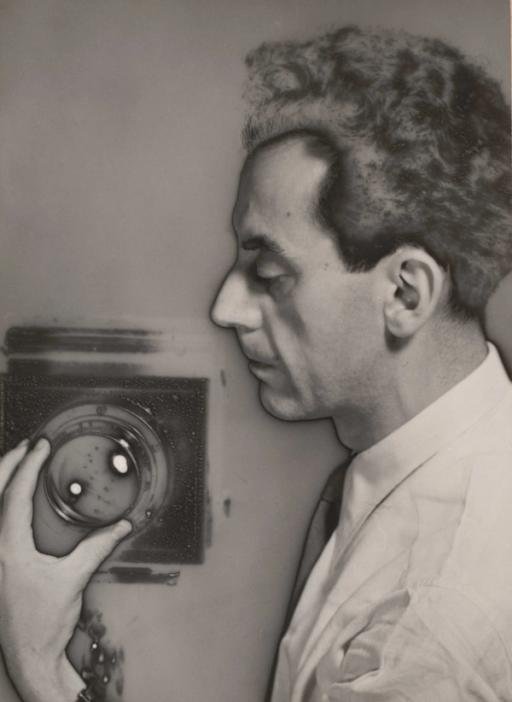
Man Ray (Emmanuel Radnitzky)
American, 1890–1976 193 works onlineSo enthused Man Ray (born Emmanuel Radnitzky) in 1922, shortly after his first experiments with camera-less photography. He remains well known for these images, commonly called photograms but which he dubbed “rayographs” in a punning combination of his own name and the word “photograph.
Learn more →

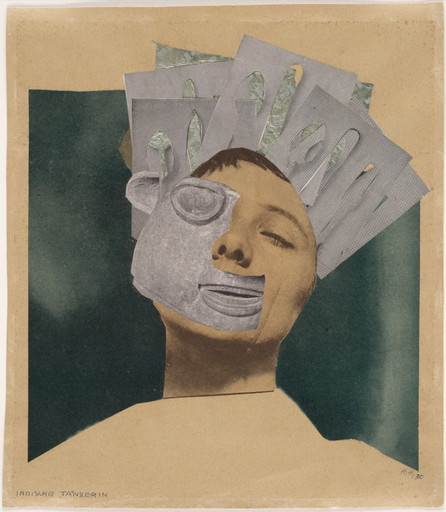
Dada
An artistic and literary movement formed in response to the disasters of World War I (1914–18) and to an emerging modern media and machine culture.
Learn more →
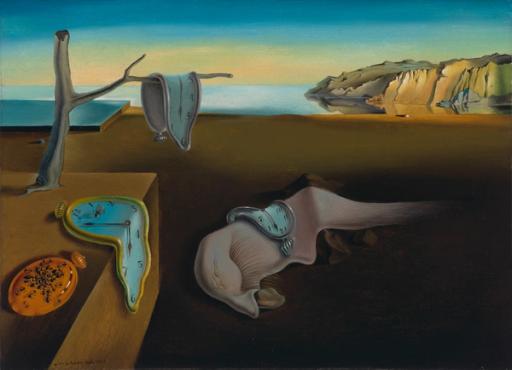
Surrealism
An artistic and literary movement led by French poet and writer André Breton from 1924 through World War II. Drawing on the psychoanalytic theories of Sigmund Freud, the Surrealists sought to overthrow what they perceived as the oppressive rationalism of modern society by accessing the sur réalisme (superior reality) of the subconscious.
Learn more →
From MoMA Design Store


Installation views
We have identified this work in the following photos from our exhibition history.
Licensing
Artwork or archival images
If you would like to reproduce an image of a work of art in MoMA's collection, or an image of a MoMA publication or archival material (including installation views, checklists, and press releases), please contact Art Resource (publication in North America) or Scala Archives (publication in all other geographic locations).
Audio and film clips
MoMA licenses archival audio and select out of copyright film clips from our film collection. At this time, MoMA produced video cannot be licensed by MoMA/Scala. All requests to license archival audio or out of copyright film clips should be addressed to Scala Archives at [email protected]. Motion picture film stills cannot be licensed by MoMA/Scala. For access to motion picture film stills for research purposes, please contact the Film Study Center at [email protected]. For more information about film loans and our Circulating Film and Video Library, please visit Circulating Film and Video Library.
Text from a publication or the archives
If you would like to reproduce text from a MoMA publication, please email [email protected]. If you would like to publish text from MoMA's archival materials, please fill out this permission form and send to [email protected].
Feedback
This record is a work in progress. If you have additional information or spotted an error, please fill out this feedback form.