Not on view
“The art of the future will not be cozy decorations for domestic apartments,” Rodchenko declared. To create Spatial Construction no. 12, he made a series of concentric cuts to a single flat plane that can then be opened up as a three-dimensional geometric volume. Traces of aluminum paint on the work’s plywood parts suggest that it was a prototype for a metal version. Rodchenko envisioned using multicolored spotlights to illuminate his metallic spatial constructions, triggering a kaleidoscopic play of hues, reflections, and shadows.
Sur moderno: Journeys of Abstraction—The Patricia Phelps de Cisneros Gift, October 21, 2019–March 14, 2020
Publication excerpt from MoMA Highlights: 375 Works from The Museum of Modern Art, New York (New York: The Museum of Modern Art, 2019)
Composed of ovals that nest and intersect, Spatial Construction no. 12 hangs suspended, moving slowly with any current of air. The ovals were measured out on a single flat sheet of plywood, precisely cut, then rotated within each other to make a three-dimensional object. The resulting form suggests a chart of planetary orbits, a cosmic structure. In companion pieces, Rodchenko applied the same principle and method to other basic geometric shapes, such as the square, but those works no longer survive.
Rodchenko’s interest in mathematical systems reflects the scientific bent of the Russian Constructivists, artists who aspired to create a radically new, radically rational art for the society that came into being with the Russian Revolution. Spatial Construction no. 12 is a stage in Rodchenko’s progress away from conventional painting and toward an art taking place in space—ultimately, an art of social involvement. The work has no clear top or bottom, and no base to rest on. It is virtually weightless, with suspension and movement replacing mass. In short, it was designed to be everything traditional sculpture was not—to reimagine art from ground zero. The artist later reflected, “We created a new understanding of beauty, and enlarged the concept of art.”
MoMA Highlights: 375 Works from The Museum of Modern Art, New York (New York: The Museum of Modern Art, 2019)
Gallery label from 2022
Rodchenko created Spatial Construction no. 12 by cutting concentric bands from a single sheet of painted plywood. Transforming the flat plane into an open, airy, three-dimensional object suspended in space, he dispensed with the sculptural traditions of figuration, mass, and pedestal. “We created a new understanding of beauty,” the artist later reflected, “and enlarged the concept of art.”
2022
Explore more
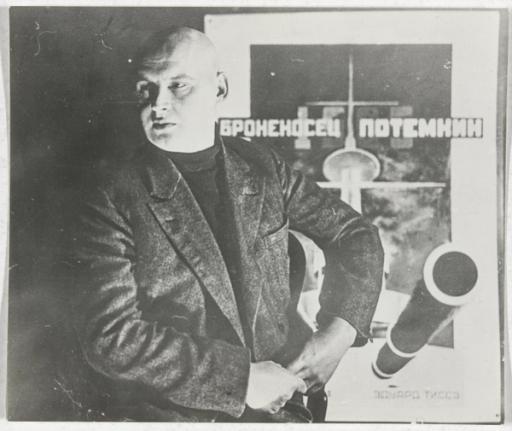
Aleksandr Rodchenko
Russian, 1891–1956 247 works onlineWhen The Museum of Modern Art’s first director, Alfred H. Barr, Jr. , met Aleksandr Rodchenko on his trip to Moscow in 1927—one of the first times an Anglophone art historian had visited the Soviet Union in the years since the Russian Revolution—he wrote, “Rodchenko showed us an appalling variety of things— Suprematist paintings (preceded by the earliest geometrical things I’ve seen, 1915, done with compass)— woodcuts , linoleum cuts , posters , book designs, photographs , kino sets, etc….
Learn more →


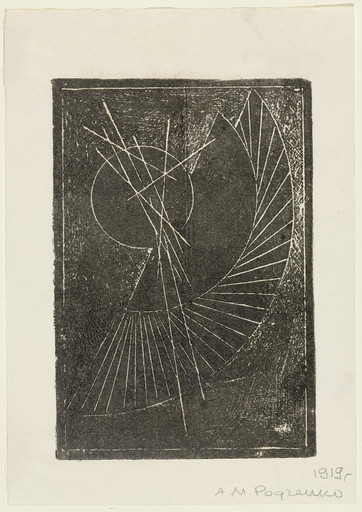
Constructivism
Developed by the Russian avant-garde at the time of the October Revolution of 1917. Declaring that a post-Revolutionary society demanded a radically new artistic language, Constructivist artists, led by Aleksandr Rodchenko , aimed to strip their works of subjective emotional character, eventually even rejecting painting as an individualist bourgeois form.
Learn more →


Audio
Audio from the playlist Collection 1880s–1940s
From MoMA Design Store


Installation views
We have identified this work in the following photos from our exhibition history.
Provenance Research Project
This work is included in the Provenance Research Project, which investigates the ownership history of works in MoMA's collection.
George Costakis
Artco-Costakis Collection (Art Co. Ltd., Nassau, Bahamas / Cayman Islands.)
The Museum of Modern Art, New York. Purchase, 1986
Provenance research is a work in progress, and is frequently updated with new information. If you have any questions or information to provide about the listed works, please email [email protected] or write to:
Provenance Research Project
The Museum of Modern Art
11 West 53 Street
New York, NY 10019
Licensing
Artwork or archival images
If you would like to reproduce an image of a work of art in MoMA's collection, or an image of a MoMA publication or archival material (including installation views, checklists, and press releases), please contact Art Resource (publication in North America) or Scala Archives (publication in all other geographic locations).
Audio and film clips
MoMA licenses archival audio and select out of copyright film clips from our film collection. At this time, MoMA produced video cannot be licensed by MoMA/Scala. All requests to license archival audio or out of copyright film clips should be addressed to Scala Archives at [email protected]. Motion picture film stills cannot be licensed by MoMA/Scala. For access to motion picture film stills for research purposes, please contact the Film Study Center at [email protected]. For more information about film loans and our Circulating Film and Video Library, please visit Circulating Film and Video Library.
Text from a publication or the archives
If you would like to reproduce text from a MoMA publication, please email [email protected]. If you would like to publish text from MoMA's archival materials, please fill out this permission form and send to [email protected].
Feedback
This record is a work in progress. If you have additional information or spotted an error, please fill out this feedback form.