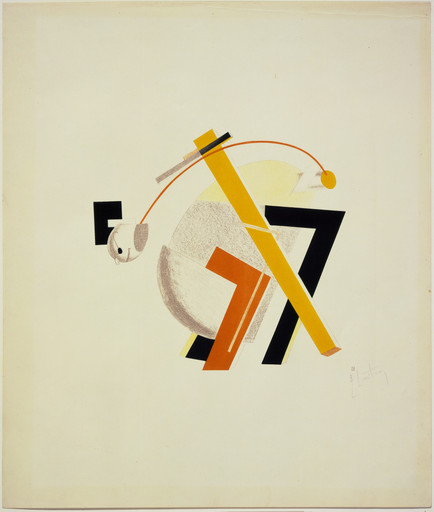
In 1920, Lissitzky announced a new type of artwork that he called a "Proun"—an acronym of the Russian phrase meaning "project for the affirmation of the new." Lissitzky and his contemporaries were working in Russia just three years after its revolution,when a civil war still raged for control of the country. For them, the new was a pressing concern. Lissitzky's term "project" came from the language not of fine art but of architecture, and betrays his training in that profession in Germany in the years before the revolution. Returning to Russia, he joined the faculty of the art school in Vitebsk, a provincial town, on the fringes of the war, where the Suprematist Kazimir Malevich was already teaching. Together they pursued a new art for a new, post-revolutionary world.
2015.
Gallery label from Inventing Abstraction, 1910–1925 , December 23, 2012–April 15, 2013.
In 1920, Lissitzky announced a new type of artwork that he called a "Proun"—an acronym of the Russian phrase meaning "project for the affirmation of the new." Lissitzky and his contemporaries were working in Russia just three years after its revolution, when a civil war still raged for control of the country. For them, the new was a pressing concern. Lissitzky’s term "project" came from the language not of fine art but of architecture, and betrays his training in that profession in Germany in the years before the revolution. Returning to Russia, he joined the faculty of the art school in Vitebsk, a provincial town, on the fringes of the war, where the Suprematist Kazimir Malevich was already teaching. Together they pursued a new art for a new, post-revolutionary world.
Inventing Abstraction, 1910–1925, December 23, 2012–April 15, 2013.
Gallery label from 2010.
Between 1919 and 1927 El Lissitzky produced a large body of paintings, prints, and drawings that he referred to by the word Proun (pronounced pro-oon), an acronym for "project for the affirmation of the new" in Russian. Lissitzky's style reflects his training as an architect in Germany before World War I as well as the inspiration of Kazimir Malevich, a fellow teacher at the Vitebsk art school. Lissitzky's radical reconception of space and material is a metaphor for and visualization of the fundamental transformations in society that he thought would result from the Russian Revolution.
2010.
Explore more

Constructivism
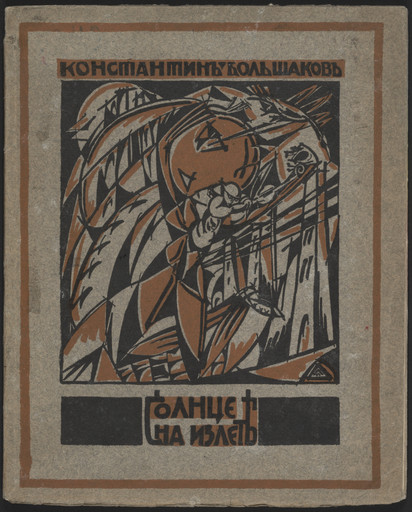
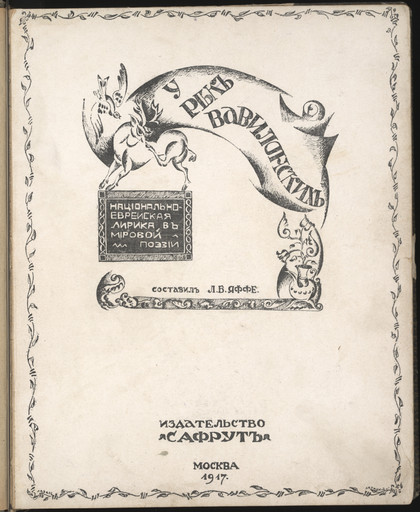
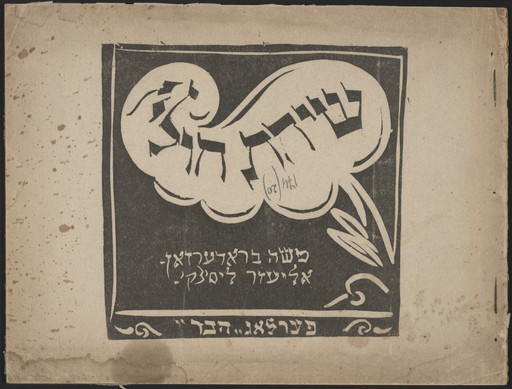
Developed by the Russian avant-garde at the time of the October Revolution of 1917. Declaring that a post-Revolutionary society demanded a radically new artistic language, Constructivist artists, led by Aleksandr Rodchenko , aimed to strip their works of subjective emotional character, eventually even rejecting painting as an individualist bourgeois form.
Learn more →

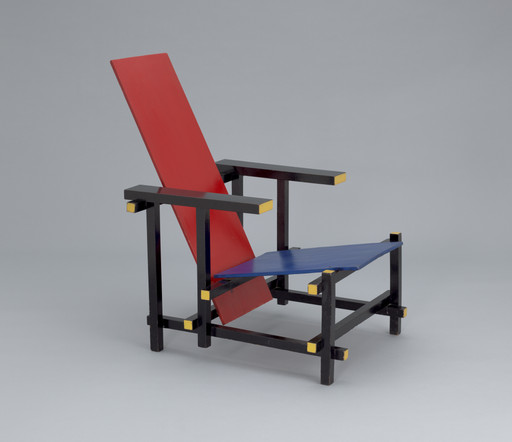
A Collective Construction
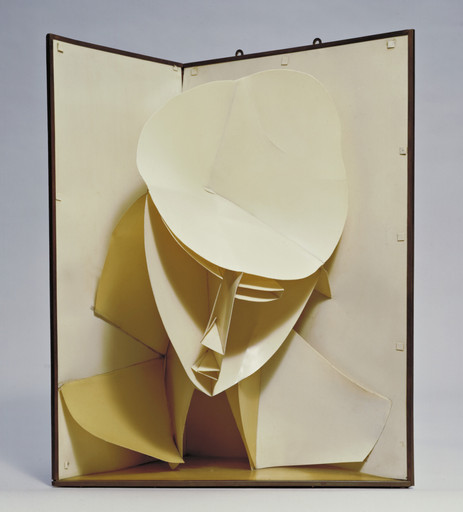
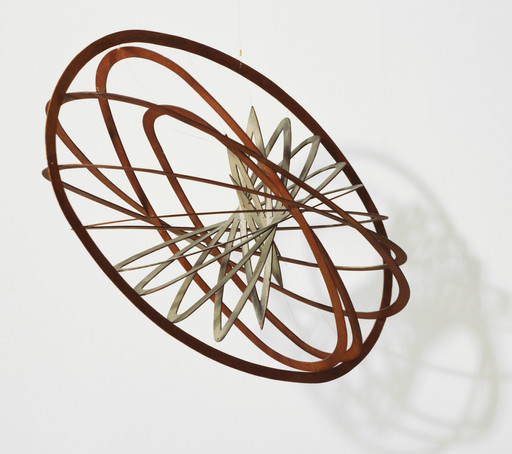
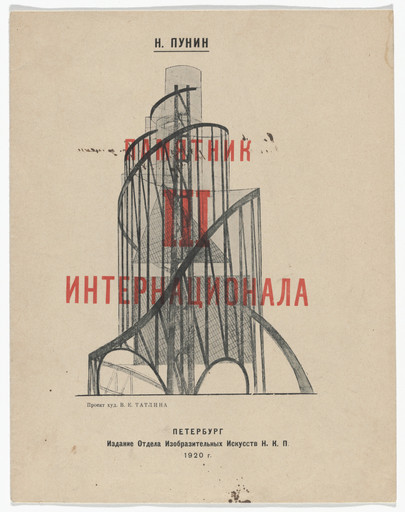
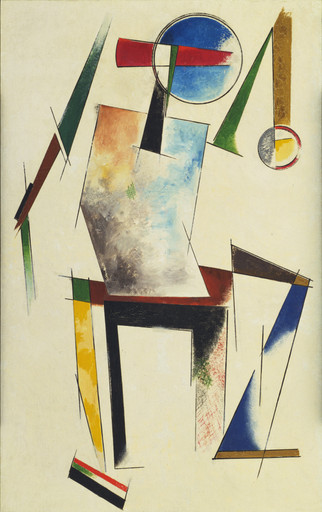
Gallery 508In their 1923 essay “Toward a Collective Construction,” Theo van Doesburg and Cornelis van Eesteren advocated for a “new plastic unity”—a common abstract language of geometric forms and a reduced palette—that would reject “every subjective speculation.
Learn more →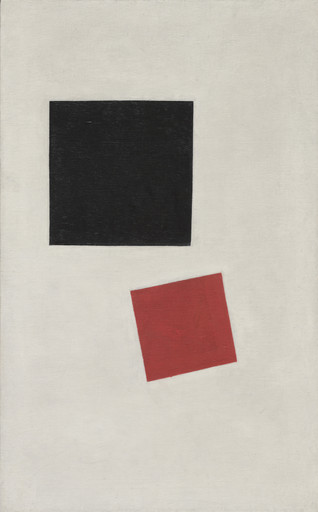


From MoMA Design Store


Installation views
We have identified this work in the following photos from our exhibition history.
Provenance Research Project
This work is included in the Provenance Research Project, which investigates the ownership history of works in MoMA's collection.
Acquired by Katherine S. Dreier (1877-1952), New York and West Redding, CT, 1922 [1]; The Museum of Modern Art, New York, 1953 (Katherine S. Dreier Bequest).
[1] Dreier purchased the work from the Erste Russische Kunstausstellung, Galerie van Diemen, Berlin, October 15-end of December, 1922 (no. 122: Proun 19D).
Provenance research is a work in progress, and is frequently updated with new information. If you have any questions or information to provide about the listed works, please email [email protected] or write to:
Provenance Research Project
The Museum of Modern Art
11 West 53 Street
New York, NY 10019
Licensing
Artwork or archival images
If you would like to reproduce an image of a work of art in MoMA's collection, or an image of a MoMA publication or archival material (including installation views, checklists, and press releases), please contact Art Resource (publication in North America) or Scala Archives (publication in all other geographic locations).
Audio and film clips
MoMA licenses archival audio and select out of copyright film clips from our film collection. At this time, MoMA produced video cannot be licensed by MoMA/Scala. All requests to license archival audio or out of copyright film clips should be addressed to Scala Archives at [email protected]. Motion picture film stills cannot be licensed by MoMA/Scala. For access to motion picture film stills for research purposes, please contact the Film Study Center at [email protected]. For more information about film loans and our Circulating Film and Video Library, please visit Circulating Film and Video Library.
Text from a publication or the archives
If you would like to reproduce text from a MoMA publication, please email [email protected]. If you would like to publish text from MoMA's archival materials, please fill out this permission form and send to [email protected].
Feedback
This record is a work in progress. If you have additional information or spotted an error, please fill out this feedback form.