This sculpture is one in a series by Salcedo that commemorates individual victims of the protracted violence and civil war in her native Colombia. Salcedo spent weeks with the families and loved ones of the deceased, immersing herself in the details of their lives. Based on these experiences, she created sculptures from domestic furniture and clothing once touched by the warmth of daily use. “Their suffering becomes mine,” the artist has said. “The center of that person becomes my center and I can no longer determine where my center actually is. . . . From this point of view, the piece forms itself.”
Immobilized in cement, the dresser and chairs in this untitled work suggest the replacement of presence with absence. The soft, warm grain of the wooden furniture contrasts with the gray mass of cold, hard concrete and rebar that fills the interior spaces and violates the structure of these objects. The furniture, bulky and mute, has been rendered useless by the sheer weight and volume of the concrete. The objects now mark time and space, bearing witness to an act of violence and functioning as memento mori. They are public reckonings of private loss and personal grief within a catastrophic sociopolitical environment.
MoMA Highlights: 375 Works from The Museum of Modern Art, New York (New York: The Museum of Modern Art, 2019)
Publication excerpt from The Museum of Modern Art, MoMA Highlights since 1980 , New York: The Museum of Modern Art, 2007, p. 148.
This sculpture is one of a series Salcedo has created that commemorates individual victims of the protracted violence and civil war in her native Colombia. Salcedo spent weeks with the families and loved ones of the deceased, infusing herself with the details of their lives. Based on these experiences, she created sculptures from domestic furniture and clothing once touched by the warmth of daily use. Complete with legs, backs, feet, and handles, the dresser and chairs in this untitled work may be seen as stand-ins for the missing body of a victim and the fractured lives of his or her family.
The soft, warm grain of the wooden furniture contrasts with the gray mass of cold, hard concrete and rebar that fills the interior spaces and violates the structure of these objects. The furniture, bulky and mute, has been rendered useless by the sheer weight and volume of its concrete interment. The objects now mark time and space, bearing witness to an act of violence and functioning as memento mori. They are public reckonings of private loss and personal grief within a desperate, charged political environment. "My work deals with the fact that the beloved—the object of violence—always leaves his or her trace imprinted on us," Salcedo has said.
The Museum of Modern Art, MoMA Highlights since 1980, New York: The Museum of Modern Art, 2007, p. 148.
Gallery label from Contemporary Art from the Collection , 2011.
Inspired by the recent history of her native Colombia, Doris Salcedo creates sculptures that address the effects of war, political oppression, and other acts of violence. Composed of found materials—including domestic furniture, remnants of clothing, and human bones—her works tell harrowing tales of trauma and affliction.
The wooden chest and chairs in Untitled have been divested of their usual purposes, transformed into monuments to the missing. "I believe that the major possibilities of art are not in showing the spectacle of violence but instead in hiding it," the artist has said. "It is the proximity, the latency of violence that interests me."
Contemporary Art from the Collection, 2011.
Explore more
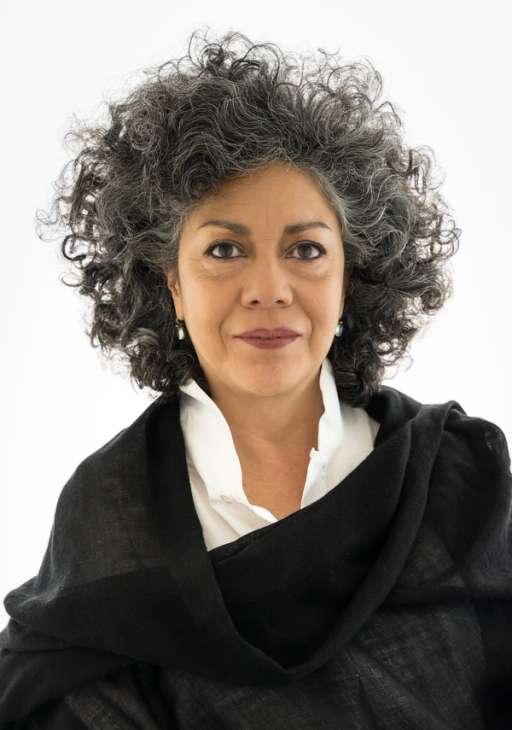
Doris Salcedo
Colombian, born 1958 3 works onlineDoris Salcedo collects witness statements and testimonies from individuals who have fallen victim to the ongoing conflict in her native Colombia between far-left guerrilla groups, the military, drug traffickers, and paramilitary forces.
Learn more →

From MoMA Design Store


Installation views
We have identified this work in the following photos from our exhibition history.
Licensing
Artwork or archival images
If you would like to reproduce an image of a work of art in MoMA's collection, or an image of a MoMA publication or archival material (including installation views, checklists, and press releases), please contact Art Resource (publication in North America) or Scala Archives (publication in all other geographic locations).
Audio and film clips
MoMA licenses archival audio and select out of copyright film clips from our film collection. At this time, MoMA produced video cannot be licensed by MoMA/Scala. All requests to license archival audio or out of copyright film clips should be addressed to Scala Archives at [email protected]. Motion picture film stills cannot be licensed by MoMA/Scala. For access to motion picture film stills for research purposes, please contact the Film Study Center at [email protected]. For more information about film loans and our Circulating Film and Video Library, please visit Circulating Film and Video Library.
Text from a publication or the archives
If you would like to reproduce text from a MoMA publication, please email [email protected]. If you would like to publish text from MoMA's archival materials, please fill out this permission form and send to [email protected].
Feedback
This record is a work in progress. If you have additional information or spotted an error, please fill out this feedback form.