Oil on canvas
Barnett Newman was best known for his color-field paintings and use of what he called “zips,” vertical strips of color placed across the surfaces of his compositions. He created the zips by applying masking tape to block off parts of the canvas and painting the exposed areas.
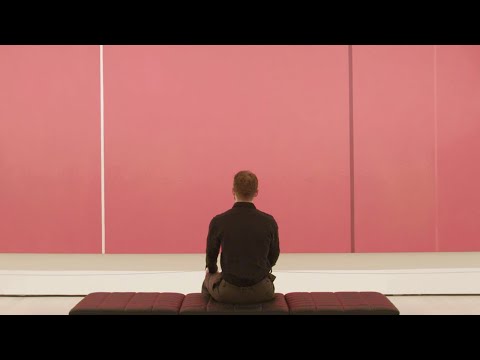
This work’s title, which can be translated as “Man, heroic and sublime,” refers to Newman’s essay “The Sublime is Now,” in which he poses the question, “If we are living in a time without a legend that can be called sublime, how can we be creating sublime art?” His response is embodied in part by this painting—his largest at the time that he made it. Newman hoped that the viewer would stand close to this expansive work, explaining: “It’s no different, really, from meeting another person. One has a reaction to the person physically. Also, there’s a metaphysical thing … and if a meeting of people is meaningful, it affects both their lives.”
Gallery label from 2023
This painting, whose Latin title can be translated as “Man, heroic and sublime,” was Newman’s largest at the time. It is so large that when you stand close to it, as Newman intended, it engulfs you in a vast red field, broken by five thin vertical lines the artist called “zips.” He likened this experience to an encounter between people: “One has a reaction to the person physically. Also, there’s a metaphysical thing, and if a meeting of people is meaningful, it affects both their lives.”
2023
Publication excerpt from MoMA Highlights: 375 Works from The Museum of Modern Art, New York (New York: The Museum of Modern Art, 2019)
It may appear that Newman concentrated on shape and color, but he insisted that his canvases were charged with symbolic meaning. Like Piet Mondrian and Kazimir Malevich before him, he believed in the spiritual content of abstract art. The very title of this painting—in English, “Man, heroic and sublime”—points to aspirations of transcendence.
Newman was one of several Abstract Expressionists who suppressed any signs of the action of the painter’s hand, preferring to work with broad, even expanses of deep color. In 1950 he moved into a new studio that afforded him the space to make this work, his first 8-by-18-foot painting and a radical shift in scale. Vir Heroicus Sublimis is so large that when the viewer stands close to it, as Newman intended, it creates an engulfing environment—a vast red field, broken by five thin vertical stripes. These stripes, or “zips,” as he called them, vary in width, color, and firmness of edge; the white zip at center left looks almost like a gap between separate planes, while the maroon zip to its right seems to recede slightly into the red. These starkly differentiated verticals create a division of the canvas that is surprisingly complex and asymmetrical. Dispersed throughout, they also act as markers in space and time as the viewer surveys the work.
MoMA Highlights: 375 Works from The Museum of Modern Art, New York (New York: The Museum of Modern Art, 2019)
Explore more
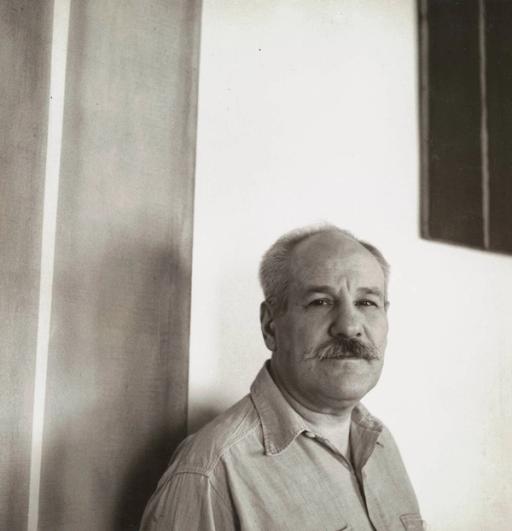
Barnett Newman
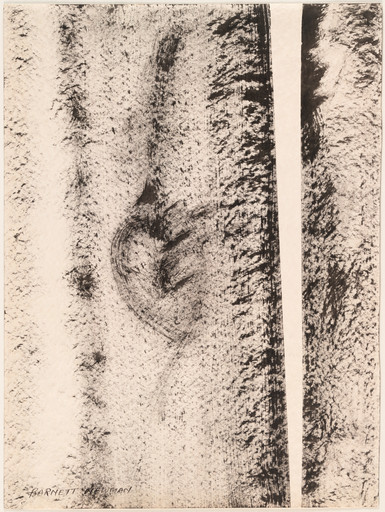
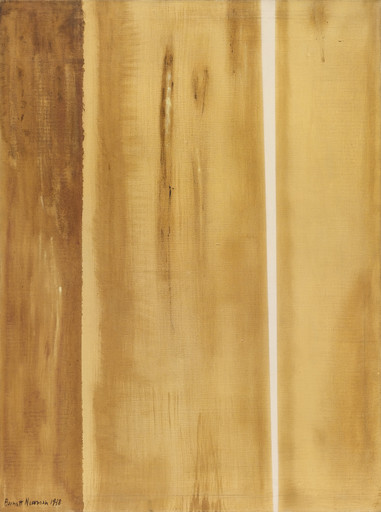
American, 1905–1970 61 works onlinePainter and theorist Barnett Newman was one of the most intellectual artists of the New York School. He was born and raised in New York, the son of Polish Jewish immigrants.
Learn more →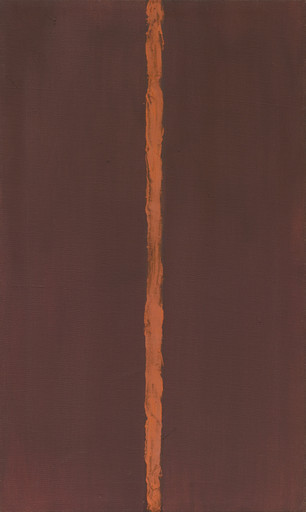
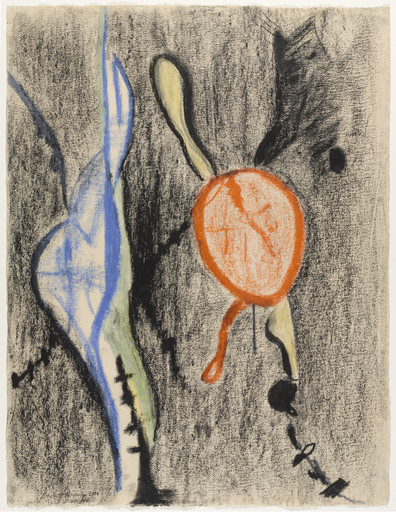
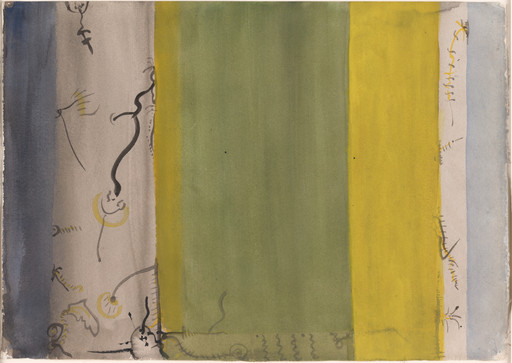
Color Field painting
A form of abstract painting that emerged in the 1950s and 1960s, characterized by large areas of color, typically without strong tonal contrasts or a defined point of focus.
Learn more →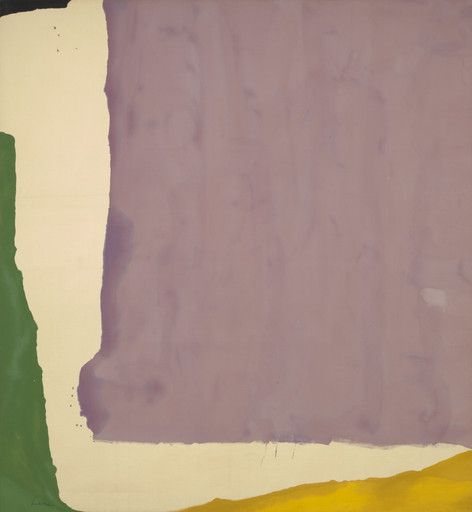
Fields and Figures
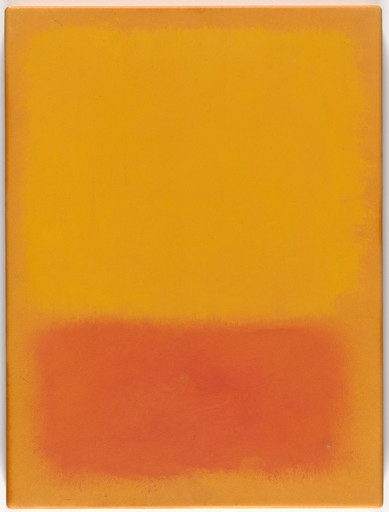
Gallery 402In New York City in the 1950s, artists grappled with the devastation felt after World War II by examining existentialist ideas, including individual creative expression and the importance of authentic feeling.
Learn more →

Audio
Audio from the playlist Collection 1950s–1970s
Audio from the playlist Verbal Descriptions
Articles and videos
From MoMA Design Store


Installation views
We have identified this work in the following photos from our exhibition history.
Licensing
Artwork or archival images
If you would like to reproduce an image of a work of art in MoMA's collection, or an image of a MoMA publication or archival material (including installation views, checklists, and press releases), please contact Art Resource (publication in North America) or Scala Archives (publication in all other geographic locations).
Audio and film clips
MoMA licenses archival audio and select out of copyright film clips from our film collection. At this time, MoMA produced video cannot be licensed by MoMA/Scala. All requests to license archival audio or out of copyright film clips should be addressed to Scala Archives at [email protected]. Motion picture film stills cannot be licensed by MoMA/Scala. For access to motion picture film stills for research purposes, please contact the Film Study Center at [email protected]. For more information about film loans and our Circulating Film and Video Library, please visit Circulating Film and Video Library.
Text from a publication or the archives
If you would like to reproduce text from a MoMA publication, please email [email protected]. If you would like to publish text from MoMA's archival materials, please fill out this permission form and send to [email protected].
Feedback
This record is a work in progress. If you have additional information or spotted an error, please fill out this feedback form.