Not on view
In the 1960s, Frankenthaler shifted away from oil paint and embraced acrylic as her primary medium, facilitating a new emphasis on shape, after a period devoted to gesture. This is evident in Mauve District, a painting that, she reflected, “relates to a theme which appears on-and-off, of pictures that often have one central vast shape, ‘district,’ or ‘territory.’” The geographical sense of those words is, perhaps, not accidental: “If I am forced to associate,” Frankenthaler acknowledged, “I think of my pictures as explosive landscapes, worlds and distances held on a flat surface.”
Helen Frankenthaler: A Grand Sweep, November 18, 2025–February 8, 2026
Gallery label from 2009
In 1969 Frankenthaler wrote of Mauve District, “It relates to a theme which appears on-and-off, of pictures that often have one central vast shape, district, or territory; in this case, the shape itself (a square) is a play on the very shape of the canvas.” The artist’s delight in spatial play is also evident in the wedge of exposed raw canvas, a common motif in her work. Although it is a negative space, it also conjures the edge of a tilted square—a form that can be perceived as either advancing or receding in relation to the mauve square it borders. “I have always been concerned with painting that simultaneously insists on a flat surface and then denies it,” Frankenthaler has said.
2009
Explore more
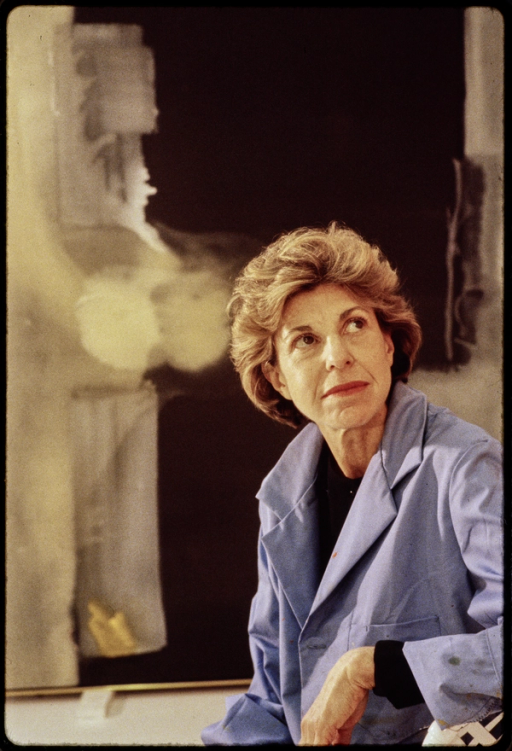
Helen Frankenthaler
American, 1928–2011 77 works onlineThe artist Helen Frankenthaler has offered two childhood scenes as foundational stories for the path her innovative practice would take.
Learn more →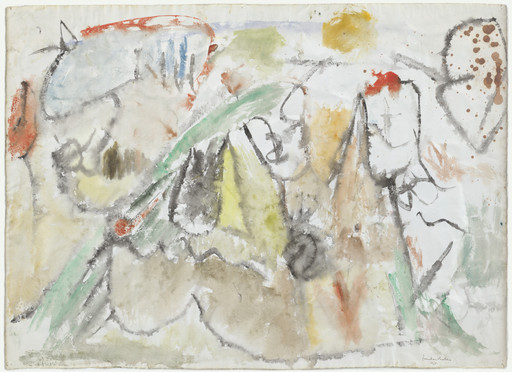

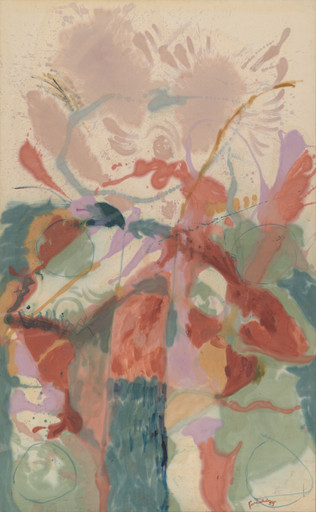
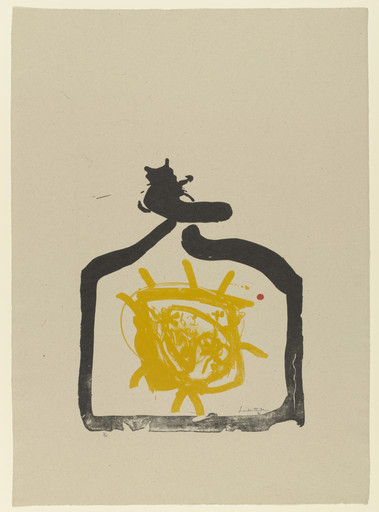
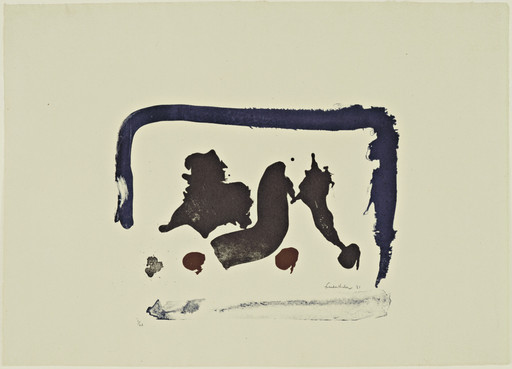
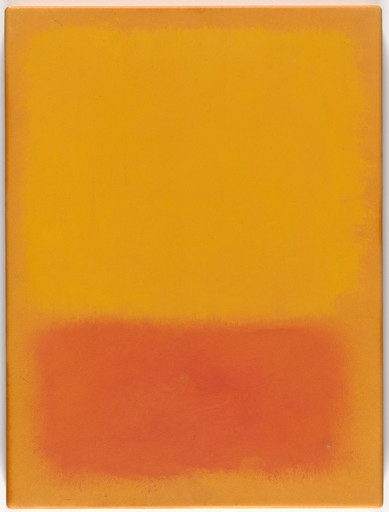
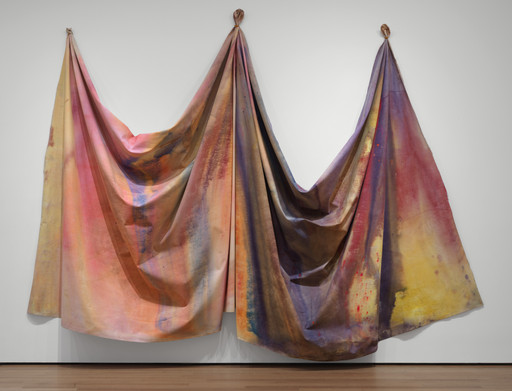
Color Field painting
A form of abstract painting that emerged in the 1950s and 1960s, characterized by large areas of color, typically without strong tonal contrasts or a defined point of focus.
Learn more →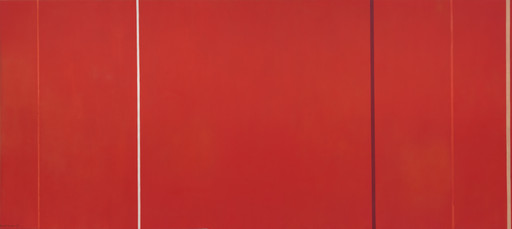
Audio
Audio from the playlist Helen Frankenthaler: A Grand Sweep
From MoMA Design Store


Installation views
We have identified this work in the following photos from our exhibition history.
Licensing
Artwork or archival images
If you would like to reproduce an image of a work of art in MoMA's collection, or an image of a MoMA publication or archival material (including installation views, checklists, and press releases), please contact Art Resource (publication in North America) or Scala Archives (publication in all other geographic locations).
Audio and film clips
MoMA licenses archival audio and select out of copyright film clips from our film collection. At this time, MoMA produced video cannot be licensed by MoMA/Scala. All requests to license archival audio or out of copyright film clips should be addressed to Scala Archives at [email protected]. Motion picture film stills cannot be licensed by MoMA/Scala. For access to motion picture film stills for research purposes, please contact the Film Study Center at [email protected]. For more information about film loans and our Circulating Film and Video Library, please visit Circulating Film and Video Library.
Text from a publication or the archives
If you would like to reproduce text from a MoMA publication, please email [email protected]. If you would like to publish text from MoMA's archival materials, please fill out this permission form and send to [email protected].
Feedback
This record is a work in progress. If you have additional information or spotted an error, please fill out this feedback form.