Not on view
By the early 1960s, Rothko was widely regarded as one of America’s leading painters. Speaking of the style he had honed over the past two decades, he remarked: “This kind of design may look simple, but it usually takes me many hours to get the proportions and colors just right. Everything has to lock together.” This untitled painting on paper—with its incendiary orange ground supporting a lighter, yellow-orange rectangle and a fiery red rectangle—attests to his sophisticated understanding of color and composition. The bright, warm palette stands as evidence that he continued to swing back-and-forth from cool to warm tones. Many have misinterpreted Rothko’s dark paintings as stemming from his worsening depression, and his brilliantly colored paintings as joyous expressions. In fact, some of the last compositions the artist painted featured bright, warm colors.
In The Studio: Postwar Abstract Painting online course, Coursera, 2017
Explore more
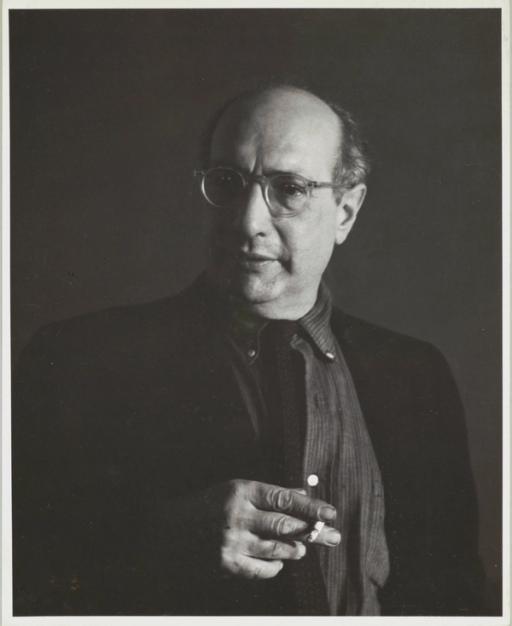
Mark Rothko
American, born Russia (now Latvia). 1903–1970 19 works onlineMark Rothko sought to make paintings that would bring people to tears.If you…are moved only by their color relationships, then you miss the point.
Learn more →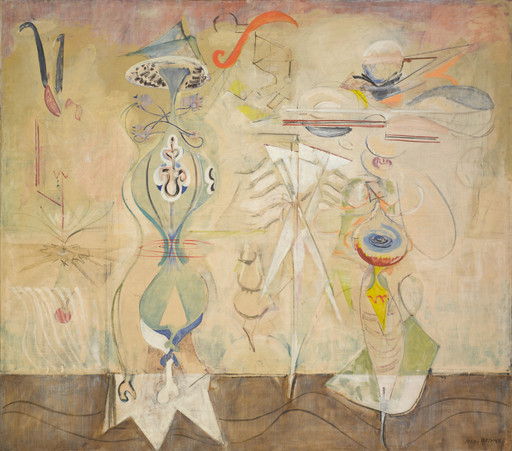
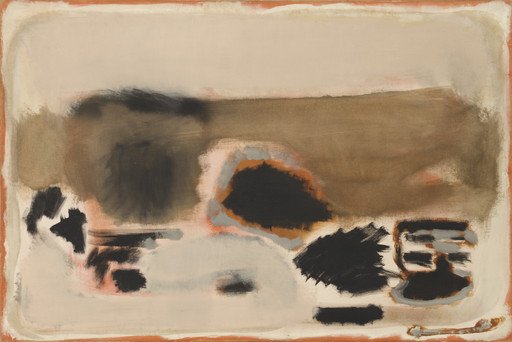


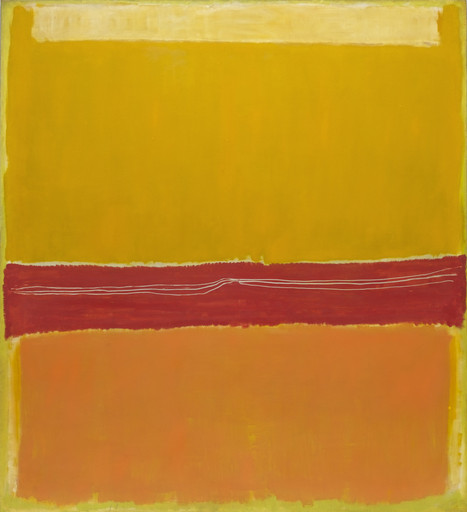
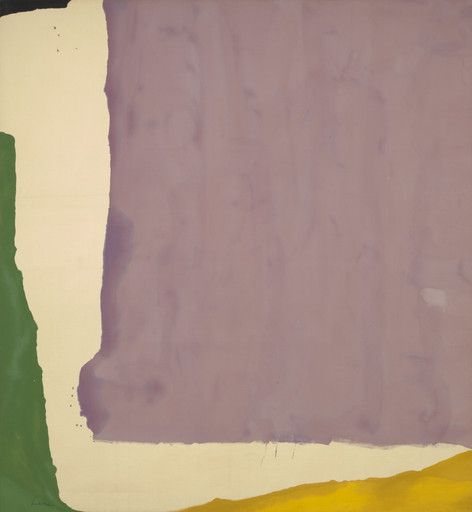
Color Field painting
A form of abstract painting that emerged in the 1950s and 1960s, characterized by large areas of color, typically without strong tonal contrasts or a defined point of focus.
Learn more →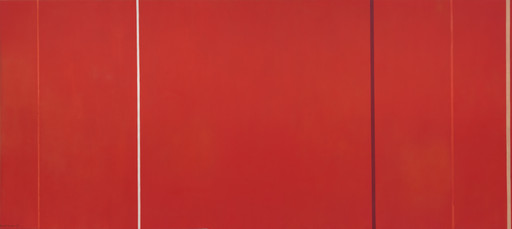

From MoMA Design Store


Licensing
Artwork or archival images
If you would like to reproduce an image of a work of art in MoMA's collection, or an image of a MoMA publication or archival material (including installation views, checklists, and press releases), please contact Art Resource (publication in North America) or Scala Archives (publication in all other geographic locations).
Audio and film clips
MoMA licenses archival audio and select out of copyright film clips from our film collection. At this time, MoMA produced video cannot be licensed by MoMA/Scala. All requests to license archival audio or out of copyright film clips should be addressed to Scala Archives at [email protected]. Motion picture film stills cannot be licensed by MoMA/Scala. For access to motion picture film stills for research purposes, please contact the Film Study Center at [email protected]. For more information about film loans and our Circulating Film and Video Library, please visit Circulating Film and Video Library.
Text from a publication or the archives
If you would like to reproduce text from a MoMA publication, please email [email protected]. If you would like to publish text from MoMA's archival materials, please fill out this permission form and send to [email protected].
Feedback
This record is a work in progress. If you have additional information or spotted an error, please fill out this feedback form.