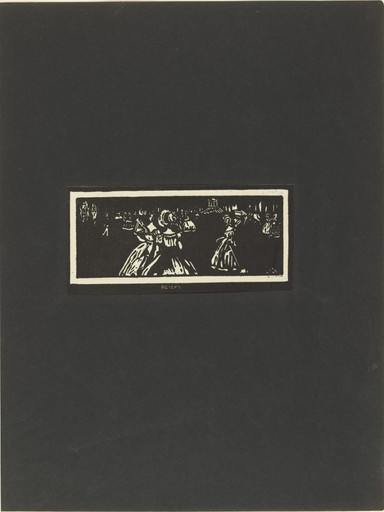
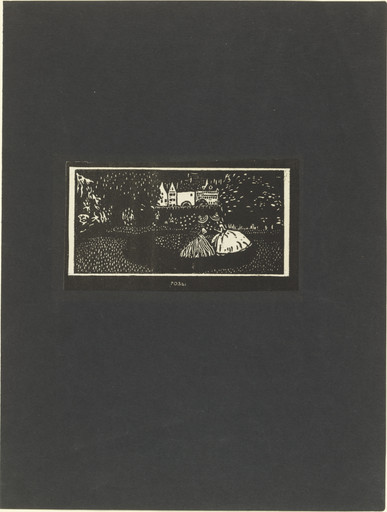
Lithograph (transferred from woodcut) from a portfolio of twelve prints, six lithographs (including two transferred from woodcuts), four drypoints, and two woodcuts
Not on view
Published in 1922, shortly after Vasily Kandinsky began teaching at the Bauhaus, this portfolio includes four prints each in etching, woodcut, and lithography. As the artist explains in the portfolio's introduction, each technique was chosen for its unique character: etching is characterized by its precision and appropriateness to the study of lines; woodcut is marked by the interplay of foreground and background, and the richness of textures; lithography combines a range of markings and colors to produce an image that most closely approximates a painting. As evident in their titles, each print represents an autonomous microcosm, a reflection of Kandinsky's view of the world as a self-contained cosmic entity consisting of innumerable independent, hermetic units.
2006.
Publication excerpt from Heather Hess, German Expressionist Digital Archive Project , German Expressionism: Works from the Collection. 2011.
In Kleine Welten (Small worlds) Vasily Kandinsky demonstrates the different effects of drypoint, lithography, and woodcut, providing four examples of each technique. As suggested by the portfolio's title, each abstract image is a world unto itself; meaning is generated exclusively through the interplay of line, plane, and color and the specific properties of the given medium. The constellation of dots orbiting the center of the drypoint Kleine Welten X penetrates deeply into the paper's surface. By contrast, the elegant marks in the lithograph Kleine Welten III seem barely to brush the surface. In the woodcut Kleine Welten V, dots made by digging into the soft, wood block with a cold, metal instrument express violent energy.
Kandinsky systematically elaborated his position on the inherent qualities of each print technique in the set's foreword and in his 1926 book, Punkt und Linie zur Fläche (Point and Line to Plane). Drypoint expressed passion and haste, foregrounding line and point. The limited number of impressions that could be pulled from a metal drypoint plate made it an "aristocratic" medium. Woodcut was more egalitarian in that it allowed for greater edition sizes; it also best conveyed planar relationships. Lithography was the most painterly, and its unlimited reproducibility made it the most "democratic," a quality that led Kandinsky to proclaim it the medium of his time.
Heather Hess, German Expressionist Digital Archive Project, German Expressionism: Works from the Collection. 2011.
Explore more
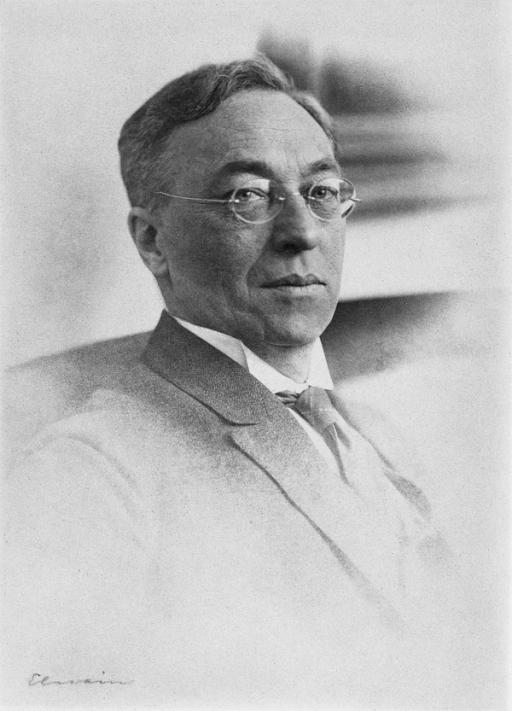
Vasily Kandinsky
French, born Russia. 1866–1944 153 works onlineVasily Kandinsky posed this question in December 1911, in Concerning the Spiritual in Art , a text that laid out his argument for abstraction.
Learn more →

From MoMA Design Store


Installation views
We have identified this work in the following photos from our exhibition history.
Licensing
Artwork or archival images
If you would like to reproduce an image of a work of art in MoMA's collection, or an image of a MoMA publication or archival material (including installation views, checklists, and press releases), please contact Art Resource (publication in North America) or Scala Archives (publication in all other geographic locations).
Audio and film clips
MoMA licenses archival audio and select out of copyright film clips from our film collection. At this time, MoMA produced video cannot be licensed by MoMA/Scala. All requests to license archival audio or out of copyright film clips should be addressed to Scala Archives at [email protected]. Motion picture film stills cannot be licensed by MoMA/Scala. For access to motion picture film stills for research purposes, please contact the Film Study Center at [email protected]. For more information about film loans and our Circulating Film and Video Library, please visit Circulating Film and Video Library.
Text from a publication or the archives
If you would like to reproduce text from a MoMA publication, please email [email protected]. If you would like to publish text from MoMA's archival materials, please fill out this permission form and send to [email protected].
Feedback
This record is a work in progress. If you have additional information or spotted an error, please fill out this feedback form.