Not on view
In the center of this work, we see an image of a smiling boy wearing a patterned shirt and suspenders. Two columns of text tell the boy’s story—or, rather, a narrative of his future desires and the forces he will encounter in the world. “One day, this kid will do something that causes men who wear the uniforms of priests and rabbis, men who inhabit certain stone buildings, to call for his death,” the text ominously declares. The photograph, it turns out, pictures the artist as a child, and the desires he will soon discover in himself—“to place his naked body on the naked body of another boy”—will accompany his understanding that he is gay.
Wojnarowicz made this work at the height of intense debate about the AIDS crisis in the United States, as conservative forces demonized both the disease and the gay community afflicted by it, and two years before his own death of AIDS-related causes. The work is a photostat, a cheaply printed poster, meant to be distributed widely as a form of protest against the silence and discrimination surrounding AIDS. The message is unapologetically political: the artist locates homosexual desire in himself as a boy, not a grown man, insisting on his sexuality as natural. What if, Wojnarowicz seems to ask, we could accept the innocence of the young boy instead of punishing him for the biases of a repressive society?
MoMA Highlights: 375 Works from The Museum of Modern Art, New York (New York: The Museum of Modern Art, 2019)
Explore more
David Wojnarowicz
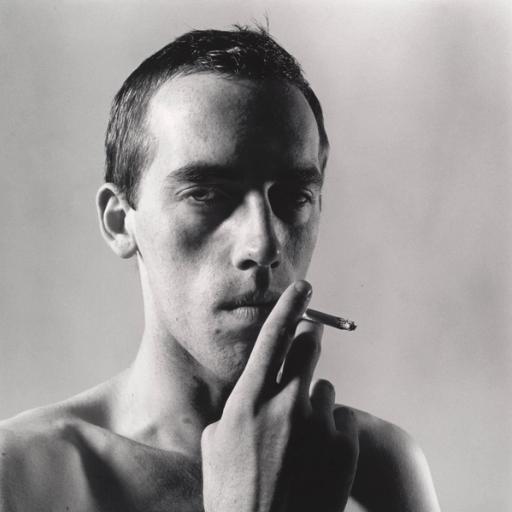
American, 1954–1992 17 works onlineFor Wojnarowicz, exposing the hypocrisy of an unjust society was a fundamental reason for making art. Through his paintings, photography, sculptures, films, performances, and writing, Wojnarowicz captured the rage felt by those society had cast aside—himself included—and expressed it in ways that still impact us today.
Learn more →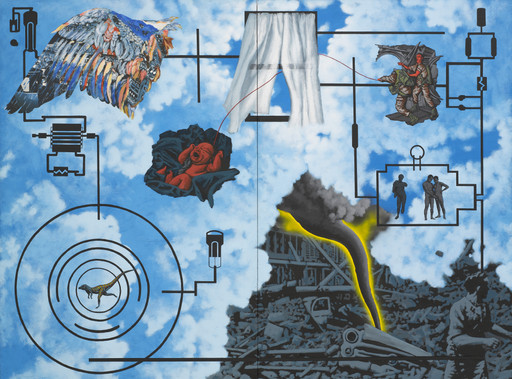

Photostat
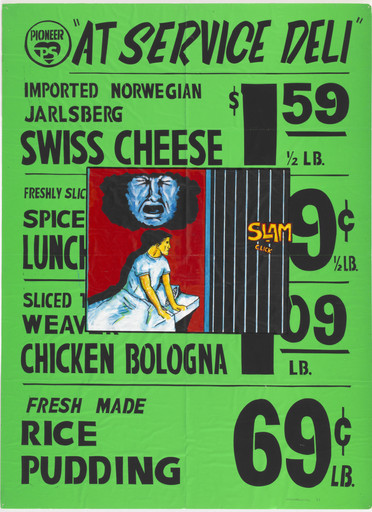
A machine that makes quick duplicate positive or negative copies directly on the surface of prepared paper. Also, the resulting copies.
Learn more →

From MoMA Design Store


Installation views
We have identified this work in the following photos from our exhibition history.
Licensing
Artwork or archival images
If you would like to reproduce an image of a work of art in MoMA's collection, or an image of a MoMA publication or archival material (including installation views, checklists, and press releases), please contact Art Resource (publication in North America) or Scala Archives (publication in all other geographic locations).
Audio and film clips
MoMA licenses archival audio and select out of copyright film clips from our film collection. At this time, MoMA produced video cannot be licensed by MoMA/Scala. All requests to license archival audio or out of copyright film clips should be addressed to Scala Archives at [email protected]. Motion picture film stills cannot be licensed by MoMA/Scala. For access to motion picture film stills for research purposes, please contact the Film Study Center at [email protected]. For more information about film loans and our Circulating Film and Video Library, please visit Circulating Film and Video Library.
Text from a publication or the archives
If you would like to reproduce text from a MoMA publication, please email [email protected]. If you would like to publish text from MoMA's archival materials, please fill out this permission form and send to [email protected].
Feedback
This record is a work in progress. If you have additional information or spotted an error, please fill out this feedback form.