Celmins's depictions of expanses of ocean and sky are executed with a meticulous attention to detail that rivals photography. In Ocean Surface Woodcut 1992, she has manipulated the traditional medium of woodcut with incredible delicacy and precision to present a seascape unbounded by sky or land. "There is a feeling of timelessness that is implied in an image of an ocean that really has no boundaries," Celmins has commented. Through her work, she offers an expansive understanding of time and geography as seemingly limitless.
Printin', February 15-May 14, 2012.
Publication excerpt from an essay by Sarah Suzuki, in Deborah Wye, Artists and Prints: Masterworks from The Museum of Modern Art , New York: The Museum of Modern Art, 2004, p. 236.
After relocating to Indianapolis from wartime Latvia at the age of ten, Vija Celmins began attending elementary school there before she could speak or write English and, as a result, spent much of her time in class drawing. In 1955 she enrolled in a local art school, making occasional trips to New York to see the work of the Abstract Expressionists. Accepted at a prestigious summer program at Yale University, Celmins befriended other young artists, including Chuck Close and Brice Marden, and fully devoted herself to the study of art.
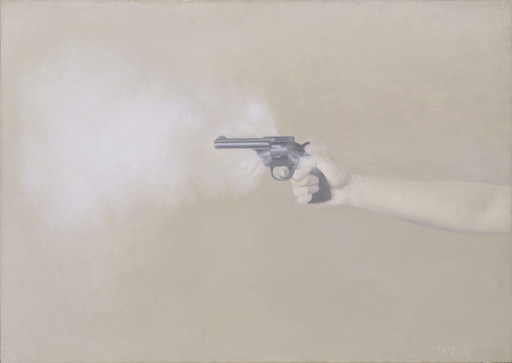
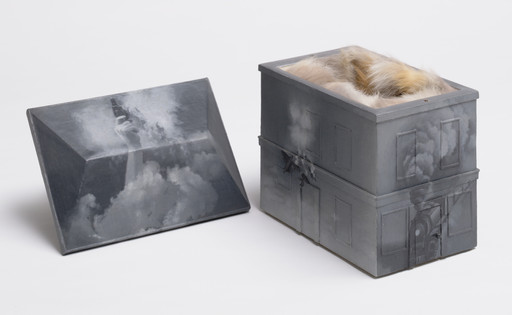
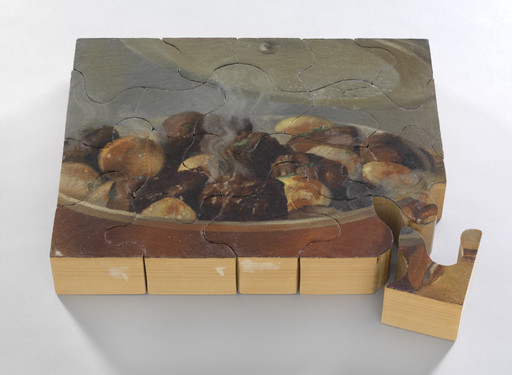
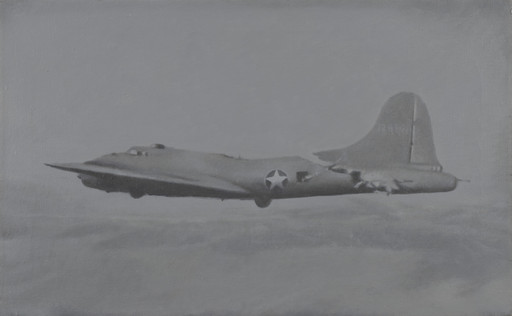
After abandoning her early painterly style, Celmins began making images based on her growing collection of newspaper clippings and photographs, sometimes combining or juxtaposing them in a single work. She eventually developed a group of recurring themes that included infinitely vast natural spaces such as ocean and lunar surfaces, deserts, and starry-night skies that can be related to both the allover compositions of Abstract Expressionism and the implied flatness of Minimalist abstraction. She returns frequently to these motifs, reworking them over long periods of time and in a variety of mediums, with the resulting images marked by enigmatic, contemplative effects.
An interest in mark-making and the gradual and meticulous buildup of an image dominate Celmins's work. This concern is evident in paintings made via many rounds of painting and sanding, drawings made of innumerable pencil marks, as well as in her prints, which she began creating in earnest at the invitation of Tamarind Lithography Workshop in 1970. Gravitating toward labor-intensive mediums such as mezzotint or approaching techniques such as woodcut with a rarely found intricacy, Celmins exploits the physicality of the printmaking process to suit her vision. She has made approximately forty-five editions to date.
an essay by Sarah Suzuki, in Deborah Wye, Artists and Prints: Masterworks from The Museum of Modern Art, New York: The Museum of Modern Art, 2004, p. 236.
Explore more
Woodcut
A printmaking technique that involves printing an image from a carved plank of wood. The image is cut into the wood using tools such as chisels, gouges, and knives.
Learn more →
From MoMA Design Store


Installation views
We have identified this work in the following photos from our exhibition history.
Licensing
Artwork or archival images
If you would like to reproduce an image of a work of art in MoMA's collection, or an image of a MoMA publication or archival material (including installation views, checklists, and press releases), please contact Art Resource (publication in North America) or Scala Archives (publication in all other geographic locations).
Audio and film clips
MoMA licenses archival audio and select out of copyright film clips from our film collection. At this time, MoMA produced video cannot be licensed by MoMA/Scala. All requests to license archival audio or out of copyright film clips should be addressed to Scala Archives at [email protected]. Motion picture film stills cannot be licensed by MoMA/Scala. For access to motion picture film stills for research purposes, please contact the Film Study Center at [email protected]. For more information about film loans and our Circulating Film and Video Library, please visit Circulating Film and Video Library.
Text from a publication or the archives
If you would like to reproduce text from a MoMA publication, please email [email protected]. If you would like to publish text from MoMA's archival materials, please fill out this permission form and send to [email protected].
Feedback
This record is a work in progress. If you have additional information or spotted an error, please fill out this feedback form.