Named after Blanche DuBois, the self-deluded protagonist of Tennessee Williams’s 1947 play A Streetcar Named Desire, Kuramata’s Miss Blanche Chair is an icon of postmodern design. Kuramata initially experimented with embedding natural roses in the chair, but the flowers burned in the acrylic resin, so he instead used artificial ones. “It has to be fake because Blanche DuBois is a fake,” Kuramata said. The synthetic roses appear to float within the chair’s acrylic body, which rests on purple tubular aluminum legs. The tranquil design belies its painstaking construction process—each rose was held in place with tweezers while the surrounding resin hardened.
Pirouette: Turning Points in Design, January 26, 2025–November 15, 2025
Gallery label from 2023
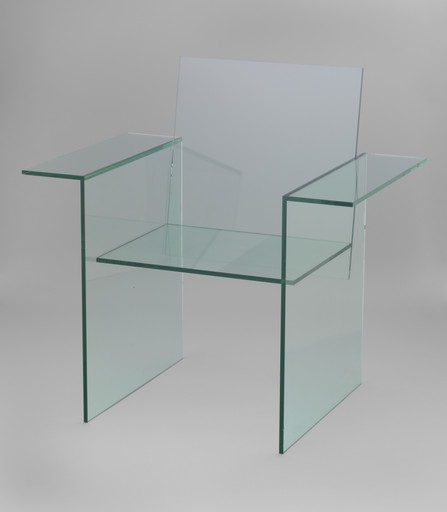
These two chairs, designed twelve years apart, display Kuramata’s explorations of transparency in different materials—the first is made of glass, and the second, acrylic. With its sleek, refined lines, the glass-made Armchair was inspired by the futuristic atmosphere of Stanley Kubrick’s 1968 film 2001: A Space Odyssey. The Miss Blanche Chair similarly draws on an American cultural reference. Named after the main heroine of Tennessee Williams’s 1947 play A Streetcar Named Desire, the chair comprises acrylic resin panels that contain artificial red roses and rests on purple anodized aluminum legs. The floating flowers are an exquisite but rare instance in Kuramata’s work in which figurative elements are combined with abstract forms.
2023
Kids label from 2023
Kuramata was a Japanese designer who often experimented with materials. For this chair, he wanted the paper flowers to “float.” To do that, he carefully positioned the flowers inside liquid acrylic resin (a type of plastic) using tweezers, a tool usually used for plucking hairs or splinters. How do you think it would feel to sit in this chair?
Now think of two other objects or materials that look or feel very different: How would you combine them into something a person could use? How would you like people to use your creation?
2023
Explore more
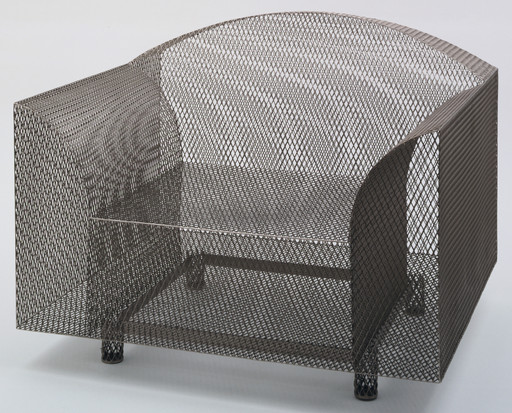
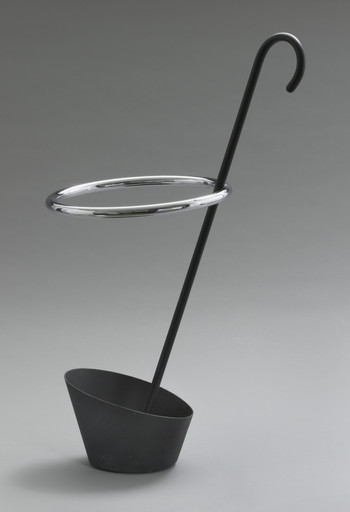
Resin
Any of numerous plant-based, clear, translucent, yellow or brown, solid or semisolid, viscous substances—including copal, rosin, and amber—used principally in lacquers, varnishes, inks, adhesives, plastics, and pharmaceuticals. Resins can also be made from synthetic sources.
Learn more →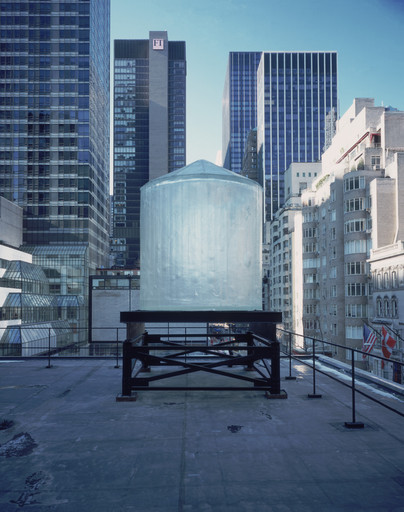






From MoMA Design Store


Installation views
We have identified this work in the following photos from our exhibition history.
Licensing
Artwork or archival images
If you would like to reproduce an image of a work of art in MoMA's collection, or an image of a MoMA publication or archival material (including installation views, checklists, and press releases), please contact Art Resource (publication in North America) or Scala Archives (publication in all other geographic locations).
Audio and film clips
MoMA licenses archival audio and select out of copyright film clips from our film collection. At this time, MoMA produced video cannot be licensed by MoMA/Scala. All requests to license archival audio or out of copyright film clips should be addressed to Scala Archives at [email protected]. Motion picture film stills cannot be licensed by MoMA/Scala. For access to motion picture film stills for research purposes, please contact the Film Study Center at [email protected]. For more information about film loans and our Circulating Film and Video Library, please visit Circulating Film and Video Library.
Text from a publication or the archives
If you would like to reproduce text from a MoMA publication, please email [email protected]. If you would like to publish text from MoMA's archival materials, please fill out this permission form and send to [email protected].
Feedback
This record is a work in progress. If you have additional information or spotted an error, please fill out this feedback form.