The transcripts of the Oral History Program have long been a central part of The Museum of Modern Art Archives, known to many in scholarly circles as an unrivaled primary source for the collective memory of MoMA’s history.


Posts tagged ‘From the Archives’
October 10, 2012
|
Behind the Scenes,
Library and Archives
Artists in Their Own Words: The MoMA Oral History Program
September 28, 2012
|
Behind the Scenes,
Library and Archives
Of Staples and Context: Adventures in Processing the Seth Siegelaub Papers
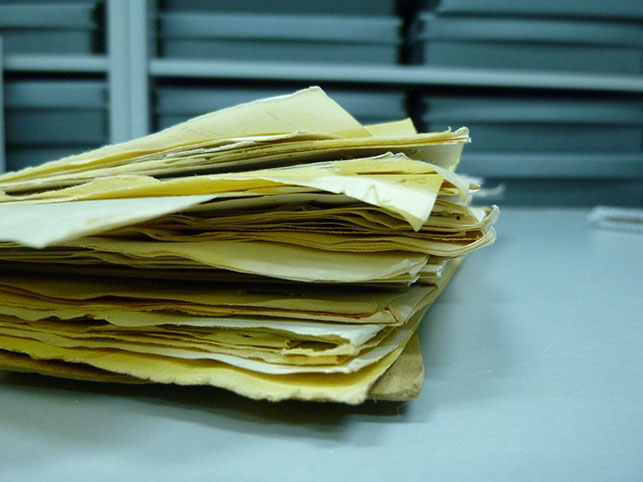
Example of an “information packet,” comprised of various related items, that Seth Siegelaub stapled together
One of the challenging and fundamental responsibilities an archivist faces in his or her work is determining the “original order” of a person or organization’s records.
July 9, 2012
|
Intern Chronicles
In Search of Lost Art: Kurt Schwitters’s Merzbau
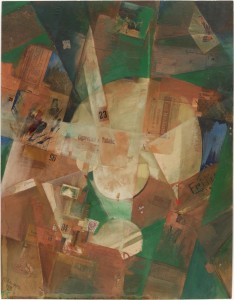
Kurt Schwitters. Picture with Light Center. 1919. Cut-and-pasted colored paper and printed paper, watercolor, oil, and pencil on board. Purchase. © 2012 Artists Rights Society (ARS), New York/VG Bild-Kunst, Bonn

April 9, 2012
|
MoMA PS1
From The Records of MoMA PS1: Illuminating Ephemera
It was as if I had walked into the middle of a professional cliché: crouched in the musty attic of MoMA PS1, I sifted through beaten-up boxes of institutional flotsam. I was attempting to survey the remaining materials to be included in The Records of MoMA PS1, which will open to the public at the end of 2012.
October 24, 2011
|
Library and Archives,
MoMA PS1
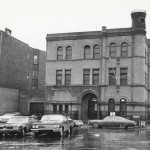
From the Records of MoMA PS1: Space Is the Place
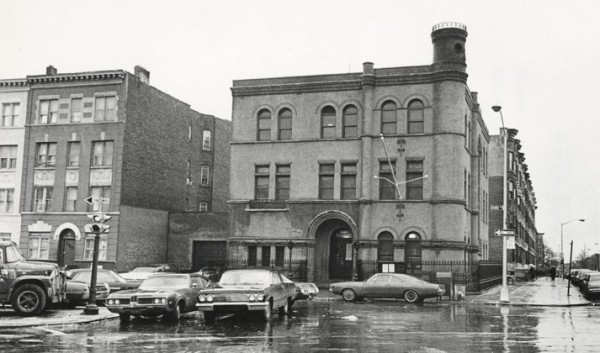
80th Precinct Building. Exhibition and studio space on top two floors operated by Institute for Art and Urban Resources (I.A.U.R.), later known as P.S.1. Photograph by Nancy Moran. 653 Grand Avenue, Brooklyn, New York (December 1972). Resin-coated print. MoMA PS1, 2299. The Museum of Modern Art Archives, New York
Walking down Washington Avenue in Brooklyn’s Crown Heights, I frequently pass a handsome brick building with the telltale green lanterns of a former police precinct headquarters. Regal, imposing, and even a little bit spooky, the 80th Precinct Building is one of the prominent landmarks of my pedestrian and neighborhood life.
October 17, 2011
|
Behind the Scenes,
Library and Archives
The Edward Steichen Archive: The Collection in Context
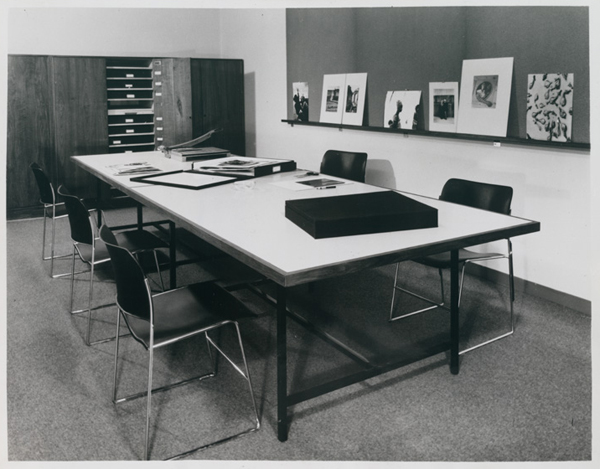
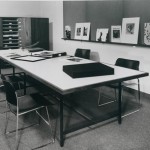
Edward Steichen Photography Study Center. The Museum of Modern Art, New York, 1967. Reports and Pamphlets, 1960s. The Museum of Modern Art Archives, New York
June 27, 2011
|
Collection & Exhibitions,
Library and Archives,
MoMA PS1
From the Records of MoMA PS1: The 40th Anniversary of The Brooklyn Bridge Event
What do you get when you put a group of artists together on a condemned pier beneath the Brooklyn Bridge? No, this isn’t a joke, but the colorfully bizarre origin story of that renowned laboratory of contemporary art, MoMA PS1.

March 8, 2011
|
Artists,
Behind the Scenes,
Library and Archives
Edward Steichen Archive: Delphiniums Blue (and White and Pink, Too)
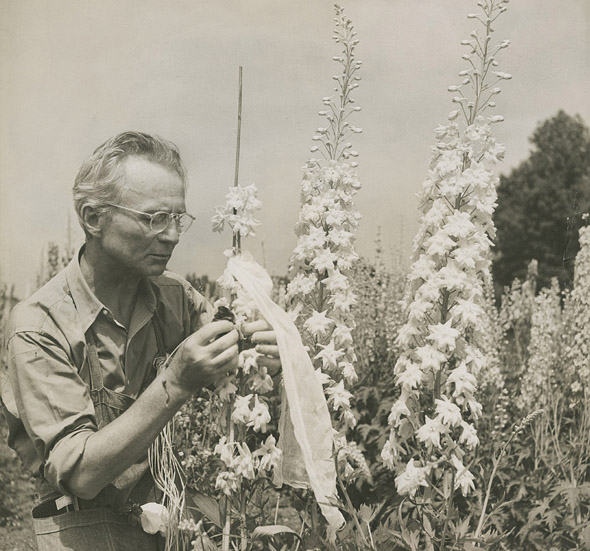
Edward Steichen with delphiniums (c. 1938), Umpawaug House (Redding, Connecticut). Photo by Dana Steichen. Gelatin silver print. Edward Steichen Archive, VII. The Museum of Modern Art Archives
Edward Steichen: painter, photographer, modern art promoter, museum curator, exhibition creator—and delphinium breeder.
Yes, in addition to his groundbreaking career as a visual artist and museum professional, Steichen was also a renowned horticulturist. While he lived in France, the French Horticultural Society awarded him its gold medal in 1913, and he served as president of the American Delphinium Society from 1935 to 1939. In the early 1930s, after leaving his position as chief of photography for the Condé Nast publications—including Vogue and Vanity Fair—and more than 10 years before beginning his career as Director of the Department of Photography at MoMA, he retired to his Connecticut farm to raise flowers.
July 1, 2010
|
Library and Archives
“ART WORK”: Famous Former Staff
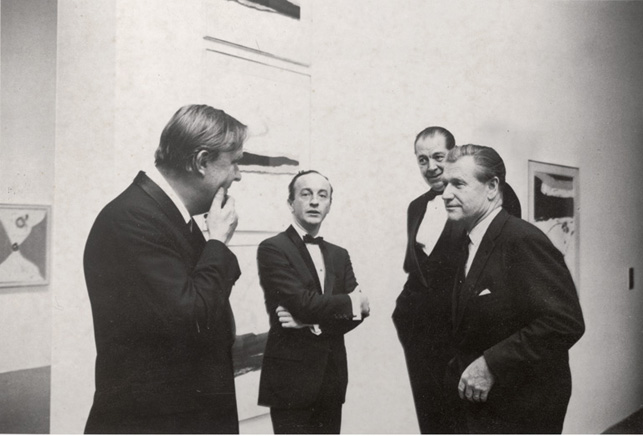
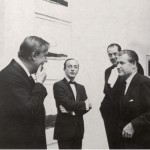
Left to right: Robert Motherwell, Frank O'Hara, René d'Harnoncourt, Nelson Rockefeller at the opening of the exhibition Robert Motherwell, curated by O’Hara. September 18, 1965. Photograph by Allyn Baum. Photographic Archive, The Museum of Modern Art Archives
A number of notable individuals began their relationship with MoMA not as noteworthy artists and established personalities, but as conventional Museum employees. To name a few: actress Kathy Bates was a cashier in the MoMA Stores; artist Allan McCollum was hired as a preparator for the Museum’s 1980 Picasso retrospective; writer and poet Frank O’Hara curated exhibitions, mainly for circulation, at the Museum in the 1950s and 1960s; photographer Edward Steichen served as the director of the Museum’s Department of Photography from 1947 to 1961; and filmmaker Luis Buñuel worked under contract with the Museum on its Latin American Project in the early 1940s.
May 24, 2010
|
Library and Archives
From the Archives: Highlights from the MoMA Guestbook, 1929 to 1944
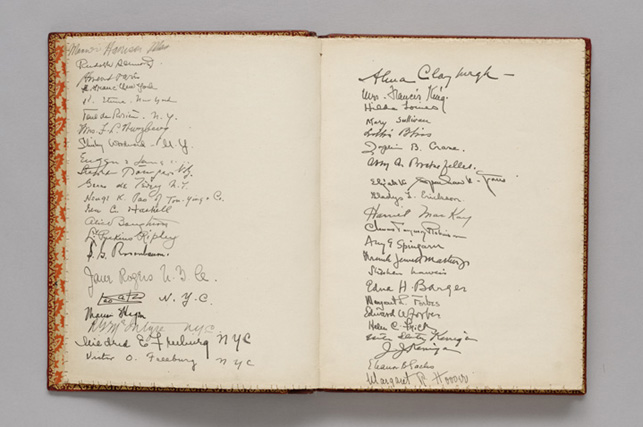
In 1929, three women, Lillie P. Bliss, Abby Aldrich Rockefeller, and Mary Quinn Sullivan, joined forces to establish a museum based in New York City that was devoted exclusively to modern art. Over the course of the next 15 years, over one and a half million visitors paid their respects to the result of their efforts: The Museum of Modern Art. As it turns out, a tiny percentage of these visitors are memorialized in a leather-bound guest register that was brought out by Museum staffers for only its most illustrious guests to sign. The guest book, which now resides in our Archives, is a fascinating document from MoMA’s fledgling years and serves as a reminder of the appeal of the Museum to well-known figures from a wide range of social, professional, and cultural backgrounds.
If you are interested in reproducing images from The Museum of Modern Art web site, please visit the Image Permissions page (www.moma.org/permissions). For additional information about using content from MoMA.org, please visit About this Site (www.moma.org/site).
© Copyright 2016 The Museum of Modern Art
Welcome to MoMA.org. To take full advantage of all the site’s features, including the option to save works in the collection, please upgrade your browser to Firefox,
Google Chrome, Safari, or Internet Explorer 9.
See our help page for more information.
To take full advantage of all of the features on MoMA.org, please upgrade your browser to Firefox, Google Chrome,
Safari, or Internet Explorer 9.