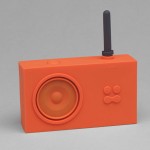
One of the all-time best Christmas presents I ever received was a tiny black plastic transistor radio. It came with a single ear plug, a corded wrist strap, and a thin black vinyl case. There are no words to describe how absolutely fabulous it was, but I have a wonderful memory of bebopping through the snow across the street to my best friend’s house on Christmas night with my new little black transistor radio pressed up close to my ear. I couldn’t wait to show it to her.


Posts in ‘Collection & Exhibitions’
January 8, 2016
|
Collection & Exhibitions
New Photography and MoMA’s Collection, Part 1
The New Photography exhibition series—which Quentin Bajac, The Joel and Anne Ehrenkranz Chief Curator of Photography, has called “a window on the Museum’s approach to photography”—has been an influential vehicle for acquisitions for three decades.
January 6, 2016
|
Collection & Exhibitions
Endless Kazuyo Sejima
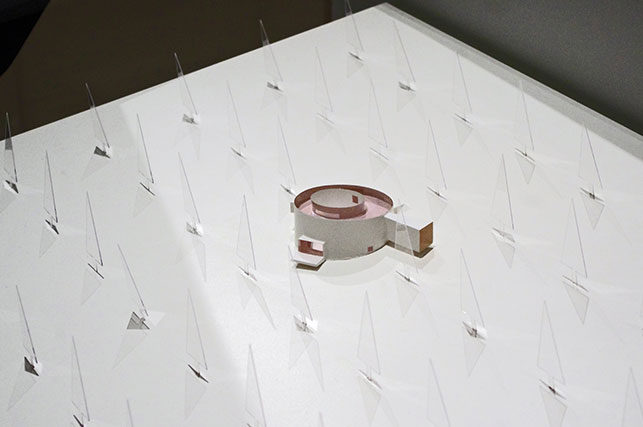
Kazuyo Sejima & Associates. Model of Villa in the Forest, Chino, Nagano, Japan. 1992–94. Acrylic, 6 1/2 x 29 1/2 x 29 3/4″ (16.5 x 74.9 x 75.6 cm). Gift of the architect in honor of Philip Johnson. © 2016 Kazuyo Sejima. Photo: Anna Blair
Some visitors to MoMA’s Endless House: Intersections of Art and Architecture exhibition tell me Frederick Kiesler’s designs don’t have enough windows. His Endless House couldn’t have connected the inhabitants with their environment, they say, comparing Kiesler’s model to Ludwig Mies van der Rohe’s Farnsworth House, a glass and steel box intended to float among the trees.
December 24, 2015
|
Collection & Exhibitions
Good Design Does Well
Being a New Yorker may mean I don’t have the best Pollyanna game going, but it doesn’t stop me from being a true-blue fan of acts of good citizenship. Teddy Roosevelt said that the “first requisite of a good citizen in the Republic of ours is that he be able and willing to pull his weight.” As a staunch defender of the environment; I’d bet Teddy would also be an avid recycler if he were around today, and I’m sure he’d count recycling as an essential act of good citizenship.
You can’t tell me you don’t feel at least a little pleased with yourself, knowing you’re doing the right thing, every time you separate your glass and your cardboard. Yes, it’s a nuisance, but as we used to say back in the early days of the modern environmental movement: “If you’re not part of the solution…you’re part of the pollution.”

Gary Anderson. Recycling Symbol. 1970
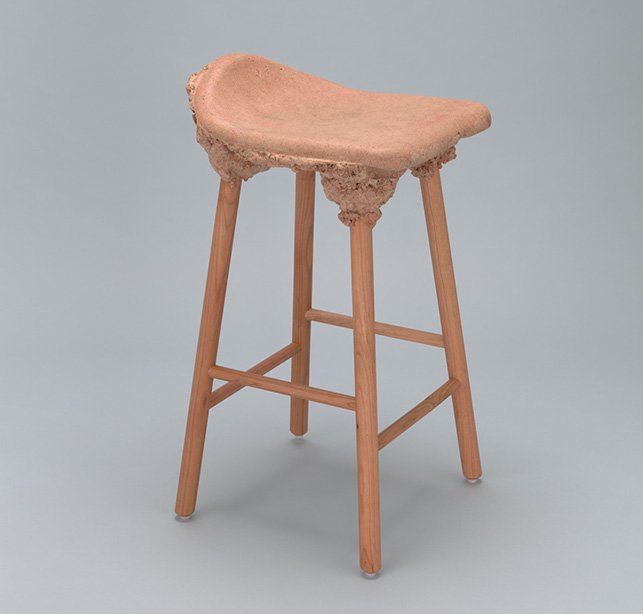
Marjan van Aubel & James Shaw. Well Proven Stool. 2014. Bioresin and cherry wood, 25 3/16 x 15 3/4 x 13 3/4″ (64 x 40 x 35 cm). The Museum of Modern Art, New York. Committee on Architecture and Design Funds. Photographer: Jonathan Muzikar
Also on view in the exhibition are Marjan van Aubel and James Shaw’s eco-friendly Well Proven Stools. Upon learning that that there is a 50 to 80 percent timber wastage in the process of manufacturing wood products from wood planks, the Dutch-British design team decided to build a series of stools and chairs that could use/reuse all of this industrial by-product.
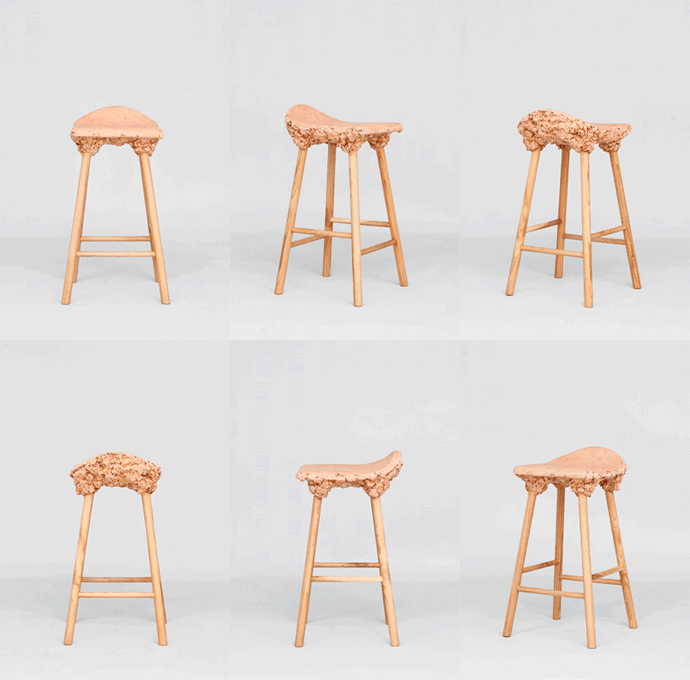
Marjan van Aubel and James Shaw. Well Proven Stool. 2014
Bio-resins are made from organic or plant materials instead of the usual fossil-fuel base, and are themselves recyclable. The material is sturdy and strong yet quite light making the Well Proven Stool possess exactly the qualities you’d want in a stool: comfortable, durable, rugged, and portable, plus they’re environmentally responsible. What could be more equable?
Two Well Proven Stools are on view until January 17, in This is for Everyone. The Universal Recycling Symbol </em>can be found everywhere.
December 22, 2015
|
Artists,
Collection & Exhibitions
Larger Than Life: Picasso’s Sculpture through Brassaï’s Lens
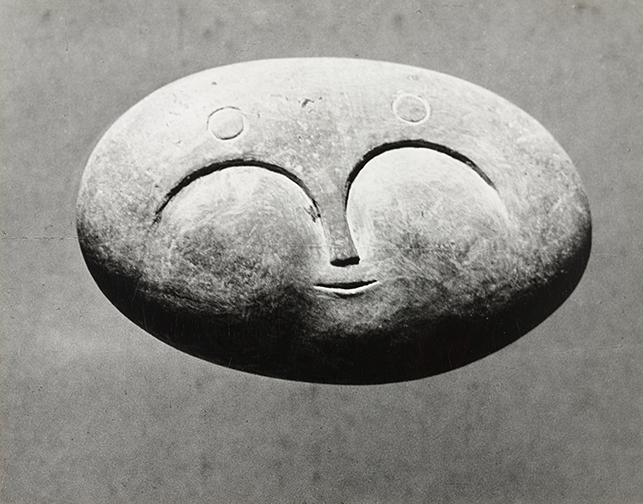
Brassaï (Gyula Halász). Untitled (Pablo Picasso’s Face, 1946). 1946. Gelatin silver print, 8 7/8 x 11 5/16″ (22.6 x 28.7 cm). The Museum of Modern Art, New York. Purchase. © Estate Brassaï-RMN
Many great photographers during the 20th century rose to the challenge of capturing Pablo Picasso on film—Henri Cartier-Bresson, David Douglas Duncan, Gjon Mili, and Irving Penn spring to mind. Yet only one understood Picasso through his sculptures, allowing viewers to do the same in the absence of the originals: the Hungarian-born Brassaï.
December 19, 2015
|
Behind the Scenes,
Collection & Exhibitions
MoMA Collects: Introducing New Acquisitions
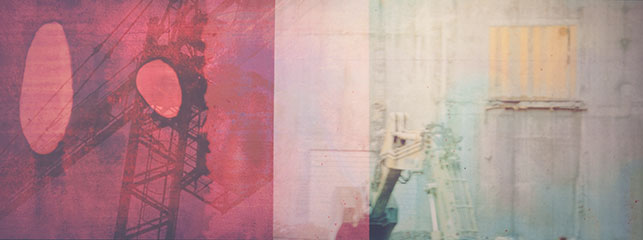
Basim Magdy. Stills from A 240 Second Analysis of Failure and Hopefulness (With Coke, Vinegar and Other Tear Gas Remedies). 2012. 160 35mm color slides and two synchronized Kodak slide carousel projectors, 4 min. The Museum of Modern Art, New York. Fund for the Twenty-First Century. © 2015 Basim Magdy
From an initial gift of eight prints and one drawing in 1929, MoMA’s collection has bloomed to nearly 200,000 works across six curatorial departments—Painting and Sculpture, Drawings and Prints, Media and Performance Art, Photography, Film, and Architecture and Design—including everything from Pablo Picasso’s Les Demoiselles d’Avignon (1907) to Maya Deren’s lush film Meshes of the Afternoon
December 16, 2015
|
Behind the Scenes,
Collection & Exhibitions,
Conservation
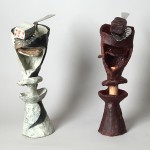
Making Picasso’s Glass of Absinthe in Wax
Pablo Picasso’s Glass of Absinthe is a series of six sculptures created in the first half of 1914. The sculpture depicts a drinking glass with the front cut away to reveal the liquid inside, and perched on the rim is a sugar cube atop an absinthe spoon. Each is painted differently on an identical bronze form. For the current exhibition Picasso Sculpture (through February 7), they are shown together for the first time since they were cast and painted, offering a unique opportunity for study and comparison.
December 15, 2015
|
Collection & Exhibitions,
Publications
Thanks to The Family of Man Fund
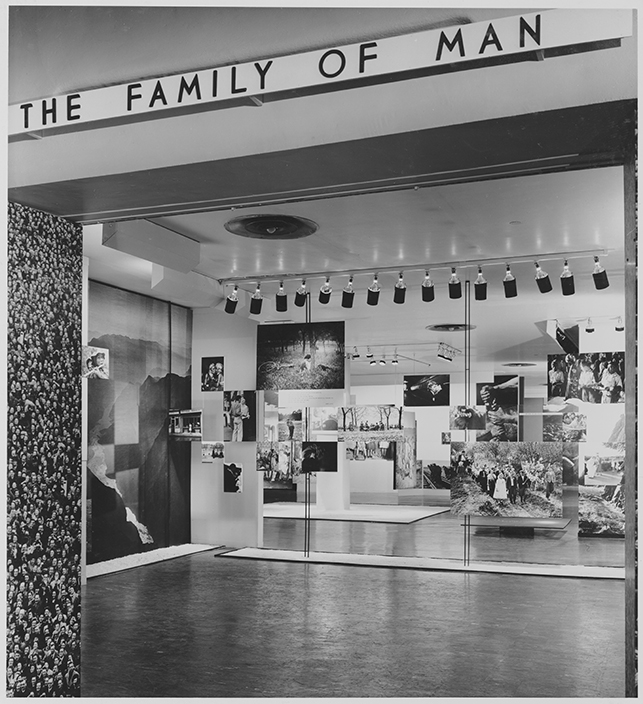
Installation view from the exhibition Family of Man, The Museum of Modern Art, New York, January 24–May 8, 1955. Edward Steichen Archive, V.B.i. The Museum of Modern Art Archives, New York. Photo: Ezra Stoller
The Family of Man opened to the public on January 24, 1955. It included 503 works by 273 photographers hailing from 68 countries. The United States Information Agency circulated five copies of the exhibition, which were presented at 88 venues in 37 countries around the world over the next decade. In 1994, a version of the exhibition was permanently installed at the Clervaux Castle in Luxembourg, where visitors today can experience the exhibition as it was seen by more than seven million people over the last 60 years. As significant as that audience might be, it pales in comparison with the number of people who have held in their hands one of the 300,000 copies that have been sold of the accompanying catalogue, also first published in 1955.
December 10, 2015
|
Collection & Exhibitions,
Design
Data visualization design and the art of depicting reality
As part of an ongoing exhibition series with the Hyundai Card Design Library in Seoul, Korea, MoMA senior curator Paola Antonelli has organized three capsule exhibitions that highlight new frontiers in contemporary design and encourage international dialogue. The second exhibition, Data Visualization, opened in Seoul in July 2015 and has recently concluded. We live in an age where we are bombarded by data gathered by sensors, arrayed by software, and dispersed via ever-proliferating networks. To visualize this data is to understand it. As the projects in this exhibition demonstrated, designers and scientists create diagrams, three-dimensional maps, and other graphics to help us make sense of the copious amount of information with which we are confronted daily. The New York-Seoul exchange has deepened during in-person visits to Korea where Antonelli met with designers to discuss their current work. Here, one of these designers, Sey Min, reflects on the specific circumstances of data visualization design in the Korea.
December 9, 2015
|
Behind the Scenes,
Collection & Exhibitions,
Conservation
Rising from Ruin: Conserving Frank Lloyd Wright’s St. Mark’s Tower Model
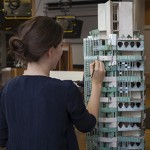
As I’ve been going through the architectural models in Frank Lloyd Wright’s Archive—in preparation for future display—I’ve seen all kinds of condition problems, from acidified paper, to warped and crushed elements, to losses and detachments. But this is not too surprising. Unlike more traditional museum objects like bronze sculptures or oil paintings, architectural models are utilitarian: they exist to articulate a design. Thus, their materials are more often selected for expediency than for longevity.
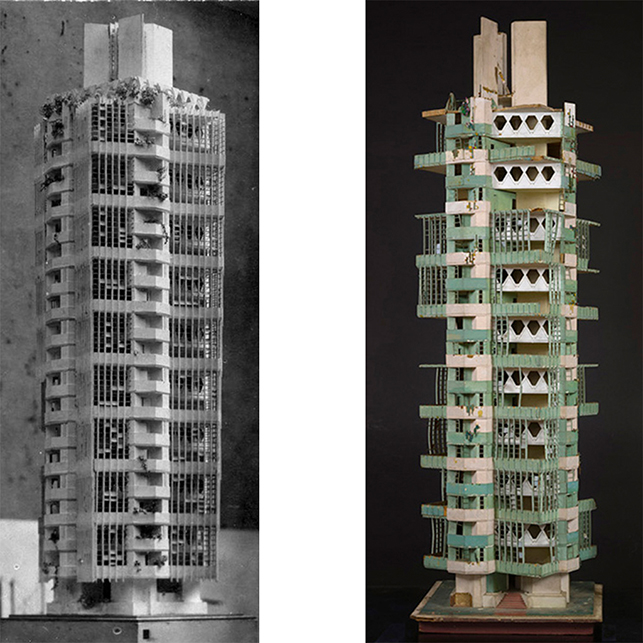
Left: Historic photograph of St. Marks Tower model on display at the Art Institute of Chicago, 1930. Frank Lloyd Wright Foundation Archives (The Museum of Modern Art and Avery Architectural and Fine Arts Library, Columbia University, New York); Right: St. Marks Tower Model at MoMA, before treatment, 2013
The painted wood and paperboard model for St. Mark’s-in-the-Bouwerie Towers represents one of three apartment buildings Wright planned to build around St. Mark’s Church in New York’s East Village. Of the 19 models in the Archive, St. Mark’s Tower is undoubtedly in the worst condition; it has suffered just about every kind of damage I’ve seen among the models. It arrived acidified and embrittled, with approximately 50% of its exterior missing, its floors warped and separating, its wooden base and finial exhibiting large jagged losses, and every surface covered with an accumulation of dirt, cobwebs, and mouse droppings (see images below).
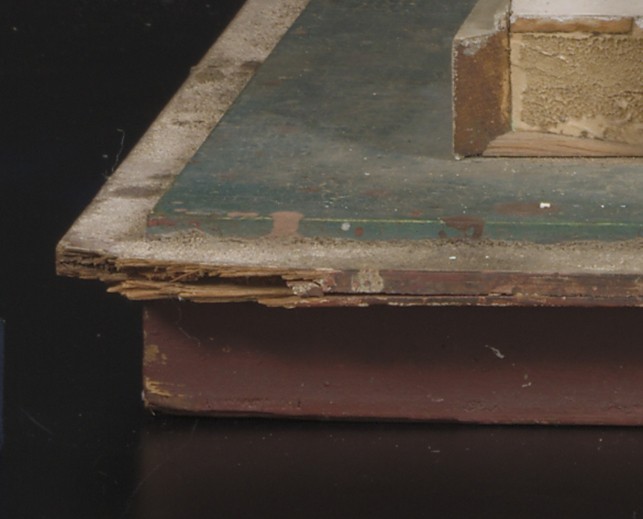
Loss to wooden base
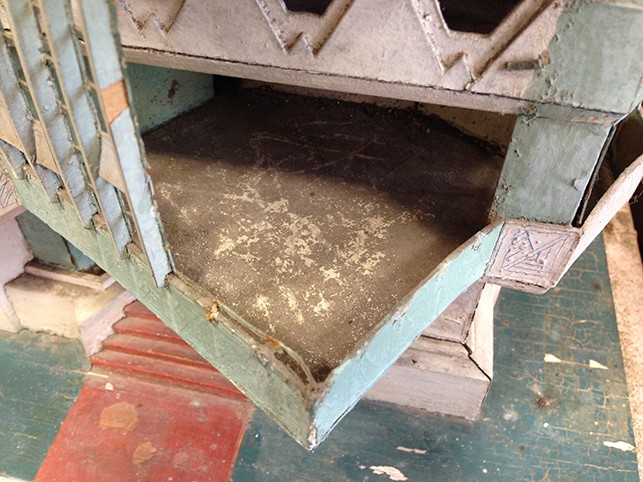
Soiled floor of an apartment unit
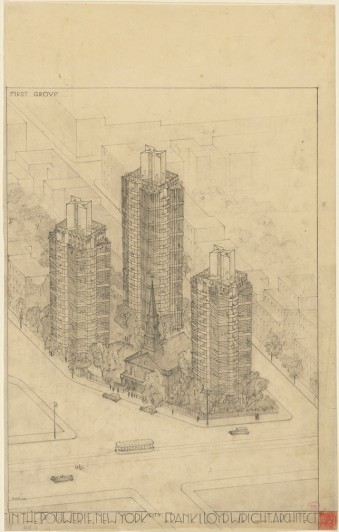
Frank Lloyd Wright. St. Mark’s-in-the-Bouwerie Towers, New York. 1927–31. Aerial perspective. Graphite and colored pencil on tracing paper
The St. Mark’s Tower model is arguably one of the most important models in the Archive. Had the project been realized in the early 1930s, it would have been Wright’s first skyscraper in New York City, and the first building in that metropolis with an all-glass exterior (beating out the Lever House and United Nations building by 20 years!). Though St. Mark’s Tower was never built, Wright exhibited the model frequently, into the early 1950s. (Price Tower, a later version of this building, the model for which is also included in the Archive, was built 20 years later in Bartlesville, Oklahoma.)
When loss to an object is as severe as it is to this model, conventional restoration techniques are brought into question: to introduce so much 21st-century material to an object from the early 20th century raises issues of originality and authenticity. In consultation with curators, a range of options were considered, from leaving the model incomplete and damaged, to restoring it entirely, to fabricating a whole new model. To strike a balance between restoring Wright’s vision and respecting the history of the object, we decided to restore it partially, leaving a quarter of it in its damaged state. From a specific angle, the model will look completely restored, but the unrestored portion will present primary evidence of the extent of the model’s loss and retain its material history. I will use materials in the restored sections that can be distinguished from the original, making the restorations reversible so that future generations can undo the additions if they so decide.
After extensive vacuuming and surface cleaning, the paperboard elements needed to be consolidated and reformed. For this task, I benefited from the expertise of our paper conservators, who advised me to use a combination of moisture, pressure, wheat-starch paste, and time to manipulate the model’s floors back into plane.
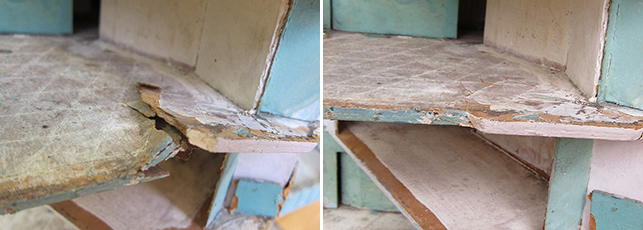
Left: Damaged paperboard floor; Right: After humidification/reshaping treatment
Replacement parts were cut from acid-free matboard. The thicker elements, such as the vertical window casings, were cut by hand. Creating these elements, which are repeated 468 times over the model, made for monotonous but meditative work (not unlike that undertaken in Wright’s studio, some 80 years ago). But I’ve been fortunate to work on this at a moment when it’s possible to also take advantage of new, time-saving technologies, like laser cutting, which was employed to cut the thinner elements such as the window mullions, and ink-jet printing, which I used to replicate repeated, hand-drawn pencil designs found on existing exterior walls.
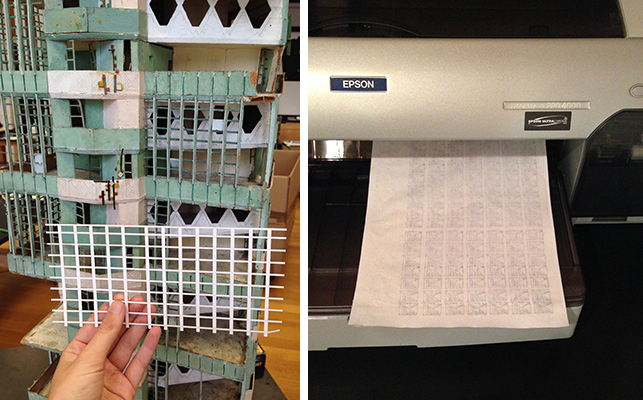
Left: Laser-cut window mullions, before toning; Right: Printing exterior designs onto mulberry paper
After painting these parts with acrylic paint, I attached them to the model with a water-resoluble adhesive and a clamping system of cotton string loops.
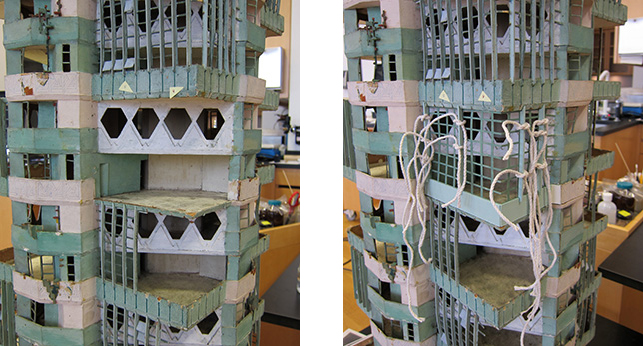
Left: Apartment unit with missing exterior; Right: New exterior applied with string clamps
I then applied the designs, printed on mulberry paper, which become transparent when saturated with adhesive.
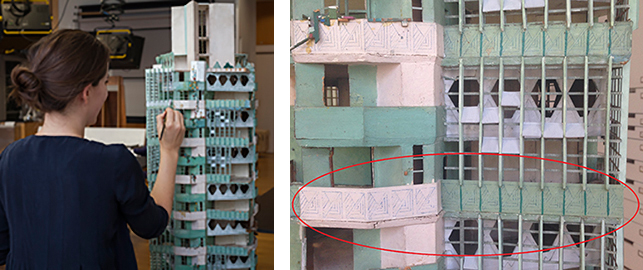
Left: Applying printed designs to the building’s exterior. Photo: Jackie Russo; Right: New walls with printed designs circled
This process has taken over 450 hours, 60 of which are condensed in this time-lapse video:

Now nearing completion, the restored model looks less like a ruin and more like an idea. In 2017, it will be exhibited for the first time in over half a century, allowing today’s visitors to gain insight into both Wright’s groundbreaking innovation and his working process. New Yorkers in particular may enjoy imagining how a trio of towering glassy structures would have transformed the landscape of the downtown lowlands.
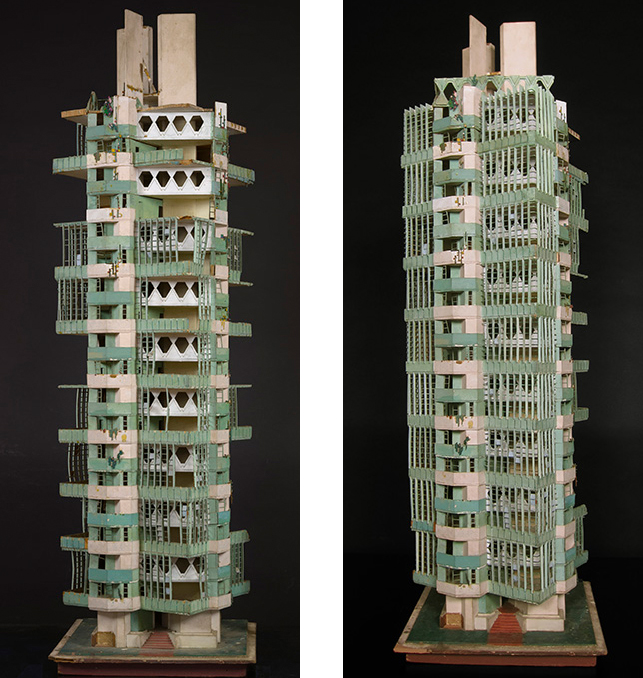
Left: Before treatment; Right: During treatment
If you are interested in reproducing images from The Museum of Modern Art web site, please visit the Image Permissions page (www.moma.org/permissions). For additional information about using content from MoMA.org, please visit About this Site (www.moma.org/site).
© Copyright 2016 The Museum of Modern Art
Welcome to MoMA.org. To take full advantage of all the site’s features, including the option to save works in the collection, please upgrade your browser to Firefox,
Google Chrome, Safari, or Internet Explorer 9.
See our help page for more information.
To take full advantage of all of the features on MoMA.org, please upgrade your browser to Firefox, Google Chrome,
Safari, or Internet Explorer 9.