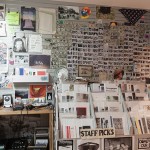
From the earliest conversations about recreating The Newsstand at The Museum of Modern Art in Ocean of Images: New Photography 2015, artist Lele Saveri was insistent that the physical work alone was not enough.


Posts in ‘Collection & Exhibitions’

February 29, 2016
|
Artists,
Collection & Exhibitions,
Film
“Native Videographers Shoot Back”: An Interview with Adam and Zack Khalil
The 15th Doc Fortnight festival closes on February 29, 2016, with the world premiere of Adam Khalil and Zack Khalil’s INAATE/SE/ [it shines a certain way. to a certain place./it flies. falls./], the artists’ reflection on and reframing of their own Native American heritage. I recently spoke with the Khalil brothers about the concept and context for their film:
February 25, 2016
|
Collection & Exhibitions
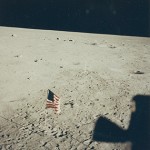
MoMA Collects: NASA Photographs of the Apollo Missions
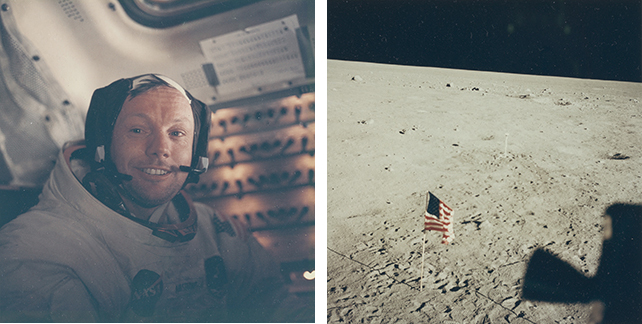
Left: Untitled photograph from the Apollo 11 mission. July 1969. Chromogenic color print. The Museum of Modern Art, New York. Gift of Susan and Peter MacGill; right: Untitled photograph from the Apollo 11 mission. July 1969. Chromogenic color print. The Museum of Modern Art, New York. Gift of Susan and Peter MacGill
The Apollo space program, which conducted 12 manned missions between 1961 and 1975, was the first to bring humans to the moon, and has become a cultural touchstone. The most famous mission, of course, is Apollo 11, when Buzz Aldrin and Neil Armstrong became the first humans to walk on the surface of the moon.
February 12, 2016
|
Behind the Scenes,
Collection & Exhibitions
MoMA Collects: Andres Serrano’s Piss and Blood
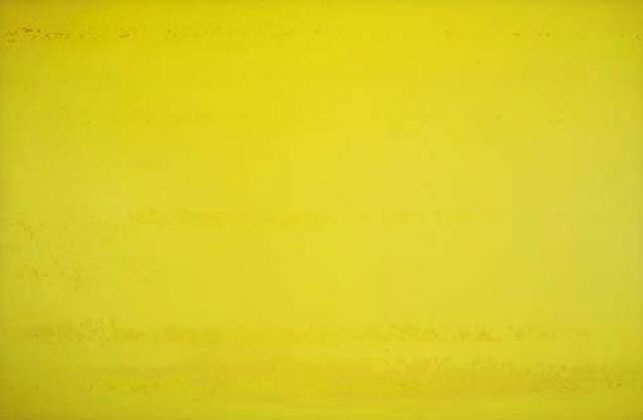
Andres Serrano. Piss. 1987. Chromogenic color print, 40 × 60″ (101.6 × 152.4 cm). The Museum of Modern Art. The Abramson Collection. Gift of Stephen and Sandra Abramson. © 2016 Andres Serrano
February 9, 2016
|
Collection & Exhibitions,
Film
Talking with Ernie Gehr about His CARNIVAL OF SHADOWS
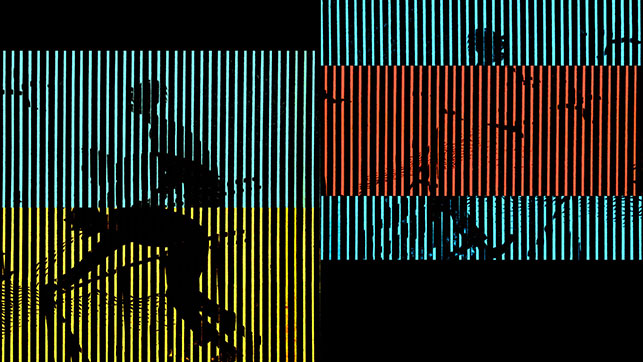
Ernie Gehr. CARNIVAL OF SHADOWS. 2012–15. Five-channel video (black-and-white and color, silent), approx 20 min. The Museum of Modern Art, New York. Image courtesy the artist
Ernie Gehr is a key figure in postwar American avant-garde filmmaking, best known for such experimental film works as Serene Velocity (1970) and Side/Walk/Shuttle (1991) (both of which are in MoMA’s collection). Gehr’s films dazzle the senses, but they are not mere eye candy; they touch deeper themes of human perception and consciousness

January 29, 2016
|
Collection & Exhibitions
MoMA Collects: Rafael Barradas, Kim Beom, William Johnson, Chris Ofili, Kara Walker, and Others
In mid-January, two of MoMA’s six curatorial departments—Painting and Sculpture, and Drawings and Prints—held acquisitions meetings to usher into the Museum’s collection new artist’s books, posters, fabric installations, painted sculptures, and more. These meetings take place quarterly and, over the course of the year, result in the addition of hundreds of works—spanning mediums, geographies, and histories—to create an overall collection that is continuously evolving.

January 28, 2016
|
Behind the Scenes,
Collection & Exhibitions
A Day-by-Day Look at Katharina Gaenssler’s Bauhaus Staircase photo-mural
For Ocean of Images: New Photography 2015, MoMA commissioned Katharina Gaenssler to create a photo-mural right outside the exhibition galleries on the third-floor platform of the Museum’s Bauhaus Staircase, which is inspired by Walter Gropius’s famous staircase in the Bauhaus building in Dessau, Germany. Gaenssler photographed that stairway, as well as two works that reference it, both in MoMA’s collection: Bauhaus Stairway (1932) by Oskar Schlemmer and Bauhaus Stairway (1988) by Roy Lichtenstein. She collaged the resulting thousands of pictures together in an installation that explores the relationship between MoMA and the influential modernist school, tracing the history of the Bauhaus’s monumental contribution to the history of art and architecture through works of imitation and homage. In the process, she adds a new artwork to this lineage.
January 27, 2016
|
Artists,
Collection & Exhibitions
MoMA Collects: Simone Forti’s Dance Constructions
Before moving to New York in 1959, choreographer Simone Forti spent four heady, formative years in San Francisco. There, she trained with the postmodern dance pioneer Anna Halprin, who rejected the stylistic constraints of ballet and modern dance. On Halprin’s outdoor dance deck in wooded Marin County, Forti explored improvisation, her motions guided by a keen alertness to the body’s anatomy. She also organized open-work sessions with her then husband, the Minimalist artist Robert Morris, gathering artists for communal, multidisciplinary explorations of movement, objects, sound, and light.
January 15, 2016
|
Artists,
Collection & Exhibitions
Marcel Duchamp’s Readymades: Celebrating the Centennial
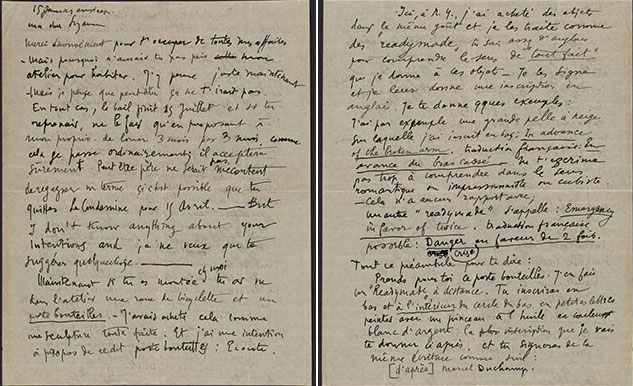
Marcel Duchamp’s letter to Suzanne Duchamp, January 15, 1916. Jean Crotti papers. Archives of American Art, Smithsonian Institution. Read the full translation below
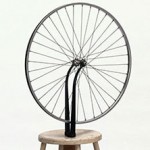
In 1913 Marcel Duchamp topped a kitchen stool with a bicycle wheel, “fork down” through a hole he had drilled in the seat, and parked this wheel-on-a-stool in his Paris studio. “I didn’t have any special reason to do it,” he later recalled.
January 13, 2016
|
Artists,
Collection & Exhibitions
Joaquín Torres-García’s Creative Paradox
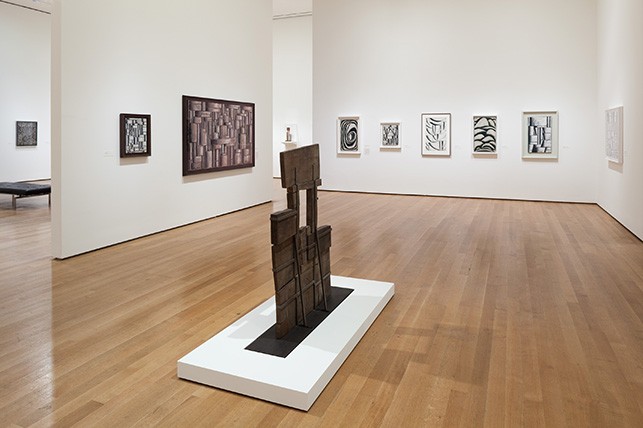
Installation view of Joaquín Torres-García: The Arcadian Modern at The Museum of Modern Art, New York (October 25, 2015–February 15, 2016). Photo: Jonathan Muzikar. © 2016 The Museum of Modern Art, New York
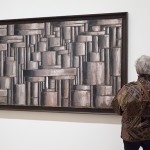
When Joaquín Torres-García returned to his native Uruguay in 1934, he was 60 years old and had lived abroad for more than 40 years. During the first years of his American relocation, before he became the referential Master at Taller Torres-García, he founded and directed the Asociación de Arte Constructivo, the achronym for which—AAC—appears signed on most of his paintings from 1935 to 1938. During these years Torres-García created a series of black-and-white abstract paintings that constitute one of the most striking repertoires of synthetic abstraction ever produced in the Americas.
If you are interested in reproducing images from The Museum of Modern Art web site, please visit the Image Permissions page (www.moma.org/permissions). For additional information about using content from MoMA.org, please visit About this Site (www.moma.org/site).
© Copyright 2016 The Museum of Modern Art
Welcome to MoMA.org. To take full advantage of all the site’s features, including the option to save works in the collection, please upgrade your browser to Firefox,
Google Chrome, Safari, or Internet Explorer 9.
See our help page for more information.
To take full advantage of all of the features on MoMA.org, please upgrade your browser to Firefox, Google Chrome,
Safari, or Internet Explorer 9.