
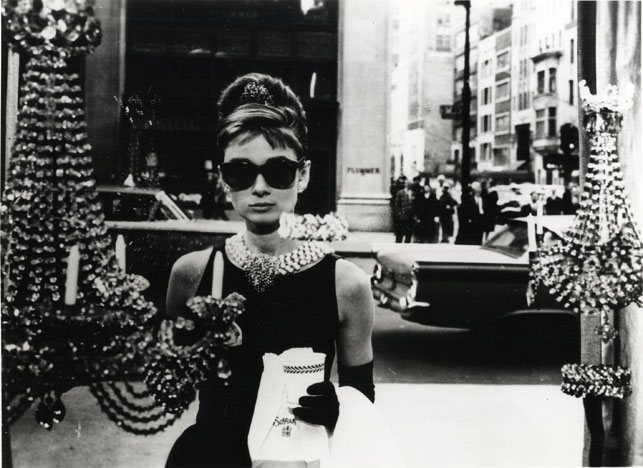
Audrey Hepburn in Breakfast at Tiffany’s. 1961. USA. Directed by Blake Edwards
These notes accompany screenings of Blake Edwards’s </em>Breakfast at Tiffany’s</a> on July 17, 18, and 19 in Theater 3.</p>
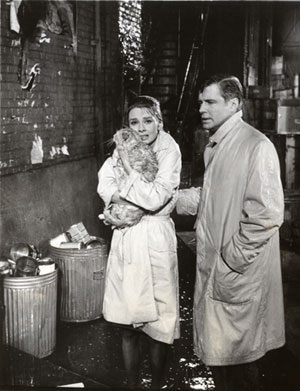
With the possible exception of Robert Aldrich, Blake Edwards (1922–2010) is, I think, the most important director to emerge from the shambles of the Hollywood studio system (and the greatest Oklahoman since statehood.) While Aldrich was the embodiment of noir, Edwards had a diverse talent. He displayed a darker side in Experiment in Terror, The Days of Wine and Roses, and Gunn (derived from the innovative television series he created), yet no director in the sound era maintained a higher standard of physical comedy, whimsical characterization, and outright slapstick reminiscent of the great silents of Chaplin, Keaton, and Lloyd. The Great Race is dedicated to Laurel and Hardy, and Edwards’s Peter Sellers films, such as The Party and A Shot in the Dark (along with the rest of the Pink Panther series), are without parallel. His work with Julie Andrews, his wife for over 40 years—which includes such masterpieces as Darling Lili, S.O.B., Victor Victoria, and That’s Life—preserves on celluloid one of the cinema’s greatest and most enduring love stories between an auteur and a performer. A self-styled “spunky, smart-assed kid” from Tulsa, step-grandson of a silent film director (J. Gordon Edwards, mentor of Theda Bara and William Farnum), and stepson of another significant movie industry figure (Jack McEdwards), Edwards seemed predestined for his career. Audrey Hepburn and George Peppard in Breakfast at Tiffany’s. 1961. USA. Directed by Blake Edwards The film is, of course, based on the novella by Truman Capote, but homage should be paid to screenwriter George Axelrod, who also collaborated on Billy Wilder’s The Seven Year Itch (which, along with Sunset Boulevard and The Apartment had some similar aspects to the plot and sensibilities of Breakfast at Tiffany’s). Ultimately, however, it is Edwards who discovered his inner romanticism, which would burgeon in his Andrews period. Wilder would have been too cynical to have brought it off, and one can’t imagine him culminating his film in the loving embrace of a cat. In the final analysis, the film is a modern fairy tale, with Holly as a self-imprisoned and, finally, liberated Snow White or Rapunzel. But unlike Snow White and the Huntsman, in this one she finds her Prince Charming living in her own Greenwich Village apartment building.