Not on view
In 1960 Clark began to produce movable metal sculptures that could be modified by the spectator from three–dimensional planes to flat reliefs. She titled this series Bichos (Critters), making reference to animals and organic structures, as in her sculpture Sundial. Poetic Shelter is a key piece, leading to the conclusion of the series by privileging space over flatness and presenting construction as a form of shelter. In this work, as in her drawings, Clark liberates plane and line from their inanimate condition and recovers their vitality through movement and transformation in space.
New Perspectives in Latin American Art, 1930–2006: Selections from a Decade of Acquisitions, November 21, 2007–February 25, 2008
Gallery label from Artist’s Choice: Grace Wales Bonner—Spirit Movers, November 18, 2023 – April 07, 2024
In 1959 Clark signed the Manifesto Neo-concreta (Neo-Concrete Manifesto), joining fellow Brazilian artists in calling for a greater emphasis on bodily and sensuous experience in geometric abstraction. Clark’s sculptural series of the early 1960s, called Bichos (“critters” in Portuguese) in reference to the creature-like forms of the works, was intended to be participatory; she invited spectators to touch and manipulate the hinged metal pieces, which could be transformed from flat planes into three-dimensional structures. Following the Bichos, Clark’s process grew increasingly interactive, collaborative, and experiential, emphasizing her perspective that art should be perceived with all the senses. “We do everything so automatically,” she said, “that we have forgotten the poignancy of smell, of physical anguish, of tactile sensations of all kinds.”
Artist’s Choice: Grace Wales Bonner—Spirit Movers, November 18, 2023 – April 07, 2024
Explore more
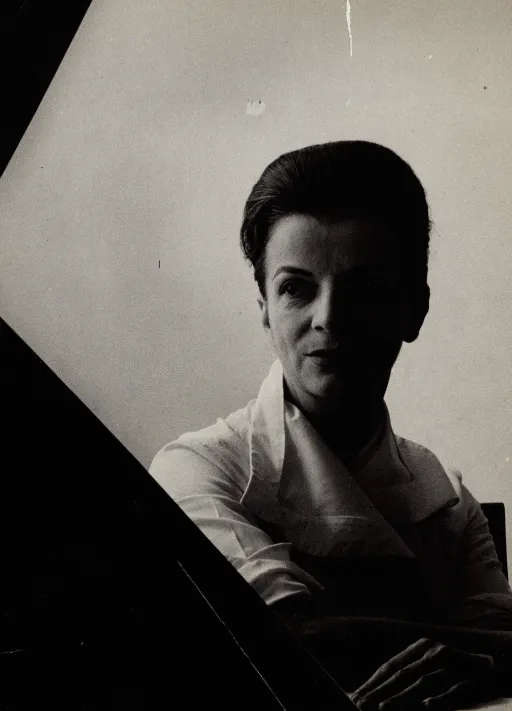
Lygia Clark
Brazilian, 1920–1988 21 works onlineThe notion that the work of art was more like a body than a discrete object was a radical idea that led many Brazilian artists to embrace the viewer’s subjective experience as the main criterion in art making.
Learn more →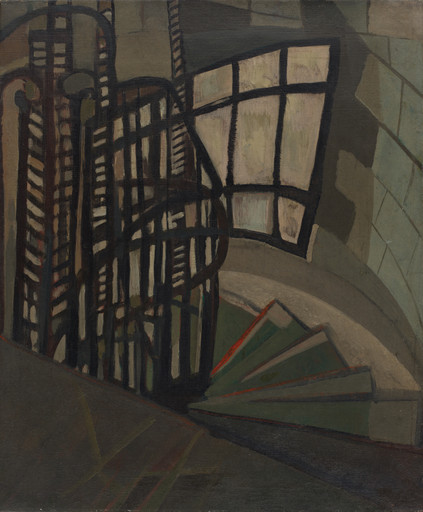

From MoMA Design Store


Installation views
We have identified this work in the following photos from our exhibition history.
Provenance
The artist.
[Alvaro Clark, inherited from the artist]
? - 1997, Galeria César Aché, Río de Janeiro (archival code #582).
1997 - 2016, Colección Patricia Phelps de Cisneros, New York, and Caracas, purchased through Galeria César Aché.
2004, The Museum of Modern Art, New York, gift from Patricia Phelps de Cisneros .
Exhibition history
MoMA Exh. #1993: "Live/Work: Performance into Drawing", 3rd Floor, The Paul J. Sachs Drawing Galleries, January 31 - May 21, 2007
MoMA Exh. #2022: "New Perspectives in Latin American Art, 1930-2006: Selections from a Decade of Acquisitions", 3rd Floor, November 21, 2007 - February 25, 2008
Albany, New York State Museum, "Latin American and Caribbean Art: Selected Highlights from the Collection of The Museum of Modern Art", May 17 - October 13, 2008
Madrid, Museo Nacional Centro de Arte Reina Sofía, "La invención concreta. Collección Patricia Phelps de Cisneros", January 22 - September 16, 2013
MoMA Exh. #2286: “Lygia Clark: The Abandonment of Art, 1948-1988”, 6th Floor, The Joan and Preston Robert Tisch Gallery, May 10 – August 24, 2014
MoMA Exh. #2335: "Transmissions: Art in Eastern Europe and Latin America, 1960–1980", 6th Floor, The Joan and Preston Robert Tisch Gallery, September 5, 2015 - January 3, 2016
MoMA Exh. #2424: "Sur moderno: Journeys of Abstraction—The Patricia Phelps de Cisneros Gift", 3rd Floor, 3 East, October 21, 2019 - September 12, 2020
MoMA Exh. #2451: “Collection: 1940s-1970s”, 4th Floor, gallery 413, “Touching the Void”, November 14, 2020 - removed February 11, 2022
Licensing
Artwork or archival images
If you would like to reproduce an image of a work of art in MoMA's collection, or an image of a MoMA publication or archival material (including installation views, checklists, and press releases), please contact Art Resource (publication in North America) or Scala Archives (publication in all other geographic locations).
Audio and film clips
MoMA licenses archival audio and select out of copyright film clips from our film collection. At this time, MoMA produced video cannot be licensed by MoMA/Scala. All requests to license archival audio or out of copyright film clips should be addressed to Scala Archives at [email protected]. Motion picture film stills cannot be licensed by MoMA/Scala. For access to motion picture film stills for research purposes, please contact the Film Study Center at [email protected]. For more information about film loans and our Circulating Film and Video Library, please visit Circulating Film and Video Library.
Text from a publication or the archives
If you would like to reproduce text from a MoMA publication, please email [email protected]. If you would like to publish text from MoMA's archival materials, please fill out this permission form and send to [email protected].
Feedback
This record is a work in progress. If you have additional information or spotted an error, please fill out this feedback form.