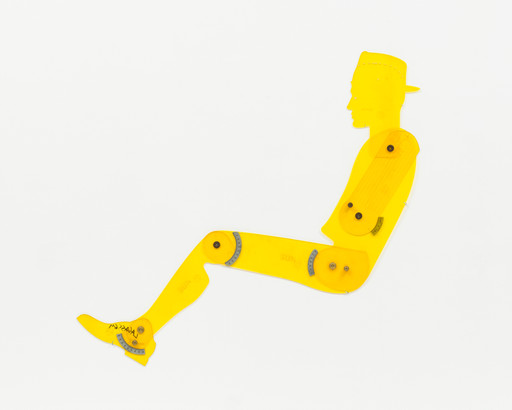
Clear acrylic, paint, metal and felt
In the early 1980s NASA began exploratory designs for the interior of the International Space Station Habitation Module: a tiny, cramped area—thirteen feet in diameter—where six astronauts would live for several months in a weightless environment, orbiting three hundred nautical miles above the Earth. In addition to these design challenges, in zero gravity there is no stable point of view—no floor or ceiling, top or bottom, or fixed floor plan. The NASA planners who deal with astronauts environment, clothing, and food—called Human Factors Research—engaged Kalil, a New York-based educator, interior designer, and artist, to examine the quintessentially human qualities of the project, such as the psychological impact of sensory deprivation and monotony. Kalil attempted to define a new spatial language for space habitation. His project is visionary, and, in the words of the client, it is "poetic, lyrical, and gets away from the nuts and bolts type of engineering at NASA."
Born out of Necessity, March 2, 2012–January 28, 2013.
Explore more
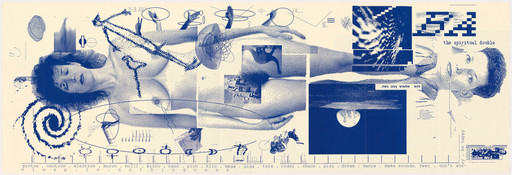
Body Constructs
Gallery 417Modern architects and designers imagined not only new buildings and objects, but also the bodies that would inhabit and use them.
Learn more →

From MoMA Design Store


Licensing
Artwork or archival images
If you would like to reproduce an image of a work of art in MoMA's collection, or an image of a MoMA publication or archival material (including installation views, checklists, and press releases), please contact Art Resource (publication in North America) or Scala Archives (publication in all other geographic locations).
Audio and film clips
MoMA licenses archival audio and select out of copyright film clips from our film collection. At this time, MoMA produced video cannot be licensed by MoMA/Scala. All requests to license archival audio or out of copyright film clips should be addressed to Scala Archives at [email protected]. Motion picture film stills cannot be licensed by MoMA/Scala. For access to motion picture film stills for research purposes, please contact the Film Study Center at [email protected]. For more information about film loans and our Circulating Film and Video Library, please visit Circulating Film and Video Library.
Text from a publication or the archives
If you would like to reproduce text from a MoMA publication, please email [email protected]. If you would like to publish text from MoMA's archival materials, please fill out this permission form and send to [email protected].
Feedback
This record is a work in progress. If you have additional information or spotted an error, please fill out this feedback form.