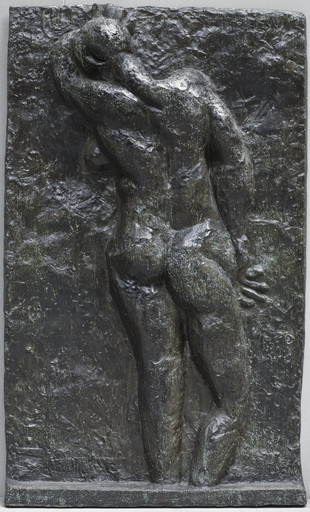
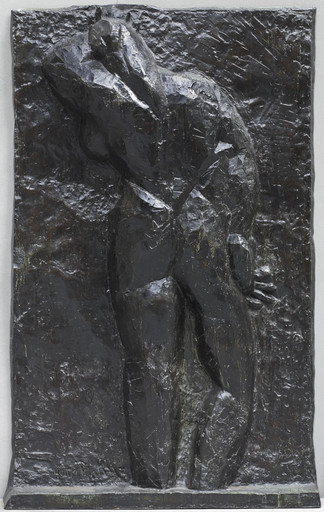
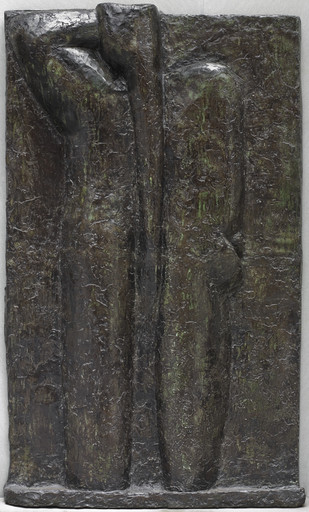
"Fit your parts into one another and build up your figure as a carpenter does a house. Everything must be constructed—built up of parts that make a unit; a tree like a human body, a human body like a cathedral." So Matisse believed the sculptor should proceed, and the credo can be sensed in this work and throughout the group of four relief sculptures to which it belongs, with its progressive stability and simplicity. Matisse did not conceive The Backs as a series, but occasionally returned to the theme over the years. Even so, these reliefs—his largest sculptures—present a coherent progress, from a relatively detailed naturalism toward a near-abstract monumentality.
This work is the third in the series, and it is more vertical and less sinuous than its precursors. The first work in the series (1909) has a dynamic tension, and an arabesque line flows through it; in the second (1913), the body is more erect, less fluid. The left leg has become a thick pillar; making the figure more solid. The third work leads to the fourth (1931), where Matisse suppresses physical detail, making the contours more fluid, the surface more homogeneous. But if he surrenders expressiveness in the sculpture's parts, he regains it in the symmetrical harmony of the work as a whole.
The Museum of Modern Art, MoMA Highlights, New York: The Museum of Modern Art, revised 2004, originally published 1999, p. 78.
Explore more
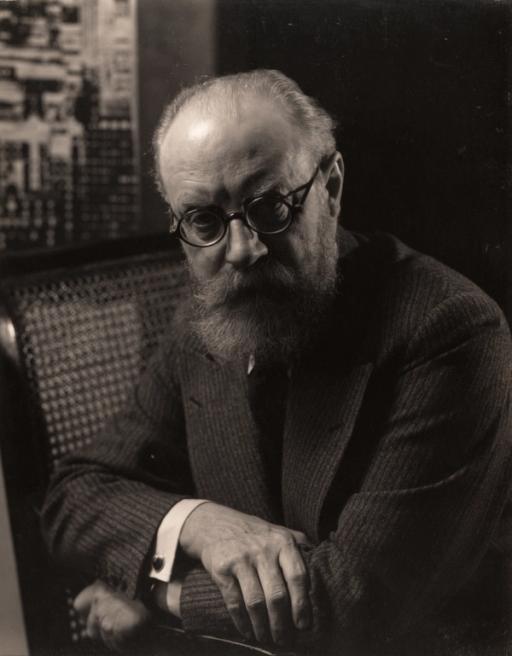
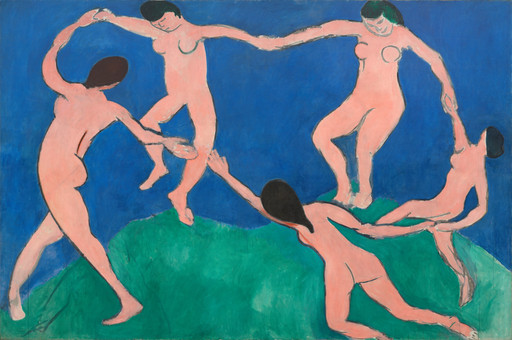
Henri Matisse
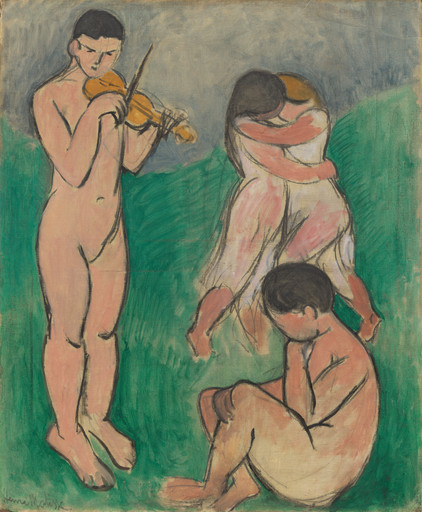
French, 1869–1954 429 works onlineThroughout his decades-long career as a painter, sculptor, draftsman, and printmaker, Henri Matisse continuously searched, in his own words, “for the same things, which I have perhaps realized by different means.
Learn more →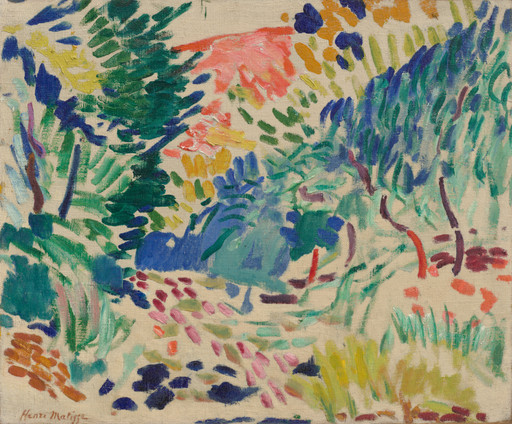
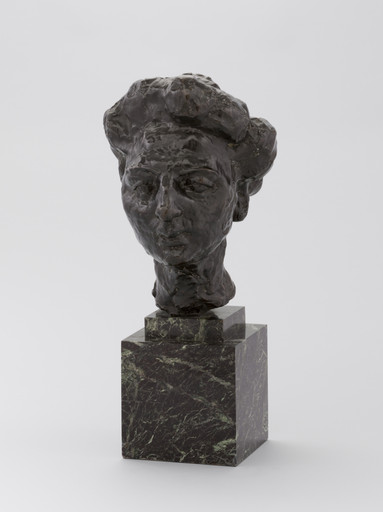
Relief
Figures or forms carved or molded so as to project from a flat surface, as in sculpture, or the apparent projection of such shapes in a painting or drawing.
Learn more →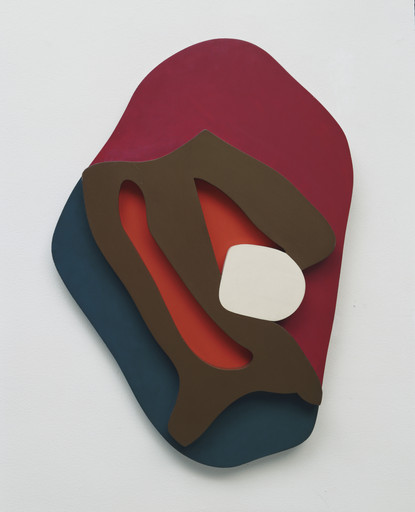
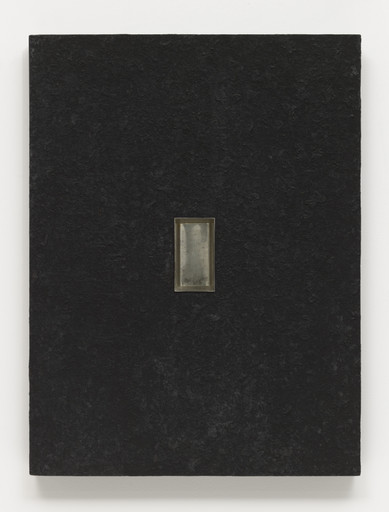

UUmwelt
Sculpture GardenAt a time when AI is dramatically changing how we see, what does it mean to visualize a world that’s no longer centered on the human mind?
Learn more →


From MoMA Design Store


Installation views
We have identified this work in the following photos from our exhibition history.
Provenance Research Project
This work is included in the Provenance Research Project, which investigates the ownership history of works in MoMA's collection.
Pierre Matisse Gallery, New York
The Museum of Modern Art, New York. Purchased from Pierre Matisse, 1952
Provenance research is a work in progress, and is frequently updated with new information. If you have any questions or information to provide about the listed works, please email [email protected] or write to:
Provenance Research Project
The Museum of Modern Art
11 West 53 Street
New York, NY 10019
Licensing
Artwork or archival images
If you would like to reproduce an image of a work of art in MoMA's collection, or an image of a MoMA publication or archival material (including installation views, checklists, and press releases), please contact Art Resource (publication in North America) or Scala Archives (publication in all other geographic locations).
Audio and film clips
MoMA licenses archival audio and select out of copyright film clips from our film collection. At this time, MoMA produced video cannot be licensed by MoMA/Scala. All requests to license archival audio or out of copyright film clips should be addressed to Scala Archives at [email protected]. Motion picture film stills cannot be licensed by MoMA/Scala. For access to motion picture film stills for research purposes, please contact the Film Study Center at [email protected]. For more information about film loans and our Circulating Film and Video Library, please visit Circulating Film and Video Library.
Text from a publication or the archives
If you would like to reproduce text from a MoMA publication, please email [email protected]. If you would like to publish text from MoMA's archival materials, please fill out this permission form and send to [email protected].
Feedback
This record is a work in progress. If you have additional information or spotted an error, please fill out this feedback form.