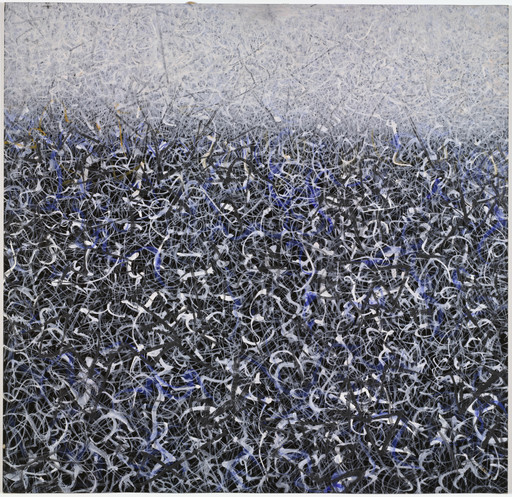
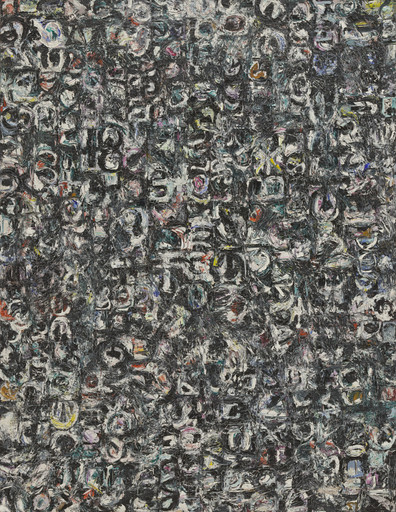
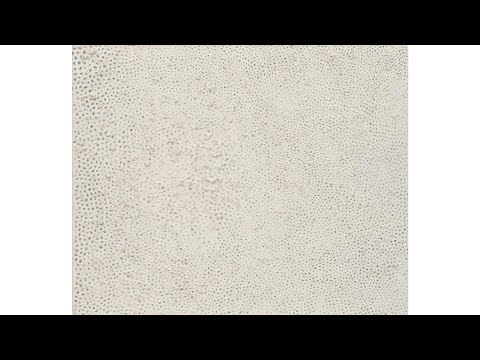
Attracted to the social freedom and teeming postwar art scene in the United States, Kusama left Japan and moved to New York City in 1958. Soon thereafter, she began producing her Infinity Nets series of paintings, including No. F., in which she played with the notion of infinite repetition and infinite space. While the expansive white of her canvas presaged the monochromes of the Minimalists, her use of thick, intricately webbed impasto hints at something more personal and obsessive. In fact, her nets can be seen as a material form of the patterns that Kusama experiences in hallucinations, a condition that has afflicted her since childhood.
Making Space: Women Artists and Postwar Abstraction, April 19 - August 13, 2017
Gallery label from 2023
Attracted to the social freedoms promised by the teeming postwar art scene in the United States, Kusama left Japan and moved to New York in 1958. Soon she began producing her series Infinity Nets, including No. F., in which she played with the idea of infinite repetition and infinite space. Marrying serial repetition with an allover painting method, the artist’s works collapse the distinction between figure and ground, giving equal weight to the interlocking brushstrokes and the spaces between them. The process of making these paintings was a form of catharsis for the artist, who said, “Forget yourself. Become one with eternity. Become part of your environment.”
2023
Explore more
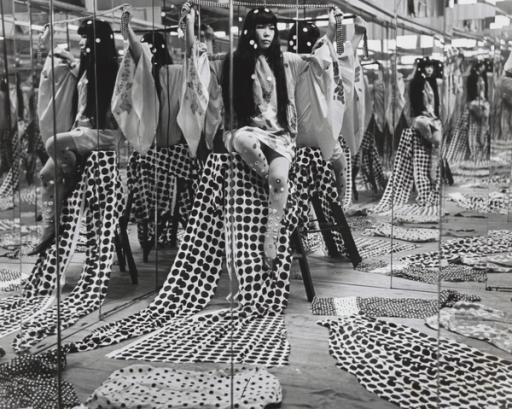
Yayoi Kusama
Japanese, 1929–2026 112 works onlineA vital part of New York’s avant-garde art scene from the late 1950s to the early 1970s, Yayoi Kusama developed a distinctive style utilizing approaches associated with Abstract Expressionism , Minimalism , Pop art , Feminist art , and institutional critique —but she always defined herself in her own terms.
Learn more →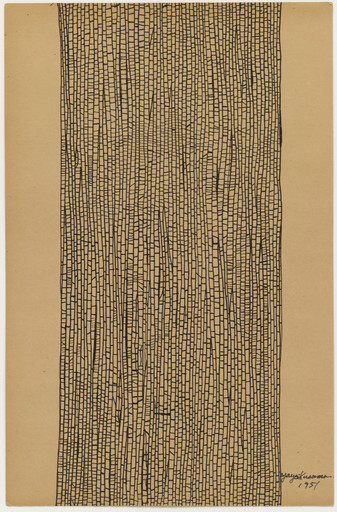
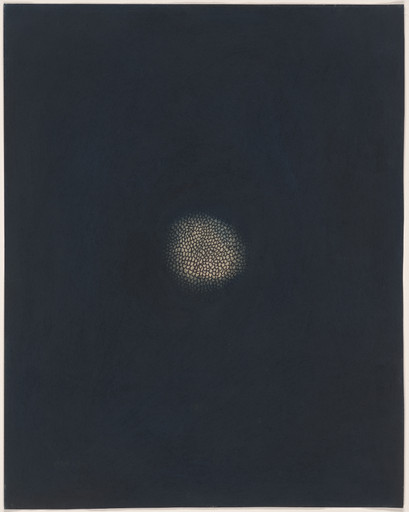
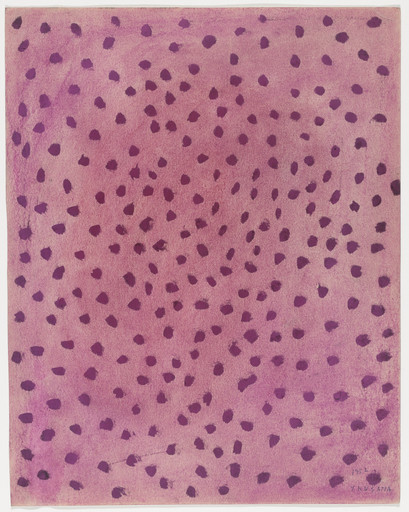
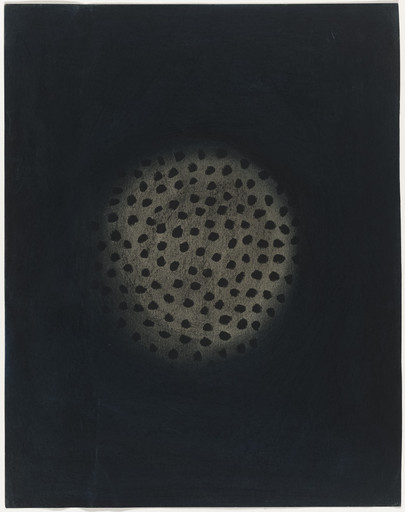
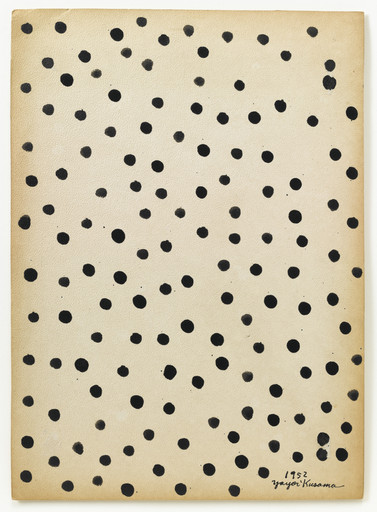
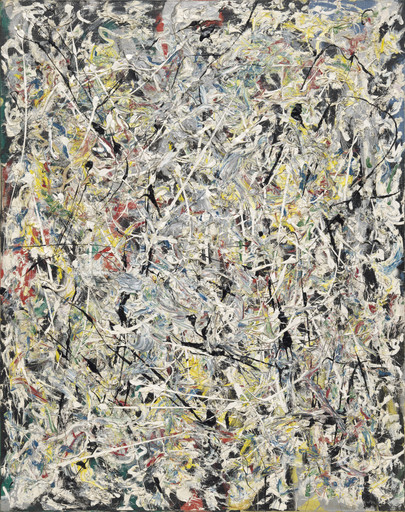
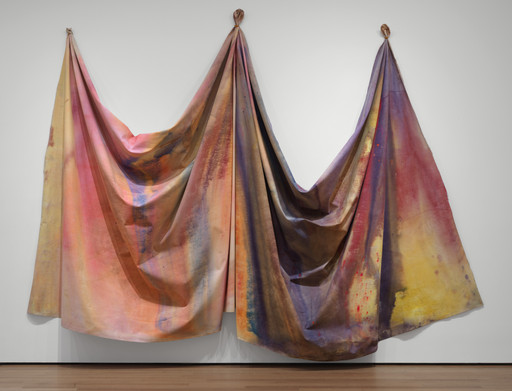
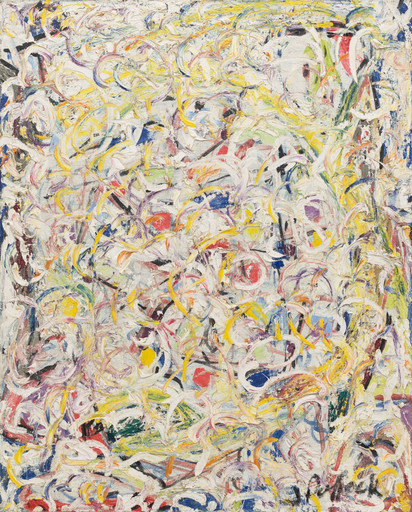
Allover painting
An approach to painting that emerged with the Abstract Expressionists, in which each area of the composition is given equal attention and significance.
Learn more →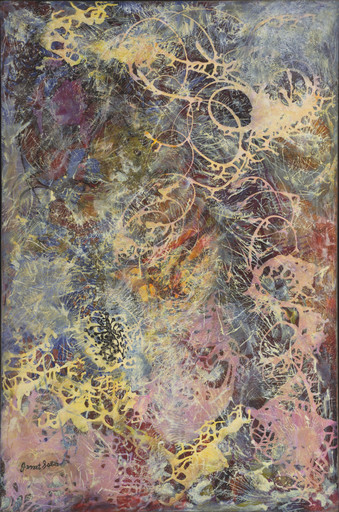
Impasto
An Italian word for “mixture,” used to describe a painting technique wherein paint is thickly laid on a surface, so that brushstrokes or palette knife marks are visible.
Learn more →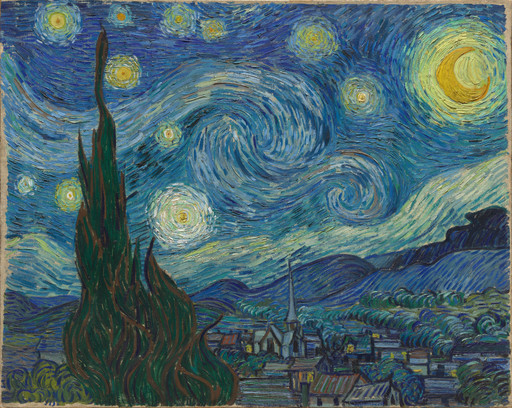


Audio
Audio from the playlist 1950–1980: Works from the Collection
Articles and videos
From MoMA Design Store


Installation views
We have identified this work in the following photos from our exhibition history.
Licensing
Artwork or archival images
If you would like to reproduce an image of a work of art in MoMA's collection, or an image of a MoMA publication or archival material (including installation views, checklists, and press releases), please contact Art Resource (publication in North America) or Scala Archives (publication in all other geographic locations).
Audio and film clips
MoMA licenses archival audio and select out of copyright film clips from our film collection. At this time, MoMA produced video cannot be licensed by MoMA/Scala. All requests to license archival audio or out of copyright film clips should be addressed to Scala Archives at [email protected]. Motion picture film stills cannot be licensed by MoMA/Scala. For access to motion picture film stills for research purposes, please contact the Film Study Center at [email protected]. For more information about film loans and our Circulating Film and Video Library, please visit Circulating Film and Video Library.
Text from a publication or the archives
If you would like to reproduce text from a MoMA publication, please email [email protected]. If you would like to publish text from MoMA's archival materials, please fill out this permission form and send to [email protected].
Feedback
This record is a work in progress. If you have additional information or spotted an error, please fill out this feedback form.