Oil on canvas
In the blazing heat of this Mediterranean afternoon, nothing rests. Against a ground scored as if by some invisible torrent, intense green olive trees twist and crimp, capped by the rolling, dwindling hillocks of the Alpilles, beneath a light-washed sky with a bundled, ectoplasmic cloud.
After van Gogh voluntarily entered the asylum at Saint-Rémy in the south of France in the spring of 1889, he wrote his brother Theo: "I did a landscape with olive trees and also a new study of a starry sky." Later, when the pictures had dried, he sent both of them to Theo in Paris, noting: "The olive trees with the white cloud and the mountains behind, as well as the rise of the moon and the night effect, are exaggerations from the point of view of the general arrangement; the outlines are accentuated as in some old woodcuts."
Van Gogh's letters make it clear that he created this particular intense vista of the southern French landscape as a daylight partner to the visionary nocturne of his more famous canvas, The Starry Night. He felt that both pictures showed, in complementary ways, the principles he shared with his fellow painter Paul Gauguin, regarding the freedom of the artist to go beyond "the photographic and silly perfection of some painters" and intensify the experience of color and linear rhythms.
The Museum of Modern Art, MoMA Highlights, New York: The Museum of Modern Art, revised 2004, originally published 1999, p. 34.
Explore more
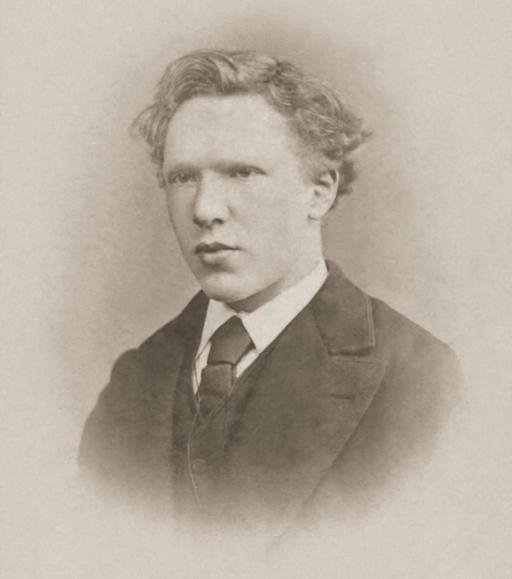
Vincent van Gogh
Dutch, 1853–1890 6 works onlineWhat makes a portrait modern? And what makes a modern portrait continue to appear modern, even decades after it was created? For Vincent van Gogh (1853–1890), the answer was clear: color.
Learn more →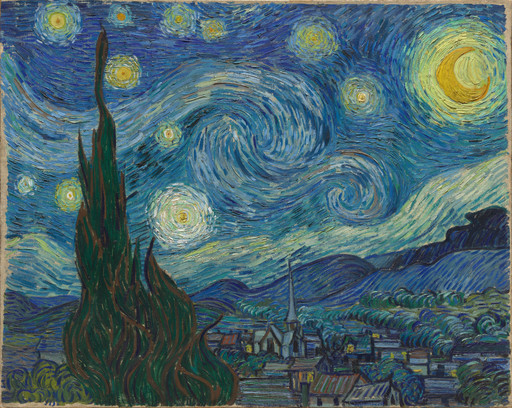


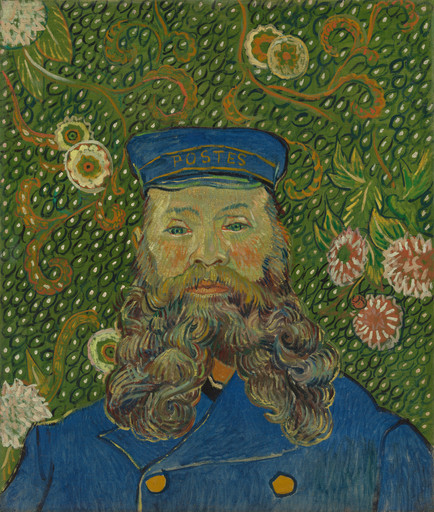
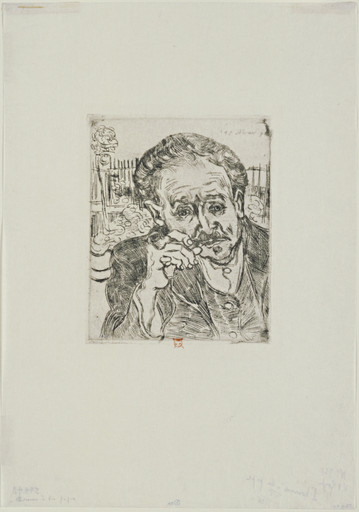
Landscape
The natural landforms of a region; also, an image that has natural scenery as its primary focus.
Learn more →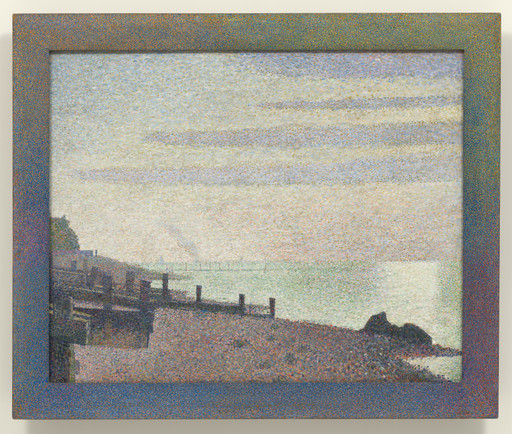
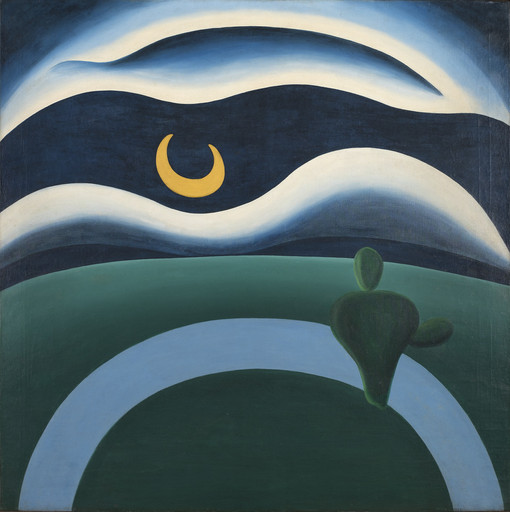
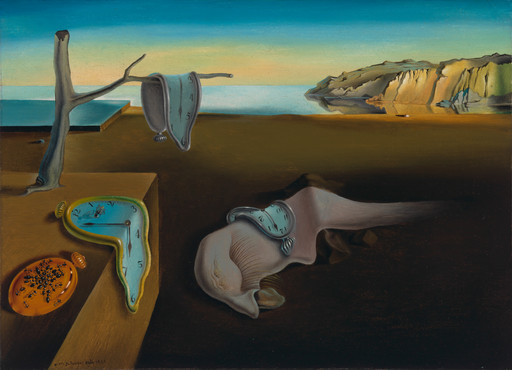
French Landscapes and Interiors
Gallery 501The late 19th century in France was an era of rapid change: the emergence of mass media, new and faster forms of transportation, urban expansion of cities like Paris, and developments in industry.
Learn more →
From MoMA Design Store


Installation views
We have identified this work in the following photos from our exhibition history.
Provenance Research Project
This work is included in the Provenance Research Project, which investigates the ownership history of works in MoMA's collection.
June - September 1889, Vincent van Gogh, Saint-Rémy-de-Provence.
September 1889 - January 1891, Theo van Gogh, Paris, acquired from his brother Vincent van Gogh.
January 1891 - February 1906, Johanna (Jo) van Gogh-Bonger, Amsterdam, in trust for her son, Vincent Willem van Gogh, Amsterdam, inherited from Theo van Gogh.
February 1906 - ?, Karl Ernst Osthaus, Hagen, purchased through Jo van Gogh-Bonger.
1924, Collection Kunsthandel D. Komter, Amsterdam.
By 1928 - 1938/39 or later, Salomon (Sam) van Deventer, Wassenaar, The Netherlands.
[1940, unknown German buyer, purchased from Sam van Deventer]
[1945/46, Galerie M. Schulthess, Basel]
By 1947 - April 1947, Katz Galerie (Nathan Katz), Basel, Switzerland.
April 1947 - 1982, John Hay Whitney, New York, purchased from Katz Galerie through Knoedler Galleries (no. CA2846), New York.
1982 - 1998, Betsey Cushing Roosevelt Whitney, New York, inherited from John Hay Whitney.
1998, The Museum of Modern Art, acquired by bequest from Mrs. John Hay Whitney (Betsey Cushing Roosevelt Whitney).
Provenance research is a work in progress, and is frequently updated with new information. If you have any questions or information to provide about the listed works, please email [email protected] or write to:
Provenance Research Project
The Museum of Modern Art
11 West 53 Street
New York, NY 10019
Licensing
Artwork or archival images
If you would like to reproduce an image of a work of art in MoMA's collection, or an image of a MoMA publication or archival material (including installation views, checklists, and press releases), please contact Art Resource (publication in North America) or Scala Archives (publication in all other geographic locations).
Audio and film clips
MoMA licenses archival audio and select out of copyright film clips from our film collection. At this time, MoMA produced video cannot be licensed by MoMA/Scala. All requests to license archival audio or out of copyright film clips should be addressed to Scala Archives at [email protected]. Motion picture film stills cannot be licensed by MoMA/Scala. For access to motion picture film stills for research purposes, please contact the Film Study Center at [email protected]. For more information about film loans and our Circulating Film and Video Library, please visit Circulating Film and Video Library.
Text from a publication or the archives
If you would like to reproduce text from a MoMA publication, please email [email protected]. If you would like to publish text from MoMA's archival materials, please fill out this permission form and send to [email protected].
Feedback
This record is a work in progress. If you have additional information or spotted an error, please fill out this feedback form.