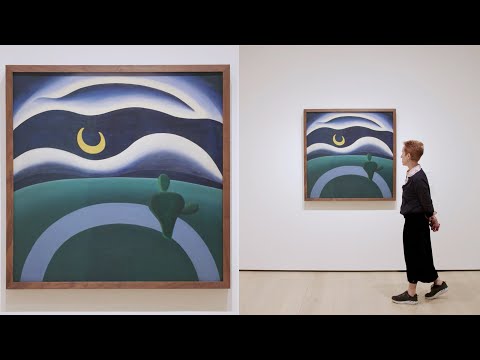
“I want to be the painter of my country,” do Amaral declared in 1923, at a moment when Brazilian artists and writers were actively developing a new, homegrown modernism. With its undulating planes suggesting land, water, and sky, and a humanlike cactus, The Moon offers the artist’s vision of a Brazilian landscape. At the same time, do Amaral’s visual language draws on experimental forms of European art, which she absorbed while studying in Paris. In this way, the painting exemplifies anthropofagia: the idea, introduced in a 1928 manifesto by the Brazilian poet Oswald de Andrade, that Brazil would forge its own art by digesting—or literally “cannibalizing”—European influence.
2023
Kids label from 2025
Shape-shifting
A crescent moon hangs low on the horizon between wavy clouds and dark hills. Brazilian artist Tarsila do Amaral painted this dreamlike landscape. Near the river stands a green heart-shaped form with two oval shapes growing out of it. Some people see it as a person, while others see it as a cactus or a tree. What do you see?
2025
Gallery label from 2019
In the 1920s, do Amaral frequently traveled between São Paulo, her native city, and Paris. There, she became acquainted with artists such as Constantin Brancusi and Fernand Léger, and witnessed a variety of avant-garde artistic strategies. In this painting of a moonlit scene, a lonesome cactus resembling a human figure stands in the foreground, contemplatively facing the crescent moon while rooted in an elliptical stream of water—a recurring motif in do Amaral’s compositions from this period. The painting reflects what the artist called her “clean, sharply outlined” technique, while offering an undulating spectacle of a dreamlike quality.
2019
Explore more
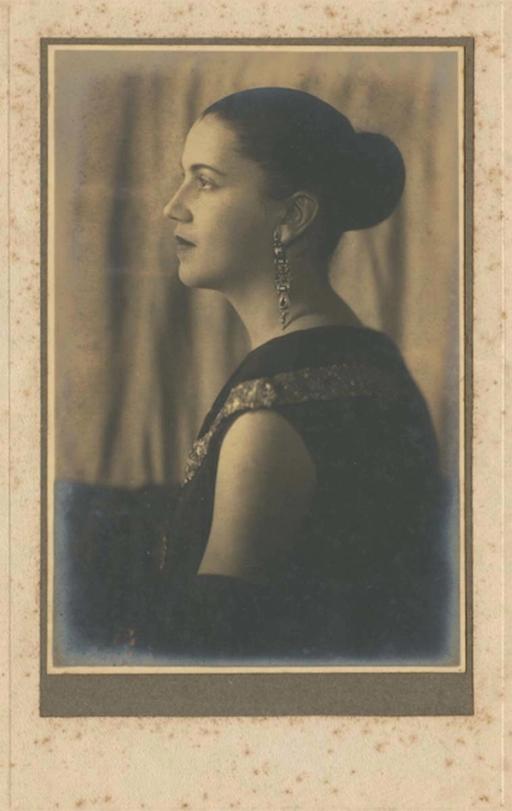
Tarsila do Amaral
Brazilian, 1886–1973 2 works onlineI am so thankful to have spent the whole of my childhood in the fazenda . My memories of that time have grown precious to me,” wrote Tarsila do Amaral in a letter to her parents sent from Paris in 1923.
Learn more →![Tarsila do Amaral. Study for Composition ( Lonely Figure ) III (Estudo de Composição [ Figura só ] III)](https://www.moma.org/media/W1siZiIsIjQwMDU4NSJdLFsicCIsImNvbnZlcnQiLCItcXVhbGl0eSA5MCAtcmVzaXplIDUxMng1MTJcdTAwM2UiXV0.jpg?sha=eab7ff80b0befe71)
Landscape
The natural landforms of a region; also, an image that has natural scenery as its primary focus.
Learn more →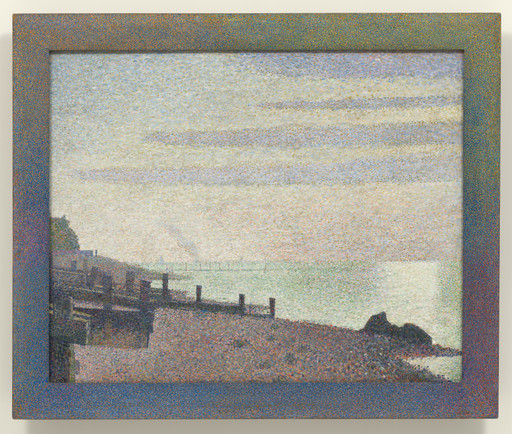
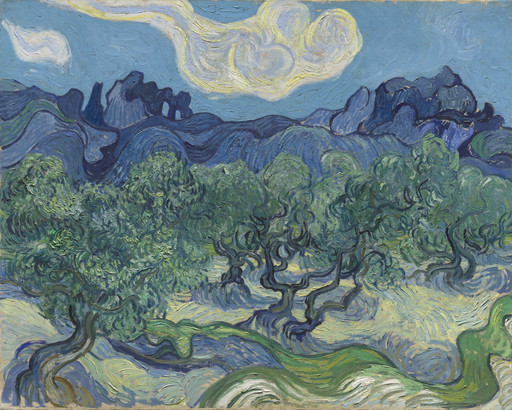
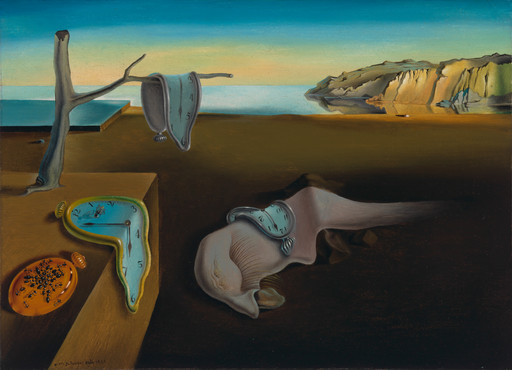
Nature Symbolized
Gallery 509Applying the formal techniques and stylistic features of European avant-gardes to distinctively homegrown subjects resulted in a fresh approach to modernism in which the natural environment appeared as central yet was often abstracted.
Learn more →


Audio
Audio from the playlist Collection 1880s–1940s
Audio from the playlist Verbal Descriptions
Articles and videos
From MoMA Design Store


Installation views
We have identified this work in the following photos from our exhibition history.
Licensing
Artwork or archival images
If you would like to reproduce an image of a work of art in MoMA's collection, or an image of a MoMA publication or archival material (including installation views, checklists, and press releases), please contact Art Resource (publication in North America) or Scala Archives (publication in all other geographic locations).
Audio and film clips
MoMA licenses archival audio and select out of copyright film clips from our film collection. At this time, MoMA produced video cannot be licensed by MoMA/Scala. All requests to license archival audio or out of copyright film clips should be addressed to Scala Archives at [email protected]. Motion picture film stills cannot be licensed by MoMA/Scala. For access to motion picture film stills for research purposes, please contact the Film Study Center at [email protected]. For more information about film loans and our Circulating Film and Video Library, please visit Circulating Film and Video Library.
Text from a publication or the archives
If you would like to reproduce text from a MoMA publication, please email [email protected]. If you would like to publish text from MoMA's archival materials, please fill out this permission form and send to [email protected].
Feedback
This record is a work in progress. If you have additional information or spotted an error, please fill out this feedback form.