Not on view
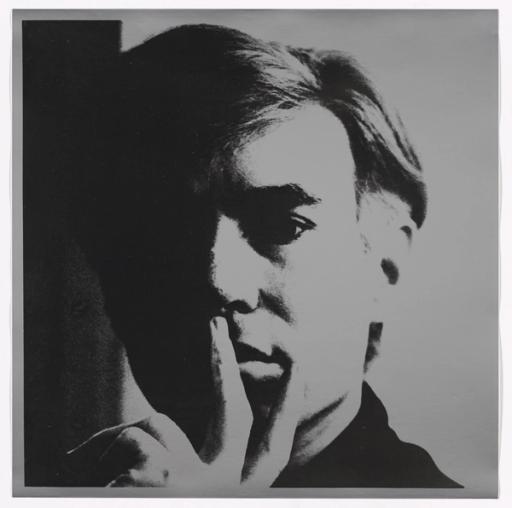
Self-Portrait (1966) was constructed in what would become one of Warhol’s signature styles—a grid of bright, repeated silkscreened portraits. An expert colorist, Warhol paired primary and secondary colors as well as different shades of the same color.
In the latter part of his career, Warhol focused more and more on portraiture. He created portraits of people he admired—musicians Michael Jackson and Grace Jones, boxer Muhammad Ali—as well as wealthy socialites he met on the New York social circuit. By the mid-1960s, Warhol had amassed a huge public following of artists, filmmakers, performers, writers, and art patrons seduced by his persona. Engaging in the painting of self-portraits only further cultivated his fame. In time, Warhol’s self-portraits became as famous as the iconic portraits of Marilyn Monroe or Elizabeth Taylor. The artist had himself become a celebrity.
Explore more
Andy Warhol
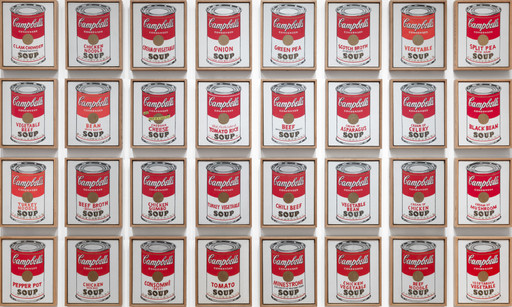
American, 1928–1987 287 works onlineTwo exhibitions in 1962 announced Andy Warhol’s dramatic entry into the art world. In July, at the Ferus Gallery in Los Angeles, he exhibited his now-iconic Campbell’s Soup Cans .
Learn more →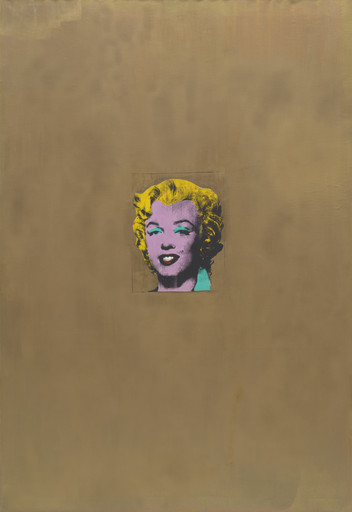
![Andy Warhol. Untitled ([Early Work] Woman)](https://www.moma.org/media/W1siZiIsIjI2ODkwOCJdLFsicCIsImNvbnZlcnQiLCItcXVhbGl0eSA5MCAtcmVzaXplIDUxMng1MTJcdTAwM2UiXV0.jpg?sha=3a19f0596d819514)
Filmmaker
A person who directs or produces movies.
Learn more →

Self-portrait
A representation of oneself made by oneself.
Learn more →
From MoMA Design Store


Installation views
We have identified this work in the following photos from our exhibition history.
Licensing
Artwork or archival images
If you would like to reproduce an image of a work of art in MoMA's collection, or an image of a MoMA publication or archival material (including installation views, checklists, and press releases), please contact Art Resource (publication in North America) or Scala Archives (publication in all other geographic locations).
Audio and film clips
MoMA licenses archival audio and select out of copyright film clips from our film collection. At this time, MoMA produced video cannot be licensed by MoMA/Scala. All requests to license archival audio or out of copyright film clips should be addressed to Scala Archives at [email protected]. Motion picture film stills cannot be licensed by MoMA/Scala. For access to motion picture film stills for research purposes, please contact the Film Study Center at [email protected]. For more information about film loans and our Circulating Film and Video Library, please visit Circulating Film and Video Library.
Text from a publication or the archives
If you would like to reproduce text from a MoMA publication, please email [email protected]. If you would like to publish text from MoMA's archival materials, please fill out this permission form and send to [email protected].
Feedback
This record is a work in progress. If you have additional information or spotted an error, please fill out this feedback form.