In September 1938 Mondrian moved from Paris to London to escape the threat of a German invasion. There he made Trafalgar Square, the first in a series of paintings titled after locations in cities that gave him refuge during World War II. The small, subtly textured planes of primary colors that seem to vibrate within their black perimeters are smaller and their arrangement more syncopated than in many of the artists earlier canvases: color segments expand across two rectangular fields in the larger black grid, and thickened blocks of black function as both line and plane (at lower right, for example). The date "39–43" inscribed on the original canvas stretcher suggests that Mondrian revisited this painting after his flight to New York in 1940 to escape the escalating war.
2010.
Explore more
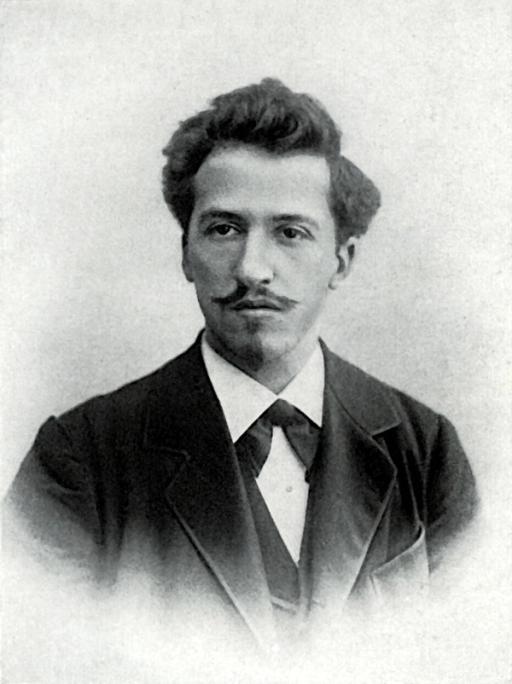
Piet Mondrian
Dutch, 1872–1944 30 works onlineFor Piet Mondrian, abstract painting was the means of achieving an equilibrium between the “concrete” (the tangible and specific aspects of reality perceived by the senses) and the “universal” (the underlying, essential truths that he believed were constant and unchanging).
Learn more →


From MoMA Design Store


Installation views
We have identified this work in the following photos from our exhibition history.
Provenance Research Project
This work is included in the Provenance Research Project, which investigates the ownership history of works in MoMA's collection.
The artist; Harry Holtzman (Piet Mondrian Estate), New York, 1944 [1]; sold to John L. Senior, Jr., New York / Danbury, Conn., 1950 [2]; sold to Sidney Janis, New York, May 24, 1957 [3]; sold to William A. M. Burden and Margaret Livingston Partridge Burden, New York, June 1957 [4]; acquired by The Museum of Modern Art, New York (Gift of Mr. and Mrs. William A. M. Burden), 1964.
[1] Lender to the exhibitions Piet Mondrian, The Museum of Modern Art, New York, March 21-May 13, 1945]; no. 50; Piet Mondriaan, Stedelijk Museum Amsterdam, November-December, 1946, no. 119; Piet Mondrian, 1872-1944, Kunsthalle Basel, February 6-March 2, 1947, no. 4; Piet Mondrian Paintings 1910 Through 1944, Sidney Janis Gallery New York, October 10-November 12, 1949, no. 28.
[2] See Robert P. Welsh, and Joop M. Joosten, Piet Mondrian: catalogue raisonné, New York: Harry N. Abrams, 1998, vol. 2, pp. 417-418, B322. Lender to the exhibitions Piet Mondrian, Sidney Janis Gallery, February 5-March 17, 1951; Selections from 5 New York Private Collections, The Museum of Modern Art, New York, June 26-September 9, 1951; Some Businessmen Collect Contemporary Art: An Exhibition of Contemporary Paintings by American and European Artists from Private Collections of American Professional and Business Men, Dallas Museum of Fine Arts, April 6-27,1952; 50 Years of Mondrian, Sidney Janis Gallery, New York, November 2-30, 1953, no. 40; 5 Years of Janis, Sidney Janis Gallery, New York, September 29-October 31, 1953 no. 41; Paintings from Private Collections, The Museum of Modern Art, New York, May 31 to September 5, 1955.
[3] See Robert P. Welsh, and Joop M. Joosten, Piet Mondrian: catalogue raisonné, New York: Harry N. Abrams, 1998, vol. 2, pp. 417-418, B322.
[4] Ibid.
Provenance research is a work in progress, and is frequently updated with new information. If you have any questions or information to provide about the listed works, please email [email protected] or write to:
Provenance Research Project
The Museum of Modern Art
11 West 53 Street
New York, NY 10019
Licensing
Artwork or archival images
If you would like to reproduce an image of a work of art in MoMA's collection, or an image of a MoMA publication or archival material (including installation views, checklists, and press releases), please contact Art Resource (publication in North America) or Scala Archives (publication in all other geographic locations).
Audio and film clips
MoMA licenses archival audio and select out of copyright film clips from our film collection. At this time, MoMA produced video cannot be licensed by MoMA/Scala. All requests to license archival audio or out of copyright film clips should be addressed to Scala Archives at [email protected]. Motion picture film stills cannot be licensed by MoMA/Scala. For access to motion picture film stills for research purposes, please contact the Film Study Center at [email protected]. For more information about film loans and our Circulating Film and Video Library, please visit Circulating Film and Video Library.
Text from a publication or the archives
If you would like to reproduce text from a MoMA publication, please email [email protected]. If you would like to publish text from MoMA's archival materials, please fill out this permission form and send to [email protected].
Feedback
This record is a work in progress. If you have additional information or spotted an error, please fill out this feedback form.