Oil on canvas
This oil painting represents the culmination of Picasso’s many variations on the theme of three women at the spring, carried out in different forms and arrangements that summer. The artist likely executed this work after the large red chalk version on the opposite wall. Its representation of chiton-clad women gathered around a water source quotes motifs traditionally depicted in Greco-Roman antiquity and French academic painting. However, Picasso’s version disrupts these classical models with stiffly disjointed bodies, mannequin-like heads, and masklike faces. Note also the curious lack of water in this scene: the central figure holds her hand out beneath the spring, yet, contrary to expectation, nothing runs over her outstretched palm.
Picasso in Fontainebleau, October 8, 2023–February 17, 2024
Explore more
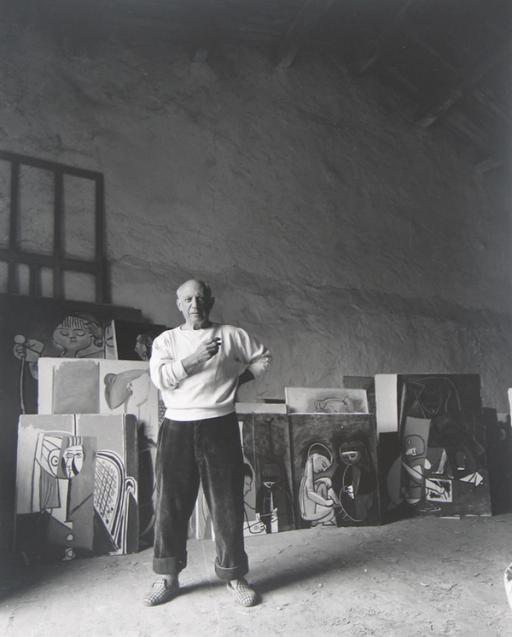
Pablo Picasso
Spanish, 1881–1973 1251 works onlineWith these words, Picasso shed light on two central principles of his artistic production over nearly 80 years: his openness to a diverse range of styles, subject matters, and mediums, and his resistance to the notion that change in art necessarily corresponds to improvement or progress.
Learn more →
Classicism
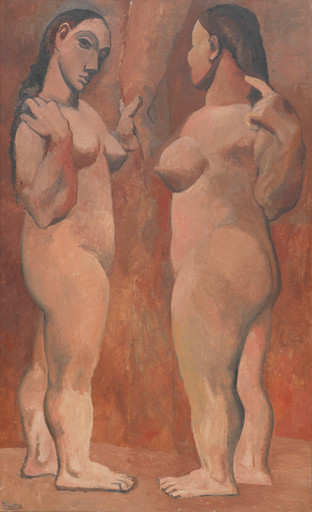
The effort to match classical antiquity—and especially the art of the ancient Greeks and Romans—in artistic style, material, or subject matter.
Learn more →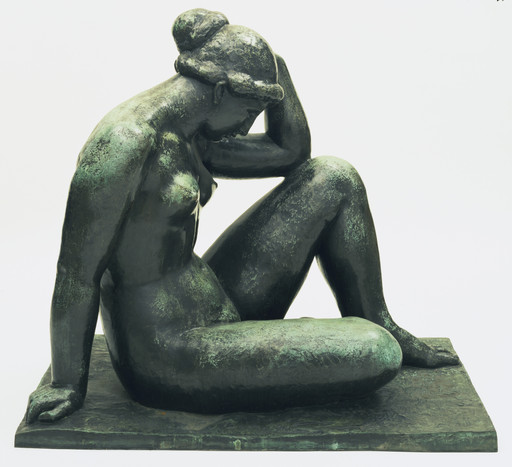
Return to order (rappel à l’ordre)
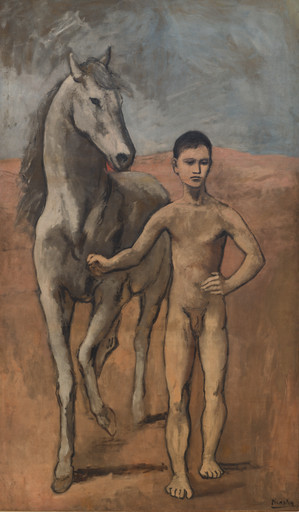
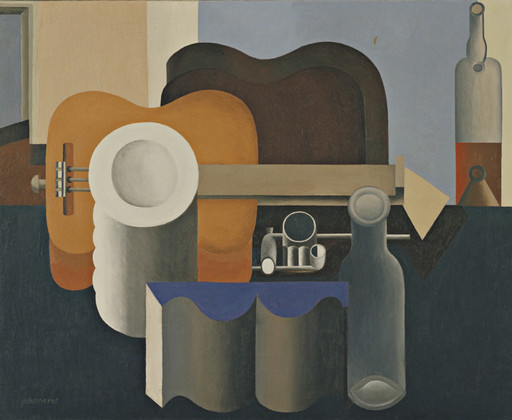
A conservative cultural movement in France in the years following World War I. This movement was defined by a renewed interest in classicism, nationalism, and a rejection of the avant-garde.
Learn more →
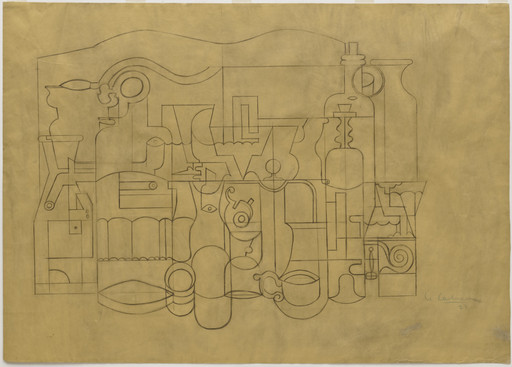

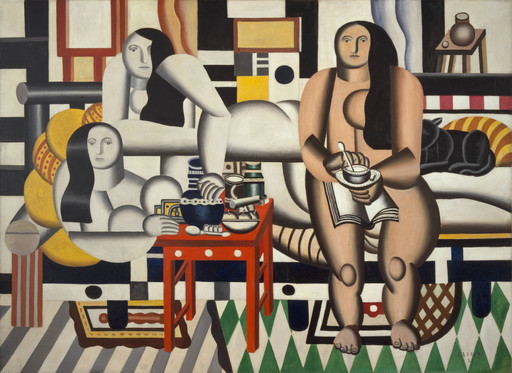
The New Spirit in Paris
Gallery 513This wide-ranging list, which appeared on the cover of the inaugural issue of the journal L’Esprit nouveau, in 1920, summarizes the energetic, boundary-crossing spirit of Paris between the two world wars.
Learn more →

Audio
Audio from the playlist Collection 1880s–1940s
Audio from the playlist Kids
Audio from the playlist Verbal Descriptions
From MoMA Design Store


Installation views
We have identified this work in the following photos from our exhibition history.
Provenance Research Project
This work is included in the Provenance Research Project, which investigates the ownership history of works in MoMA's collection.
The artist
1922 John Quinn, New York ( Acquired from the artist)
1924 Estate of John Quinn
1926 Paul Rosenberg, Paris (Purchased at the John Quinn estate sale, 9 Jan 1926)
1926 Mary Callery, Paris and New York
Allan D. Emil, New York (per Picasso, Gris, Miro, The Spanish Masters of Twentieth Century Painting, SF Museum of Art, Sept 14 – Oct 17, 1948, and Portland Art Museum, Oct 26 – Nov 28, 1948, cat. no. 8)
1952 The Museum of Modern Art, New York (Gift of Mr. and Mrs. Allan D. Emil)
Provenance research is a work in progress, and is frequently updated with new information. If you have any questions or information to provide about the listed works, please email [email protected] or write to:
Provenance Research Project
The Museum of Modern Art
11 West 53 Street
New York, NY 10019
Licensing
Artwork or archival images
If you would like to reproduce an image of a work of art in MoMA's collection, or an image of a MoMA publication or archival material (including installation views, checklists, and press releases), please contact Art Resource (publication in North America) or Scala Archives (publication in all other geographic locations).
Audio and film clips
MoMA licenses archival audio and select out of copyright film clips from our film collection. At this time, MoMA produced video cannot be licensed by MoMA/Scala. All requests to license archival audio or out of copyright film clips should be addressed to Scala Archives at [email protected]. Motion picture film stills cannot be licensed by MoMA/Scala. For access to motion picture film stills for research purposes, please contact the Film Study Center at [email protected]. For more information about film loans and our Circulating Film and Video Library, please visit Circulating Film and Video Library.
Text from a publication or the archives
If you would like to reproduce text from a MoMA publication, please email [email protected]. If you would like to publish text from MoMA's archival materials, please fill out this permission form and send to [email protected].
Feedback
This record is a work in progress. If you have additional information or spotted an error, please fill out this feedback form.