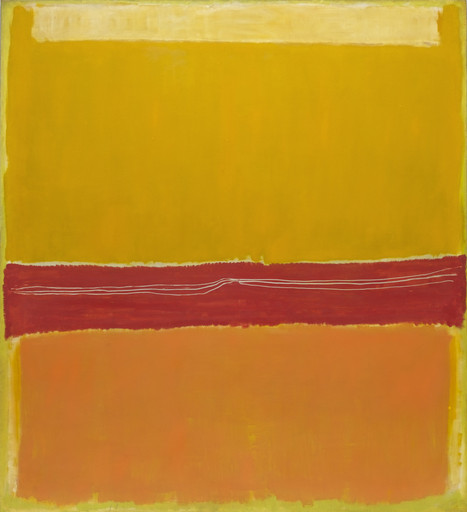
No. 3/No. 13 is an early example of a compositional structure that Rothko would continue to explore for more than two decades. Narrowly separated blocks of color hover against a colored ground. Their edges are soft and irregular, so that when Rothko used closely related tones the blocks sometimes seem barely to emerge from the ground. The green bar in No. 3/No. 13, on the other hand, appears to vibrate against the orange around it, creating an optical flicker. In fact, the canvas is full of gentle movement, as blocks emerge and recede and surfaces seem to breathe. Just as the edges tend to fade and blur, the colors are never completely flat, and the faint unevenness in their intensity reveals the artist’s exploration of the technique of scumbling: by planting bold colors on top of a haze of translucent layers of paint, he created ambiguity, a shifting between solidity and impalpable depth.
The sense of boundlessness in Rothko’s paintings has been related to the aesthetics of the sublime, an implicit or explicit concern of a number of his fellow painters in the New York School. The remarkable color in his paintings was for him only a means to a larger end: “I’m interested only in expressing basic human emotions—tragedy, ecstasy, doom,” he said. “If you...are moved only by...color relationships, then you miss the point.”
MoMA Highlights: 375 Works from The Museum of Modern Art, New York (New York: The Museum of Modern Art, 2019)
Explore more
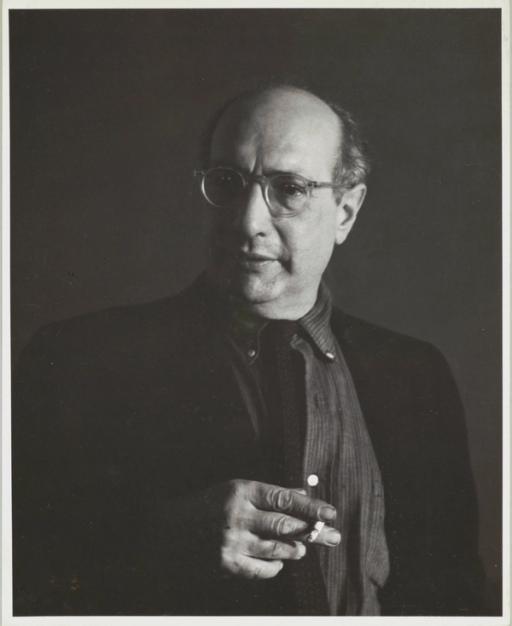
Mark Rothko
American, born Russia (now Latvia). 1903–1970 19 works onlineMark Rothko sought to make paintings that would bring people to tears.If you…are moved only by their color relationships, then you miss the point.
Learn more →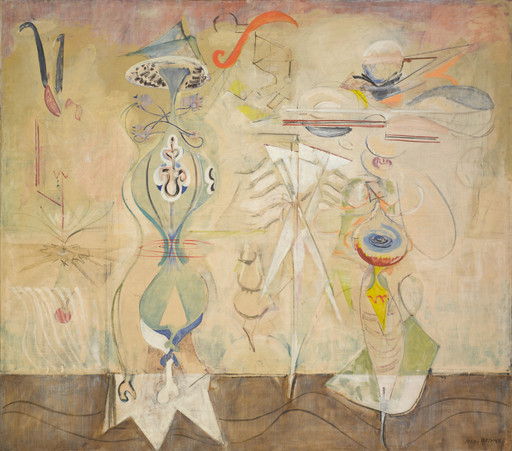
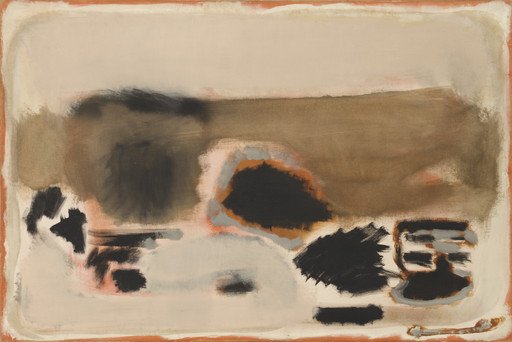


From MoMA Design Store


Installation views
We have identified this work in the following photos from our exhibition history.
Licensing
Artwork or archival images
If you would like to reproduce an image of a work of art in MoMA's collection, or an image of a MoMA publication or archival material (including installation views, checklists, and press releases), please contact Art Resource (publication in North America) or Scala Archives (publication in all other geographic locations).
Audio and film clips
MoMA licenses archival audio and select out of copyright film clips from our film collection. At this time, MoMA produced video cannot be licensed by MoMA/Scala. All requests to license archival audio or out of copyright film clips should be addressed to Scala Archives at [email protected]. Motion picture film stills cannot be licensed by MoMA/Scala. For access to motion picture film stills for research purposes, please contact the Film Study Center at [email protected]. For more information about film loans and our Circulating Film and Video Library, please visit Circulating Film and Video Library.
Text from a publication or the archives
If you would like to reproduce text from a MoMA publication, please email [email protected]. If you would like to publish text from MoMA's archival materials, please fill out this permission form and send to [email protected].
Feedback
This record is a work in progress. If you have additional information or spotted an error, please fill out this feedback form.