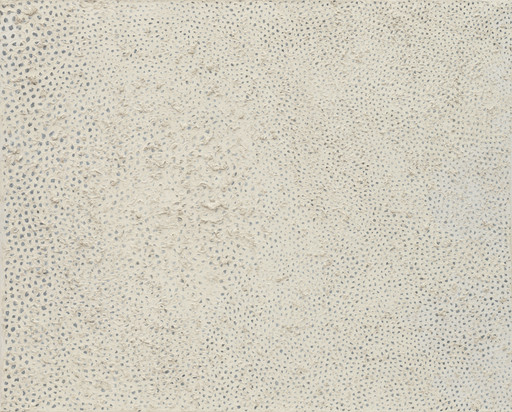
White Light is one of Pollock's last paintings and the only one he completed in 1954. He made it in part by squeezing paint directly from a tube onto the canvas evident in the sculptural white and black tendrils of paint that constitute the top layers. He also used a brush, creating subtle marbling effects by manipulating wet paint in certain areas. Though Pollock was tormented by an artistic block he would never overcome, White Light sparkles, and one reviewer described it as having "a blazing, acrid and dangerous glamor of a legendary kind."
Jackson Pollock: A Collection Survey, 1934-1954, November 22, 2015–May 1, 2016.
Additional text from In The Studio: Postwar Abstract Painting online course, Coursera, 2017
Pollock made White Light in 1954, a year during which he suffered from a severe creative block and related depression and alcoholism. This allover abstract composition, with its light palette shot through with black lines, was the only work he completed that year and is among his last paintings. Revisiting some of his early experiments with paint applications, here he squeezed paint directly from the tubes (both from the nozzle and from punctures he made in the sides of the tubes) onto canvas, creating a textured, sculptural surface. He then edited various sections of the canvas with a paintbrush, smearing and pulling wet paint into marbled patterns. By 1955, Pollock had stopped painting entirely. A year later, he died in a drunken car crash, a tragic end for an artist who made a profound impact on modern and contemporary art, and whose approach to the canvas, as he once said, was “a natural growth out of a need: I want to express my feelings rather than illustrate them.”
In The Studio: Postwar Abstract Painting online course, Coursera, 2017
Explore more
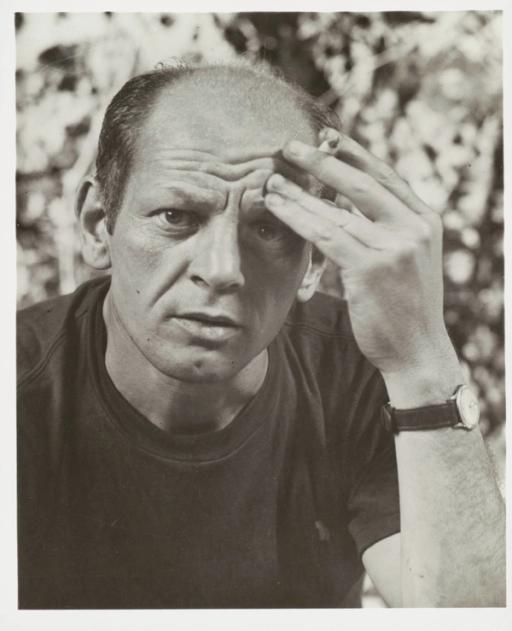
Jackson Pollock
American, 1912–1956 86 works onlineIn 1947 Jackson Pollock arrived at a new mode of working that brought him international fame. His method consisted of flinging and dripping thinned enamel paint onto an unstretched canvas laid on the floor of his studio.
Learn more →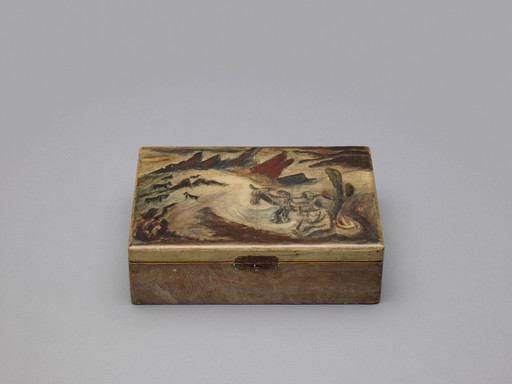
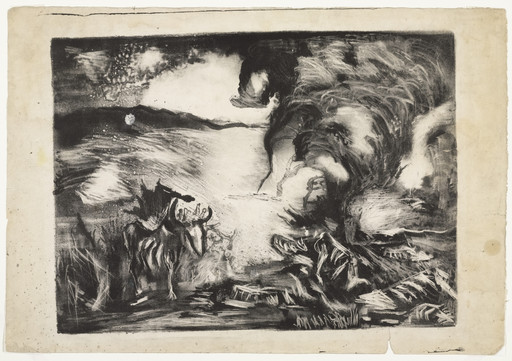
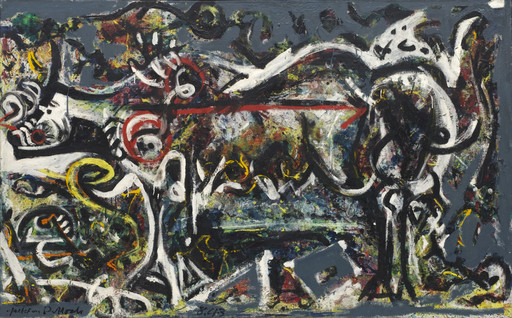
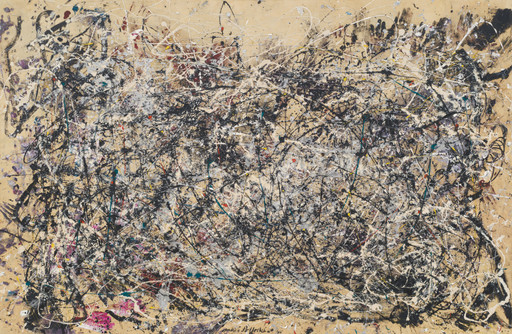

Allover painting
An approach to painting that emerged with the Abstract Expressionists, in which each area of the composition is given equal attention and significance.
Learn more →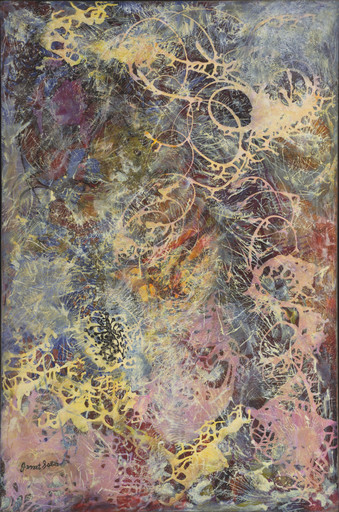

From MoMA Design Store


Installation views
We have identified this work in the following photos from our exhibition history.
Licensing
Artwork or archival images
If you would like to reproduce an image of a work of art in MoMA's collection, or an image of a MoMA publication or archival material (including installation views, checklists, and press releases), please contact Art Resource (publication in North America) or Scala Archives (publication in all other geographic locations).
Audio and film clips
MoMA licenses archival audio and select out of copyright film clips from our film collection. At this time, MoMA produced video cannot be licensed by MoMA/Scala. All requests to license archival audio or out of copyright film clips should be addressed to Scala Archives at [email protected]. Motion picture film stills cannot be licensed by MoMA/Scala. For access to motion picture film stills for research purposes, please contact the Film Study Center at [email protected]. For more information about film loans and our Circulating Film and Video Library, please visit Circulating Film and Video Library.
Text from a publication or the archives
If you would like to reproduce text from a MoMA publication, please email [email protected]. If you would like to publish text from MoMA's archival materials, please fill out this permission form and send to [email protected].
Feedback
This record is a work in progress. If you have additional information or spotted an error, please fill out this feedback form.