While the style of "drip" painting has become synonymous with the name Jackson Pollock, here the artist has autographed the work even more directly, with several handprints found at the composition's upper right. Around this time Pollock stopped giving his paintings evocative titles and began instead to number them. His wife, artist Lee Krasner, later explained, "Numbers are neutral. They make people look at a painting for what it is—pure painting." Collectors did not immediately appreciate Pollock's radical new style, and when first exhibited, in 1949 (then titled Number 1, 1948), this painting remained unsold. Later that year the work was shown again in the artist’s second solo exhibition (Pollock added "A" to the title to avoid confusion with more recent work) and shortly thereafter was purchased by MoMA.
Abstract Expressionist New York, October 3, 2010-April 25, 2011.
Gallery label from 2018
While the style of "drip" painting has become synonymous with the name Jackson Pollock, here the artist has autographed the work even more directly, with several handprints found at the composition's upper right. “Sometimes I use a brush but often prefer using a stick. Sometimes I pour the paint straight out of the can. I like to use a dripping, fluid paint.” Working on the floor in a spacious converted barn on Long Island, Pollock moved away from traditional artist’s oil paints and embraced lower viscosity commercial enamel paints.The fluidity of this paint allowed him to directly capture the movements of his entire body over the canvas. Around the same time, Pollock stopped giving his paintings evocative titles and began instead to number them. His wife, artist Lee Krasner, later explained, "Numbers are neutral. They make people look at a painting for what it is—pure painting."
2018
Explore more
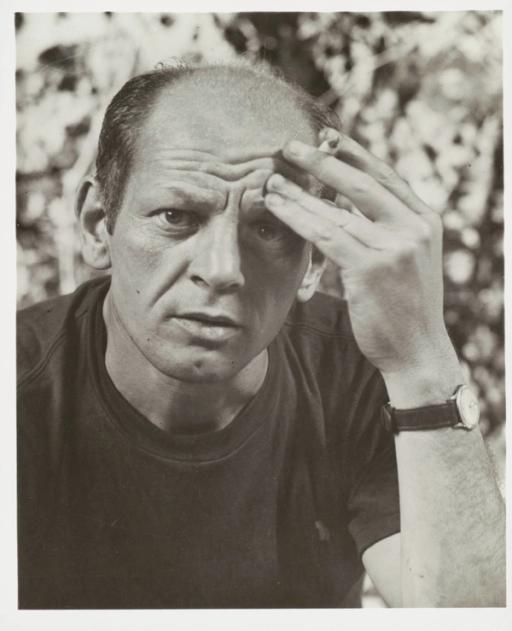
Jackson Pollock
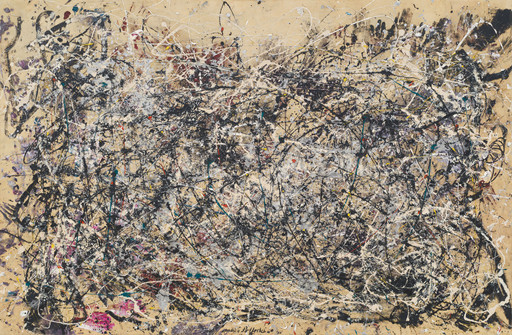
American, 1912–1956 86 works onlineIn 1947 Jackson Pollock arrived at a new mode of working that brought him international fame. His method consisted of flinging and dripping thinned enamel paint onto an unstretched canvas laid on the floor of his studio.
Learn more →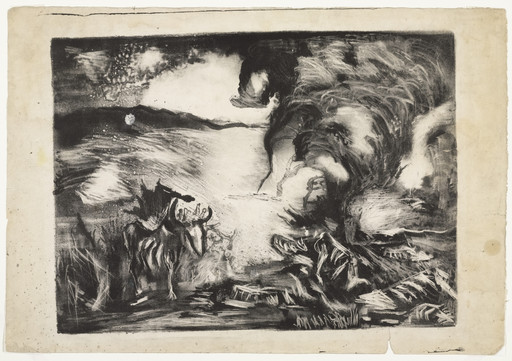

Postwar New York
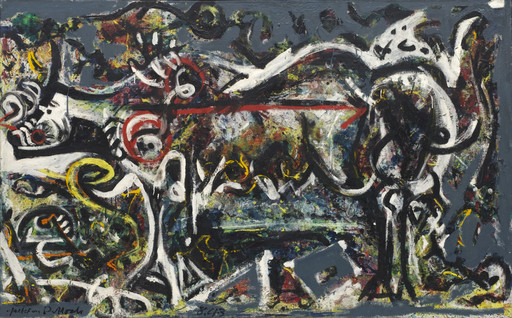
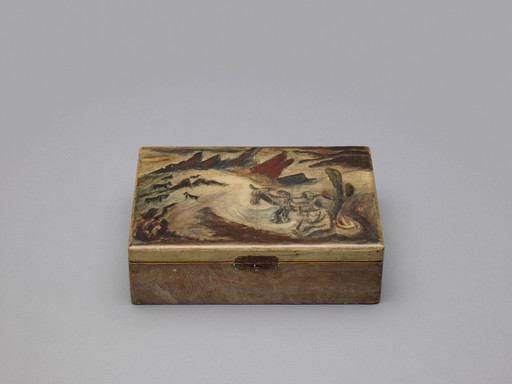
Gallery 401In the aftermath of World War II, a new generation of artists catapulted New York City to the forefront of the international art world.
Learn more →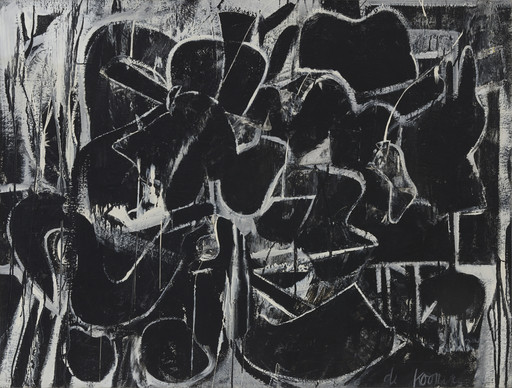
Audio
Audio from the playlist Materials & Process
From MoMA Design Store


Installation views
We have identified this work in the following photos from our exhibition history.
Licensing
Artwork or archival images
If you would like to reproduce an image of a work of art in MoMA's collection, or an image of a MoMA publication or archival material (including installation views, checklists, and press releases), please contact Art Resource (publication in North America) or Scala Archives (publication in all other geographic locations).
Audio and film clips
MoMA licenses archival audio and select out of copyright film clips from our film collection. At this time, MoMA produced video cannot be licensed by MoMA/Scala. All requests to license archival audio or out of copyright film clips should be addressed to Scala Archives at [email protected]. Motion picture film stills cannot be licensed by MoMA/Scala. For access to motion picture film stills for research purposes, please contact the Film Study Center at [email protected]. For more information about film loans and our Circulating Film and Video Library, please visit Circulating Film and Video Library.
Text from a publication or the archives
If you would like to reproduce text from a MoMA publication, please email [email protected]. If you would like to publish text from MoMA's archival materials, please fill out this permission form and send to [email protected].
Feedback
This record is a work in progress. If you have additional information or spotted an error, please fill out this feedback form.