Enamel paint on canvas
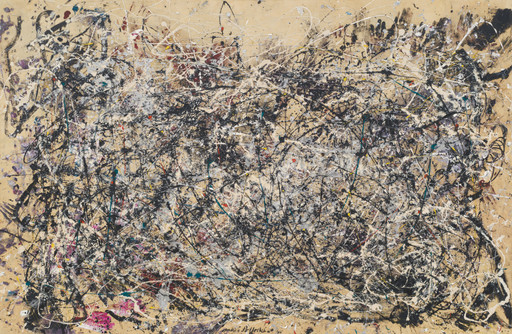
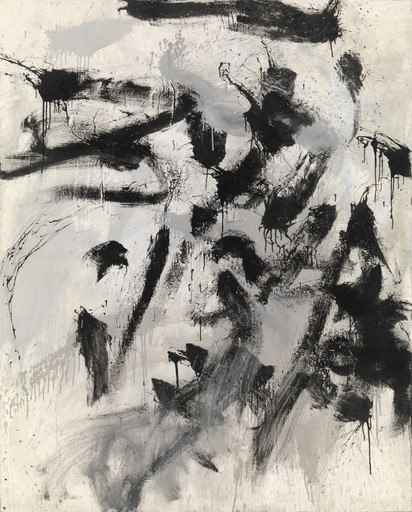
Echo: Number 25, 1951 is a radical departure from Pollock’s earlier "drip" paintings. In contrast to the explosive energy and multidirectional force of One: Number 31, 1950, made the previous year, Echo: Number 25, 1951 has a lyrical economy, and, though abstract, the painting flirts with figuration. Pollock recognized this, and he wrote in a letter to a friend, “I’ve had a period of drawing on canvas in black—with some of my early images coming thru—think the non-objectivists will find them disturbing—and the kids who think it simple to splash a Pollock out.”
Abstract Expressionist New York, October 3, 2010-April 25, 2011.
Gallery label from "Collection 1940s—1970s", 2019
Echo: Number 25, 1951 departs radically from Pollock’s earlier “drip” paintings. In contrast to the explosive energy and multidirectional force of One: Number 31, 1950, made the previous year, Echo has a lyrical economy, and, while remaining abstract, flirts with figuration. Pollock recognized this, writing in a letter to a friend, “I’ve had a period of drawing on canvas in black—with some of my early images coming thru—think the non-objectivists will find them disturbing—and the kids who think it simple to splash a Pollock out.”
"Collection 1940s—1970s", 2019
Additional text from In The Studio: Postwar Abstract Painting online course, Coursera, 2017
Though his “drip paintings” brought him enormous critical and financial success, rather than continuing in this vein Pollock switched course. In 1951, he began a series of paintings that included Echo: Number 25, 1951. He reduced his palette solely to black and poured the enamel paint onto unprimed canvas with a slowness and control that resulted in compositions characterized more by delicacy and economy than by explosive, radiating energy. Even more radically, he re-introduced hints of figuration into these works, such as the eye that peers out from the upper-left corner of Echo, or the faces and bodies that emerge from his lines in the other canvases in this series. Pollock’s new direction confounded many admirers and critics. Anticipating this, he wrote to a friend, “[I] think the non-objectivists will find them disturbing,” yet his pared-down approach introduced a new creative pathway that helped lay the ground for Minimalism.
In The Studio: Postwar Abstract Painting online course, Coursera, 2017
Explore more
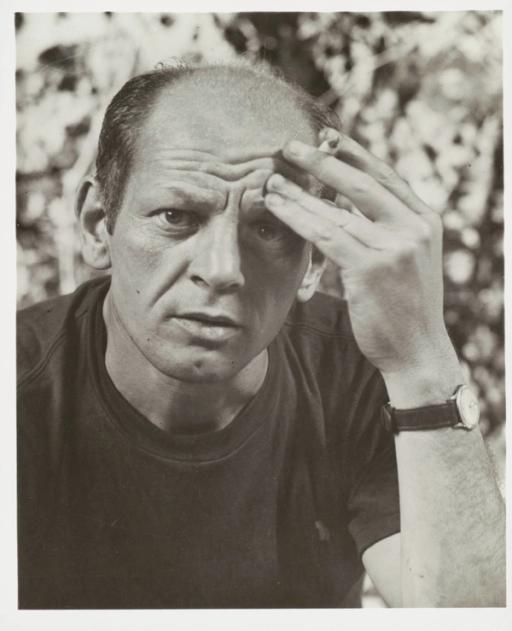
Jackson Pollock
American, 1912–1956 86 works onlineIn 1947 Jackson Pollock arrived at a new mode of working that brought him international fame. His method consisted of flinging and dripping thinned enamel paint onto an unstretched canvas laid on the floor of his studio.
Learn more →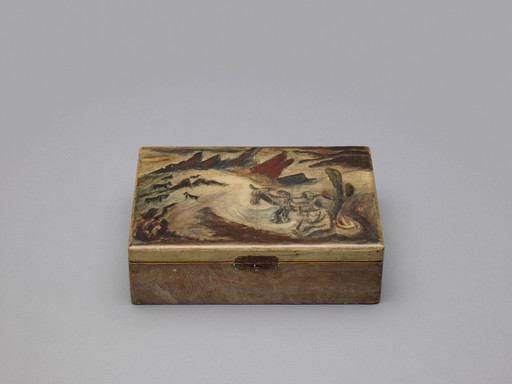
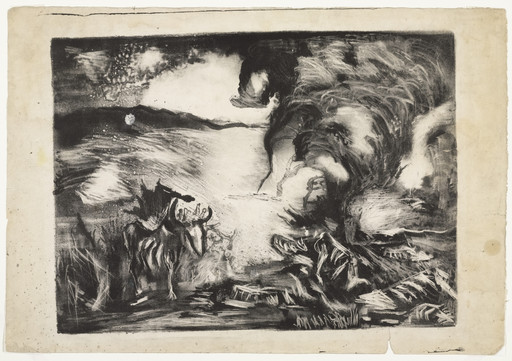
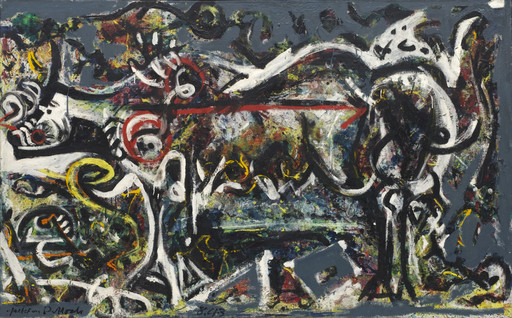
Acting Out
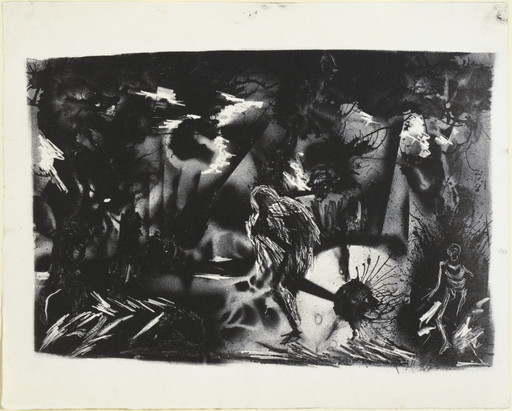
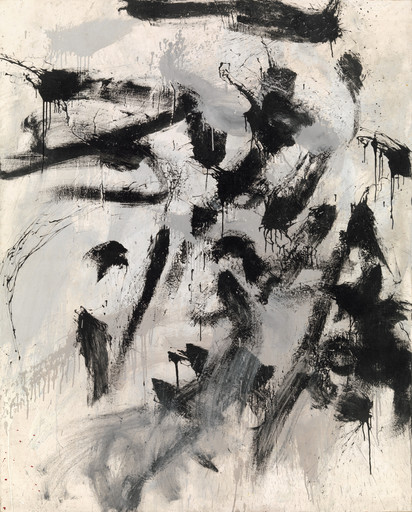
Gallery 405Around the world, in the 1950s and ’60s, artists found new ways to make their mark. Instead of applying paint with a brush, they painted with their feet, stained and soaked canvases with thinned pigment, or poured vibrantly hued dyes on tin.
Learn more →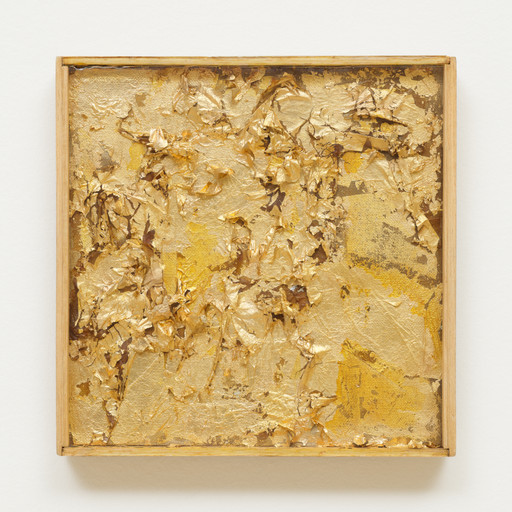

Audio
Audio from the playlist Abstract Expressionist New York
From MoMA Design Store


Installation views
We have identified this work in the following photos from our exhibition history.
Licensing
Artwork or archival images
If you would like to reproduce an image of a work of art in MoMA's collection, or an image of a MoMA publication or archival material (including installation views, checklists, and press releases), please contact Art Resource (publication in North America) or Scala Archives (publication in all other geographic locations).
Audio and film clips
MoMA licenses archival audio and select out of copyright film clips from our film collection. At this time, MoMA produced video cannot be licensed by MoMA/Scala. All requests to license archival audio or out of copyright film clips should be addressed to Scala Archives at [email protected]. Motion picture film stills cannot be licensed by MoMA/Scala. For access to motion picture film stills for research purposes, please contact the Film Study Center at [email protected]. For more information about film loans and our Circulating Film and Video Library, please visit Circulating Film and Video Library.
Text from a publication or the archives
If you would like to reproduce text from a MoMA publication, please email [email protected]. If you would like to publish text from MoMA's archival materials, please fill out this permission form and send to [email protected].
Feedback
This record is a work in progress. If you have additional information or spotted an error, please fill out this feedback form.