Oil on canvas with nails, tacks, buttons, key, coins, cigarettes, matches, etc.
Not on view
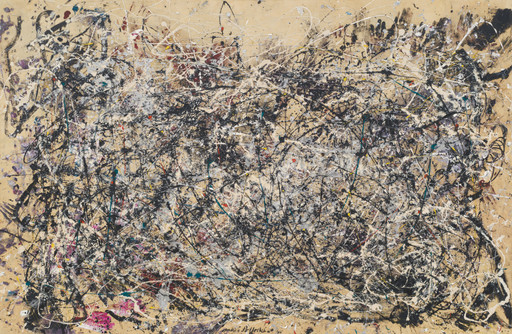
The work is a bridge between Pollock’s previous approach, in which he used an easel, and his break with traditional painting methods. Though he began this painting on an easel, he ultimately completed it on the floor. Using a paintbrush and palette knife, he built up layers of paint into which he embedded detritus including a key, cigarettes, and nails. Eventually, he took the canvas off of the easel, placed it on the floor, and dripped black and silver enamels over its entire surface. For Pollock, this deceptively simple move opened up an entirely new set of creative possibilities that he would spend the following years exploring in some of his most celebrated work. This is one of the first paintings in which he used his “drip” method, and in which he extended his marks across the entire surface of the canvas, creating what became known as an allover composition. Though he had been pursuing abstraction since 1945, it was not until 1947 that he embraced the radical technique that would become his signature style.
In The Studio: Postwar Abstract Painting online course, Coursera, 2017
Gallery label from from Abstract Expressionist New York , October 3, 2010-April 25, 2011.
Full Fathom Five is one of Pollock’s earliest “drip” paintings. While its lacelike top layers consist of poured skeins of house paint, Pollock built up the underlayer using a brush and palette knife. A close look reveals an assortment of objects embedded in the surface, including cigarette butts, nails, thumbtacks, buttons, coins, and a key. Though many of these items are obscured by paint, they contribute to the work’s dense and encrusted appearance. The title, suggested by a neighbor, comes from Shakespeare’s play The Tempest, in which the character Ariel describes a death by shipwreck: “Full fathom five thy father lies / Of his bones are coral made / Those are pearls that were his eyes.”
from Abstract Expressionist New York, October 3, 2010-April 25, 2011.
Explore more
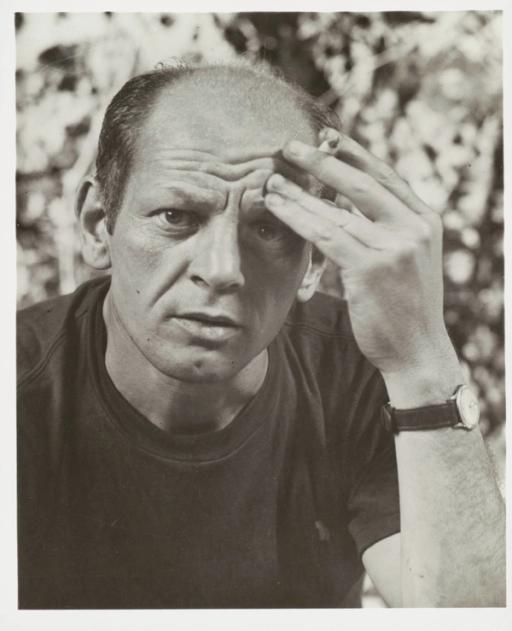
Jackson Pollock
American, 1912–1956 86 works onlineIn 1947 Jackson Pollock arrived at a new mode of working that brought him international fame. His method consisted of flinging and dripping thinned enamel paint onto an unstretched canvas laid on the floor of his studio.
Learn more →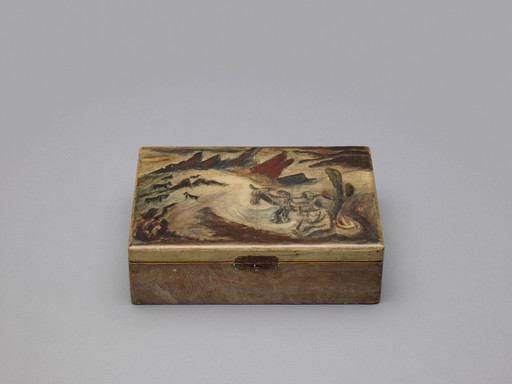
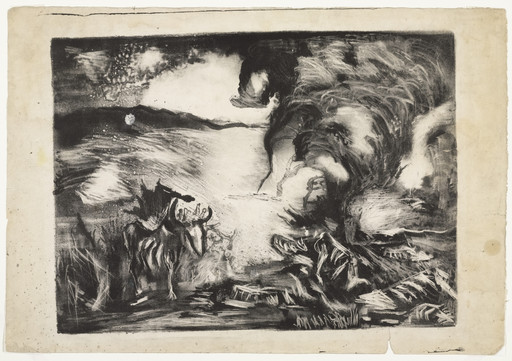
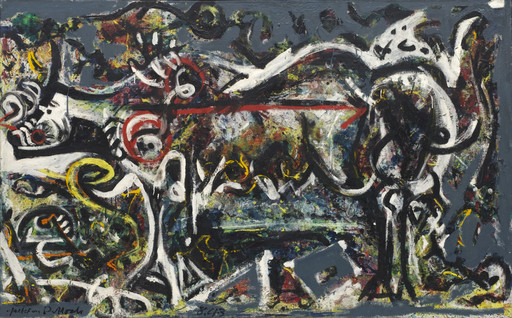



From MoMA Design Store


Installation views
We have identified this work in the following photos from our exhibition history.
Licensing
Artwork or archival images
If you would like to reproduce an image of a work of art in MoMA's collection, or an image of a MoMA publication or archival material (including installation views, checklists, and press releases), please contact Art Resource (publication in North America) or Scala Archives (publication in all other geographic locations).
Audio and film clips
MoMA licenses archival audio and select out of copyright film clips from our film collection. At this time, MoMA produced video cannot be licensed by MoMA/Scala. All requests to license archival audio or out of copyright film clips should be addressed to Scala Archives at [email protected]. Motion picture film stills cannot be licensed by MoMA/Scala. For access to motion picture film stills for research purposes, please contact the Film Study Center at [email protected]. For more information about film loans and our Circulating Film and Video Library, please visit Circulating Film and Video Library.
Text from a publication or the archives
If you would like to reproduce text from a MoMA publication, please email [email protected]. If you would like to publish text from MoMA's archival materials, please fill out this permission form and send to [email protected].
Feedback
This record is a work in progress. If you have additional information or spotted an error, please fill out this feedback form.