On October 18, 1977, Andreas Baader, Jan-Carl Raspe, and Gudrun Ensslin were found dead in their cells in a Stuttgart prison. The three were members of the Red Army Faction, a coalition of young political radicals led by Baader and Ulrike Meinhof, who had earlier hung herself in police custody. Turning to violence in the late 1960s, the Baader-Meinhof group had become Germany's most feared terrorists. Although the prisoners' deaths were pronounced suicides, the authorities were suspected of murder.
The fifteen works in October 18, 1977 evoke fragments from the lives and deaths of the Baader-Meinhof group. Richter has worked in a range of styles over the years, including painterly and geometric abstraction as well as varieties of realism based on photography; the slurred and murky motifs of this work derive from newspaper and police photographs or television images. Shades of gray dominate, the absence of color conveying the way these second-hand images from the mass media sublimate their own emotional content. An almost cinematic repetition gives an impression, as if in slow motion, of the tragedy's inexorable unfolding. Produced during a prosperous, politically conservative era eleven years after the events, and insisting that this painful and controversial subject be remembered, these paintings are widely regarded as among the most challenging works of Richter's career.
The Museum of Modern Art, MoMA Highlights, New York: The Museum of Modern Art, revised 2004, originally published 1999, p. 309.
Gallery label from Out of Time: A Contemporary View , August 30, 2006–April 9, 2007.
The fifteen paintings that compose October 18, 1977 are based on photographs of moments in the lives and deaths of four members of the Red Army Faction (RAF), a German left-wing terrorist group that perpetrated a number of kidnappings and killings throughout the 1970s. Like On Kawara’s date paintings, these paintings have a single date as their title. On this date the bodies of three principal RAF members were found in the cells of the German prison where they were incarcerated. Although the deaths were officially deemed suicides, there was widespread suspicion that the prisoners had been murdered by the German state police. Richter based his paintings on newspaper and police photographs; his reworking of these documentary sources is dark, blurred, and diffuse. Richter hopes that, "by way of reporting," these paintings will "contribute to an appreciation of [our time], to see it as it is."
Out of Time: A Contemporary View, August 30, 2006–April 9, 2007.
Publication excerpt from MoMA Highlights: 375 Works from The Museum of Modern Art, New York (New York: The Museum of Modern Art, 2019)
On October 18, 1977, Andreas Baader, Jan-Carl Raspe, and Gudrun Ensslin were found dead in their cells in a Stuttgart prison. The three were members of the Red Army Faction, a coalition of young political radicals led by Baader and Ulrike Meinhof, who had earlier hanged herself in police custody. Turning to violence in the late 1960s, the Baader-Meinhof group had become Germany’s most feared terrorists. Although the prisoners’ deaths were pronounced suicides, the authorities were suspected of murder.
The fifteen works in October 18, 1977 evoke fragments from the lives and deaths of the Baader-Meinhof group and reflect Richter’s distrust of painting’s ability to accurately represent the world, a recurring subject of his work. Their slurred and murky motifs derive from newspaper and police photographs or television images. Shades of gray dominate; the absence of color conveys the way these secondhand images from the mass media sublimate their own emotional content. The almost cinematic repetition gives an impression, as if in slow motion, of the tragedy’s inexorable unfolding. Produced during a prosperous, politically conservative era eleven years after the events, and insisting that this painful and controversial subject be remembered, these paintings are widely regarded as among the most challenging works of Richter’s career so far.
MoMA Highlights: 375 Works from The Museum of Modern Art, New York (New York: The Museum of Modern Art, 2019)
Explore more
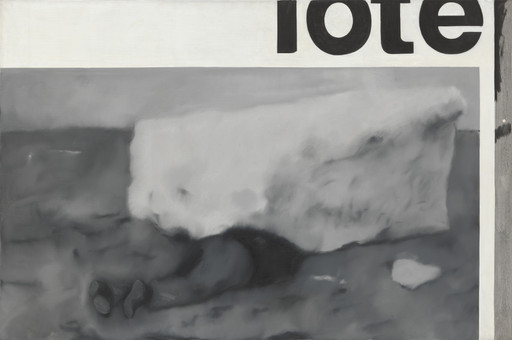
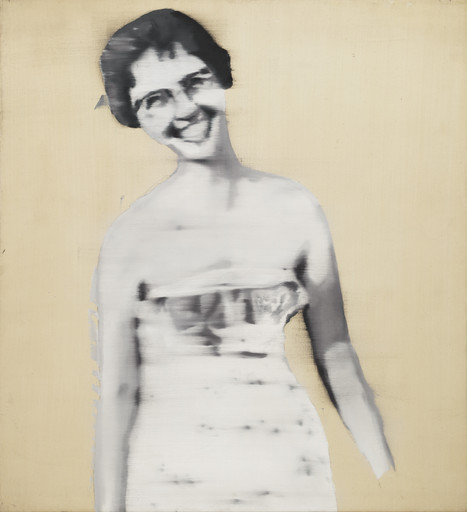
Articles and videos
From MoMA Design Store


Installation views
We have identified this work in the following photos from our exhibition history.
Licensing
Artwork or archival images
If you would like to reproduce an image of a work of art in MoMA's collection, or an image of a MoMA publication or archival material (including installation views, checklists, and press releases), please contact Art Resource (publication in North America) or Scala Archives (publication in all other geographic locations).
Audio and film clips
MoMA licenses archival audio and select out of copyright film clips from our film collection. At this time, MoMA produced video cannot be licensed by MoMA/Scala. All requests to license archival audio or out of copyright film clips should be addressed to Scala Archives at [email protected]. Motion picture film stills cannot be licensed by MoMA/Scala. For access to motion picture film stills for research purposes, please contact the Film Study Center at [email protected]. For more information about film loans and our Circulating Film and Video Library, please visit Circulating Film and Video Library.
Text from a publication or the archives
If you would like to reproduce text from a MoMA publication, please email [email protected]. If you would like to publish text from MoMA's archival materials, please fill out this permission form and send to [email protected].
Feedback
This record is a work in progress. If you have additional information or spotted an error, please fill out this feedback form.