Not on view
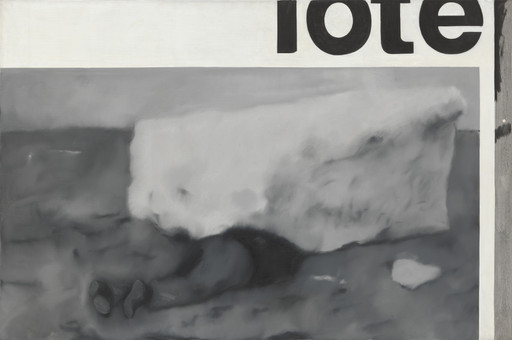
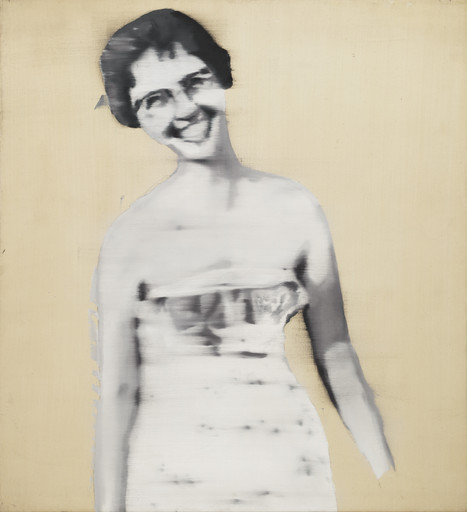
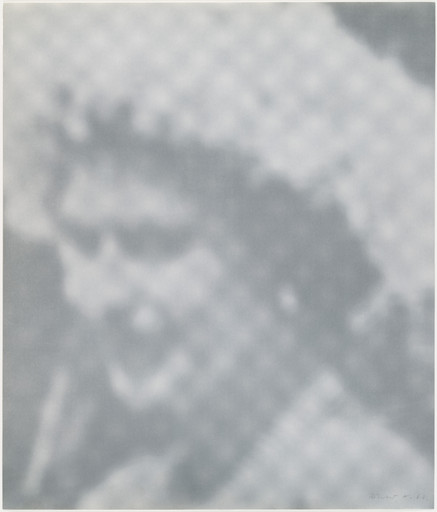
Gerhard Richter is one of the foremost painters in postwar European art. Alternating between figurative and abstract approaches, his work intentionally defies stylistic categorization. He was first recognized in the early 1960s as co-founder, with Sigmar Polke and others, of Capitalist Realism, a group dedicated to the objective depiction of society in an increasingly commodity-oriented Germany. Photography was central to Richter's pictorial documentation and his rejection of the Expressionist painting popular at the time. In 1962 he began making paintings directly after photographs, family snapshots, or newspaper illustrations, aligning himself with a European manifestation of Pop art. But by constantly questioning modes of perception and artistic representation, he has given his work an element of Conceptual art as well.
Richter began making prints in 1965 and has completed more than one hundred to date; he was most active before 1974, completing projects only sporadically since that time. He has explored a variety of photographic printmaking processes—screenprint, photolithography, and collotype—in search of inexpensive mediums that would lend a "non-art" appearance to his work. Although interested in the wide dissemination of imagery that printmaking offers, he has avoided the collaborative workshop prerequisites of the more traditional techniques.
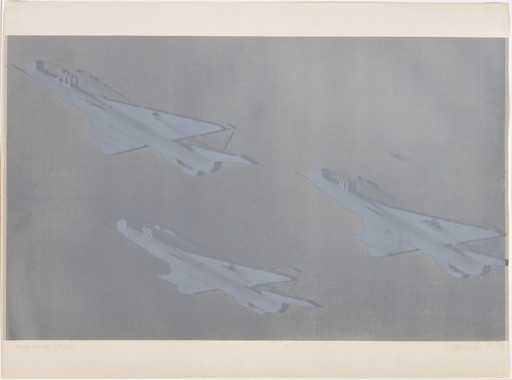
This print reveals the political undertones common in Richter's work of the late 1960s. His imagery of fighter planes reflects the World War II bombing of his native Dresden as well as the hotly debated topic of German rearmament raging in the national press at the time. The work's off-register printing simulates the hazy afterimage of mass-produced newspaper illustrations while also emphasizing the planes' sonic speed.
Originally from TextEntryID 69523 (TextTypeID 127)
waiting for editorial approval on changes in text before authorizing - j.maldonado - 9/21
an essay by Wendy Weitman, in Deborah Wye, Artists and Prints: Masterworks from The Museum of Modern Art, New York: The Museum of Modern Art, 2004, p. 180.
Explore more
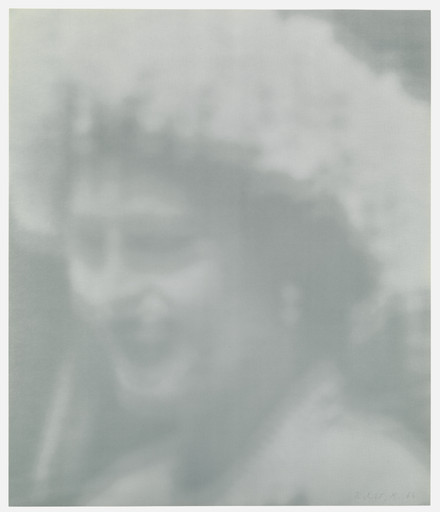
Screenprint
A stencil-based printmaking technique in which the first step is to stretch and attach a woven fabric (originally made of silk, but now more commonly of synthetic material) tightly over a wooden frame to create a screen.
Learn more →
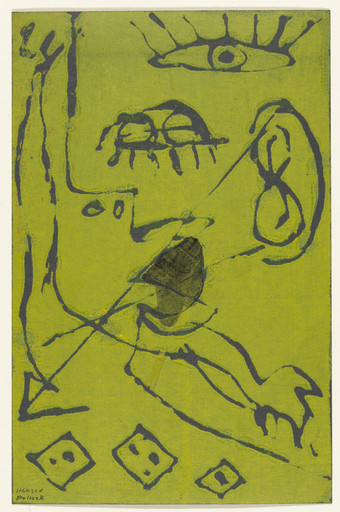

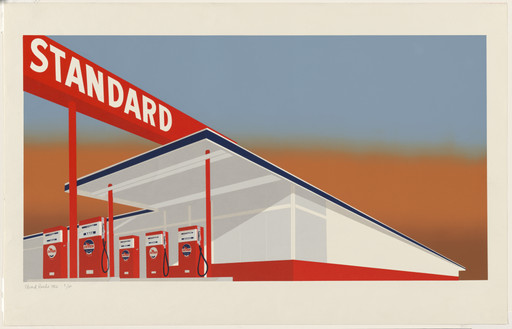
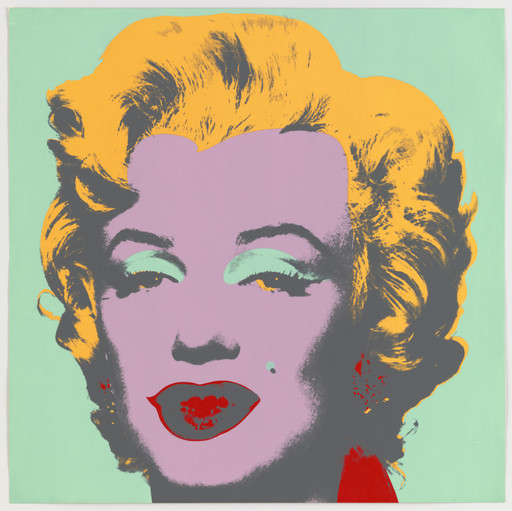
Silkscreen
A stencil-based printmaking technique in which the first step is to stretch and attach a woven fabric (originally made of silk, but now more commonly of synthetic material) tightly over a wooden frame to create a screen.
Learn more →
From MoMA Design Store


Installation views
We have identified this work in the following photos from our exhibition history.
Licensing
Artwork or archival images
If you would like to reproduce an image of a work of art in MoMA's collection, or an image of a MoMA publication or archival material (including installation views, checklists, and press releases), please contact Art Resource (publication in North America) or Scala Archives (publication in all other geographic locations).
Audio and film clips
MoMA licenses archival audio and select out of copyright film clips from our film collection. At this time, MoMA produced video cannot be licensed by MoMA/Scala. All requests to license archival audio or out of copyright film clips should be addressed to Scala Archives at [email protected]. Motion picture film stills cannot be licensed by MoMA/Scala. For access to motion picture film stills for research purposes, please contact the Film Study Center at [email protected]. For more information about film loans and our Circulating Film and Video Library, please visit Circulating Film and Video Library.
Text from a publication or the archives
If you would like to reproduce text from a MoMA publication, please email [email protected]. If you would like to publish text from MoMA's archival materials, please fill out this permission form and send to [email protected].
Feedback
This record is a work in progress. If you have additional information or spotted an error, please fill out this feedback form.