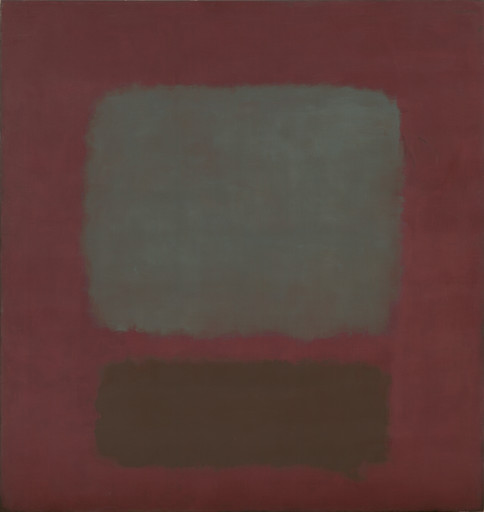
As refined and radical as was Rothko’s formal language, he saw his paintings as means to a much more essential end: to awaken viewers to the full force of human emotion. “There is no such thing as good painting about nothing,” he argued with fellow artist Adolph Gottlieb in 1943. “We assert that the subject is crucial and only that subject matter is valid which is tragic and timeless.”
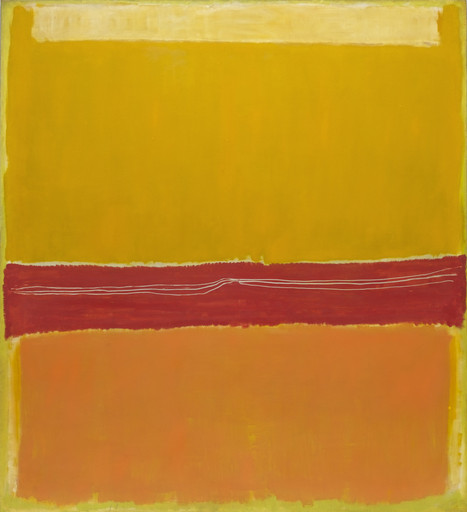
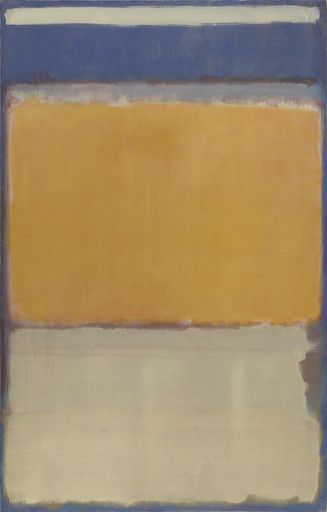
In No. 10, large passages of warm (yellow) and cool (blue, white, and gray) colors create a subtly pulsing field meant to envelop viewers. These effects reflect Rothko’s interest in the “push/pull” color theory of German painter Hans Hoffman, who described warm colors as appearing to advance (“push”) towards viewers and cool colors as appearing to recede (“pull”) away. Rothko wanted viewers to get close to his paintings, so that they would be dominated by his compositions and immersed in the emotions they expressed and evoked.
In The Studio: Postwar Abstract Painting online course, Coursera, 2017
Gallery label from 2023
Between 1949 and 1950, Rothko simplified the compositions of his earlier, Surrealist-inspired paintings to arrive at what would become his signature style. Here, he divided the canvas horizontally into three dominant planes that softly merge into one another. The work’s large passages of warm and cool colors create a subtly pulsing field. Rothko wanted his paintings to awaken viewers to human emotion: “There is no such thing as good painting about nothing,” he argued. He also wanted viewers to look at his paintings up close to become enveloped in their compositions and immersed in the emotions they express.
2023
Explore more
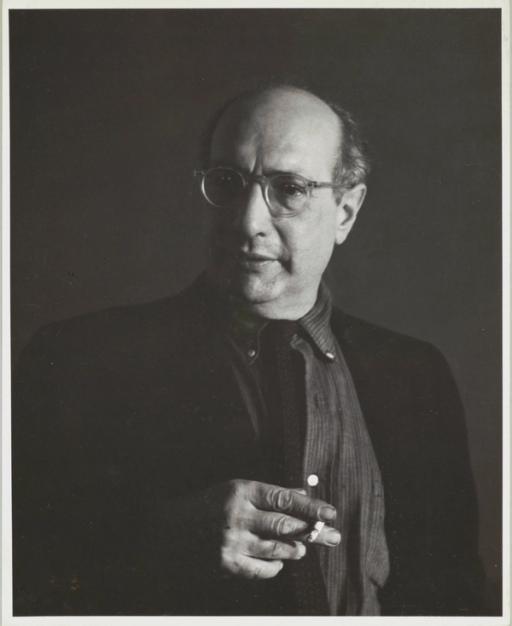
Mark Rothko
American, born Russia (now Latvia). 1903–1970 19 works onlineMark Rothko sought to make paintings that would bring people to tears.If you…are moved only by their color relationships, then you miss the point.
Learn more →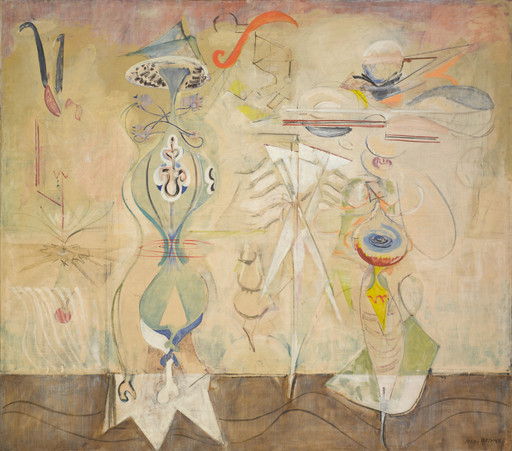

Mark Rothko
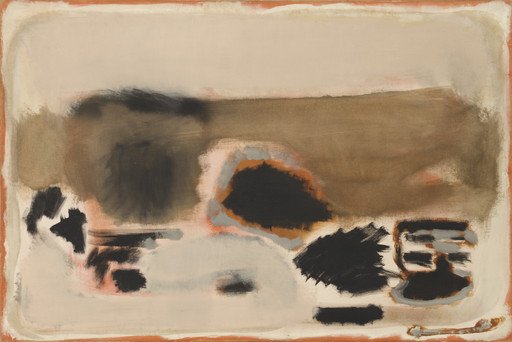
Gallery 403Like many of his fellow Abstract Expressionist artists, Rothko, in response to unthinkable atrocities—the Holocaust, the vast casualties on the battlefields of World War II, the atomic bomb—believed in the power of abstract art to reassert the highest ideals of humankind.
Learn more →
Audio
Audio from the playlist Collection 1950s–1970s
From MoMA Design Store


Installation views
We have identified this work in the following photos from our exhibition history.
Licensing
Artwork or archival images
If you would like to reproduce an image of a work of art in MoMA's collection, or an image of a MoMA publication or archival material (including installation views, checklists, and press releases), please contact Art Resource (publication in North America) or Scala Archives (publication in all other geographic locations).
Audio and film clips
MoMA licenses archival audio and select out of copyright film clips from our film collection. At this time, MoMA produced video cannot be licensed by MoMA/Scala. All requests to license archival audio or out of copyright film clips should be addressed to Scala Archives at [email protected]. Motion picture film stills cannot be licensed by MoMA/Scala. For access to motion picture film stills for research purposes, please contact the Film Study Center at [email protected]. For more information about film loans and our Circulating Film and Video Library, please visit Circulating Film and Video Library.
Text from a publication or the archives
If you would like to reproduce text from a MoMA publication, please email [email protected]. If you would like to publish text from MoMA's archival materials, please fill out this permission form and send to [email protected].
Feedback
This record is a work in progress. If you have additional information or spotted an error, please fill out this feedback form.