Oil on canvas
In this portrait, Neel depicted the prominent Depression-era poet Kenneth Fearing, whom she had met soon after moving to Manhattan’s Greenwich Village in 1932. Seated centrally at a table or desk before an open book and below a gleaming light bulb, the poet appears to be at work. His likeness extends to the painting’s fantastically compressed surroundings, which glitter with details and vignettes that speak directly to Fearing’s life and work. The Sixth Avenue El train, which Fearing lived near and which he described as a source of inspiration, is pictured wrapping behind his head. The baby who rests on a small pillow beneath his wrist alludes to Fearing’s own newborn. These details are joined by a broad cast of characters and events culled from his prose: an injured soldier, a bride and groom, a scene of police brutality, and several impoverished-seeming figures, hunched over and with skull-like faces.
Much like Fearing’s poems, Neel’s portraits often depict the disenfranchised or, as in this case, those who championed them. “I always considered the human being the first premise,” she once declared of her art. “I feel his condition is a barometer of his era.” Speaking of the skeleton that emerges from Fearing’s heart, she explained, “He really sympathized with humanity. . . . His heart bled for the grief of the world.”
MoMA Highlights: 375 Works from The Museum of Modern Art, New York (New York: The Museum of Modern Art, 2019)
Explore more
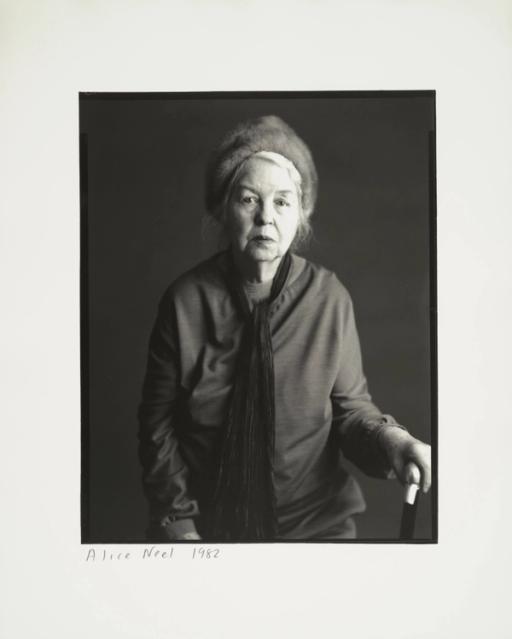
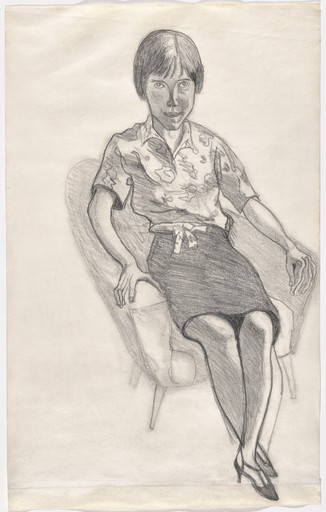
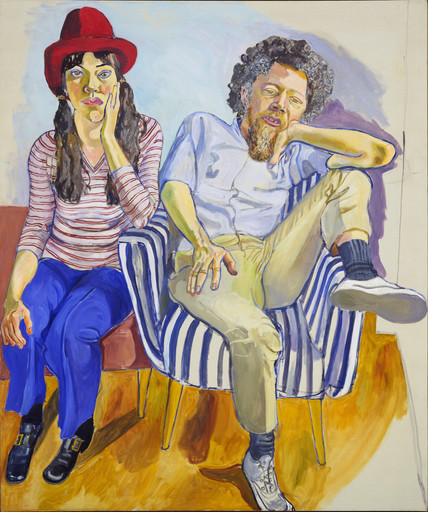
Alice Neel
American, 1900–1984 7 works onlineAlice Neel’s portraits hinge on trust. A figurative painter throughout the 20th century, she created work known for its deliberate distortion, bold outlines, expressive brushwork, and imaginative use of color.
Learn more →
American Idioms
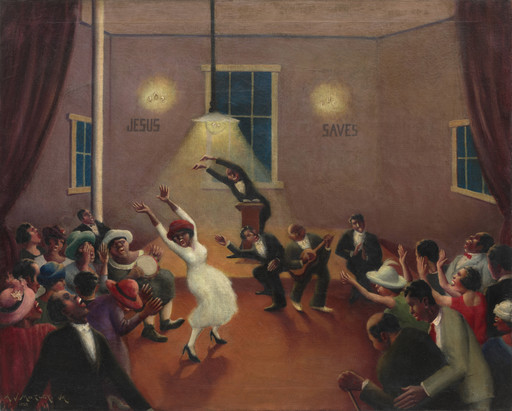
Gallery 521From the Great Depression through World War II, the United States experienced a period of turbulence and transformation. Informed by shifting social and economic dynamics at home and abroad, artists developed unique approaches to narrative art in diverse styles and mediums.
Learn more →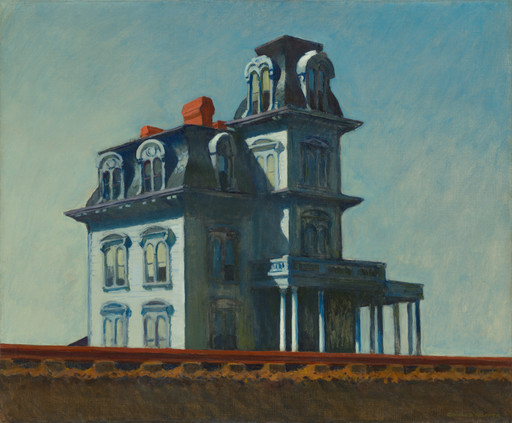
Audio
Audio from the playlist 1880–1950: Works from the Collection
From MoMA Design Store


Installation views
We have identified this work in the following photos from our exhibition history.
Licensing
Artwork or archival images
If you would like to reproduce an image of a work of art in MoMA's collection, or an image of a MoMA publication or archival material (including installation views, checklists, and press releases), please contact Art Resource (publication in North America) or Scala Archives (publication in all other geographic locations).
Audio and film clips
MoMA licenses archival audio and select out of copyright film clips from our film collection. At this time, MoMA produced video cannot be licensed by MoMA/Scala. All requests to license archival audio or out of copyright film clips should be addressed to Scala Archives at [email protected]. Motion picture film stills cannot be licensed by MoMA/Scala. For access to motion picture film stills for research purposes, please contact the Film Study Center at [email protected]. For more information about film loans and our Circulating Film and Video Library, please visit Circulating Film and Video Library.
Text from a publication or the archives
If you would like to reproduce text from a MoMA publication, please email [email protected]. If you would like to publish text from MoMA's archival materials, please fill out this permission form and send to [email protected].
Feedback
This record is a work in progress. If you have additional information or spotted an error, please fill out this feedback form.