In 1943, Mark Rothko, with his friend and fellow painter Adolph Gottlieb, wrote several philosophical statements that would guide their art for years to come. They wrote, “We favor the simple expression of the complex thought. We are for the large shape because it has the impact of the unequivocal. We wish to reassert the picture plane. We are for flat forms because they destroy illusion and reveal truth."
The scale and surface of No. 16 (Red, Brown, and Black) reflect these ideas. A brilliant colorist, Rothko ranged from working with bright to dark colors throughout his career. In No. 16 (Red, Brown, and Black), he creates a sense of atmospheric depth with shadowy, nocturnal hues of rich purples, maroons, and browns. The artist sought to awe viewers into silence and contemplation when standing before this work. At once luminous and weighty, it reflects his nuanced mastery of the formal elements of painting: color, composition and pictorial space, surface gloss, and brushwork. Here he used generous amounts of turpentine to create a hazy, matte surface. To soften the geometry of this and his other Color Field paintings, he would use a small brush or a turpentine-soaked rag to blur the corners and edges of his rectangular forms. This reduction of clear lines foregrounds the perceptual effects of his colors, creating the illusion of depth on an otherwise flat surface.
Gallery label from 2023
In 1943, Rothko, with his friend and fellow painter Adolph Gottlieb, wrote several philosophical statements that would continue to guide his painting for years to come: “We favor the simple expression of the complex thought. We are for the large shape because it has the impact of the unequivocal. We wish to reassert the picture plane. We are for flat forms because they destroy illusion and reveal truth.” The size and surface of this painting reflect these ideas. Multiple glazes of dark pigments of varying opacity make the picture’s surface feel flat, yet it quivers and vibrates, offering a sense of atmospheric depth.
2023
Gallery label from Abstract Expressionist New York , October 3, 2010-April 25, 2011
In 1957 Rothko abandoned the bright color palette that had come to characterize much of his work. With some exceptions, for the remainder of his career he painted with shadowy, nocturnal hues such as the layers of rich purples, maroons, and browns that create a sense of atmospheric depth in No. 16 (Red, Brown, and Black). Rothko once said to a friend, “Often, towards nightfall, there’s a feeling in the air of mystery, threat, frustration—all of these at once. I would like my paintings to have the quality of such moments.”
Abstract Expressionist New York, October 3, 2010-April 25, 2011
Gallery label from Focus: Ad Reinhardt and Mark Rothko , 2008
In 1943, Rothko, with his friend the painter Adolph Gottlieb, wrote several philosophical statements that would continue to guide his painting for years to come: "We favor the simple expression of the complex thought. We are for the large shape because it has the impact of the unequivocal. We wish to reassert the picture plane. We are for flat forms because they destroy illusion and reveal truth." The scale and surface of this painting reflect these ideas. Rothko abandoned traditional Renaissance three–point perspective, which conceives of the canvas as a window onto another world. Multiple glazes of dark pigments of varying opacity make the picture's surface feel flat, yet it quivers and vibrates, offering a sense of atmospheric depth. Rothko hoped that these compositional strategies would invite visual and emotional contemplation on the part of the viewer, creating the conditions for silence and reflection.
Focus: Ad Reinhardt and Mark Rothko, 2008
Explore more
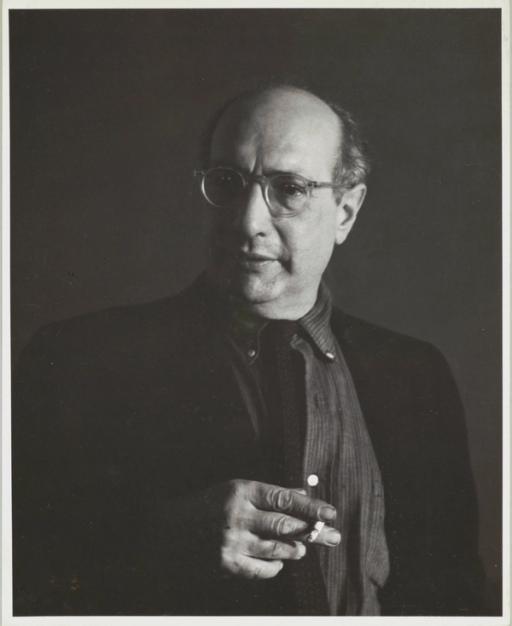
Mark Rothko
American, born Russia (now Latvia). 1903–1970 19 works onlineMark Rothko sought to make paintings that would bring people to tears.If you…are moved only by their color relationships, then you miss the point.
Learn more →


From MoMA Design Store


Installation views
We have identified this work in the following photos from our exhibition history.
Licensing
Artwork or archival images
If you would like to reproduce an image of a work of art in MoMA's collection, or an image of a MoMA publication or archival material (including installation views, checklists, and press releases), please contact Art Resource (publication in North America) or Scala Archives (publication in all other geographic locations).
Audio and film clips
MoMA licenses archival audio and select out of copyright film clips from our film collection. At this time, MoMA produced video cannot be licensed by MoMA/Scala. All requests to license archival audio or out of copyright film clips should be addressed to Scala Archives at [email protected]. Motion picture film stills cannot be licensed by MoMA/Scala. For access to motion picture film stills for research purposes, please contact the Film Study Center at [email protected]. For more information about film loans and our Circulating Film and Video Library, please visit Circulating Film and Video Library.
Text from a publication or the archives
If you would like to reproduce text from a MoMA publication, please email [email protected]. If you would like to publish text from MoMA's archival materials, please fill out this permission form and send to [email protected].
Feedback
This record is a work in progress. If you have additional information or spotted an error, please fill out this feedback form.