Oil on canvas over board
Working as a carpenter, house painter, and railroad worker, Kane witnessed Pittsburgh's changing industrial landscape and represented it in his art. In 1938, the art critic Frank Crowninshield marveled at the “magnificent paradox” that an immigrant day-laborer with little means “should yet emerge, at the age of sixty-seven, as the most significant painter America has produced during the past quarter-century.”
American Folk Art: Revisiting the Collection of Abby Aldrich Rockefeller, June 13, 2026–August 09, 2026
Gallery label from 521: American Idioms , 2025
“I find beauty everywhere in Pittsburgh,” said Kane. The self-taught artist made a living as a carpenter, house painter, and railroad worker, witnessing the city’s changing landscape and representing it in his art. In Self-Portrait he depicts himself flexing his arms and gazing directly at the viewer with a resolute stare. Art critic Frank Crowninshield wrote there was “no more [a] magnificent paradox” that “an immigrant day-laborer, who had no time to paint, no money to paint . . . should yet emerge, at the age of sixty-seven, as the most significant painter America has produced during the past quarter-century.”
521: American Idioms, 2025
Gallery label from Glossolalia: Languages of Drawing , March 26–July 7, 2008 .
Kane's 1929 Self-Portrait is considered one of the artist's masterpieces. The portrait is both a shockingly realistic depiction of the male body—veins, chest hair, and all—and an object meant for decorative display, with a frame indicated around the image edges and painted arches defining the figure's head. Kane produced most of his work in a concentrated period of time—the last seven years of his life.
Glossolalia: Languages of Drawing, March 26–July 7, 2008 .
Explore more

John Kane
American, born Scotland. 1860–1934 6 works onlineAll you need is observation.” Kane’s life and art are inherently bound to his dedication to labor. Even when discussing his paintings, he referred to them as his “art work,” and in doing so contextualized his creations as a product of effort, just like the roads he paved and the steel he poured.
Learn more →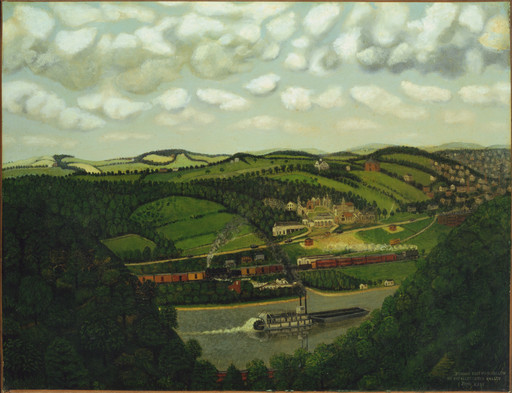
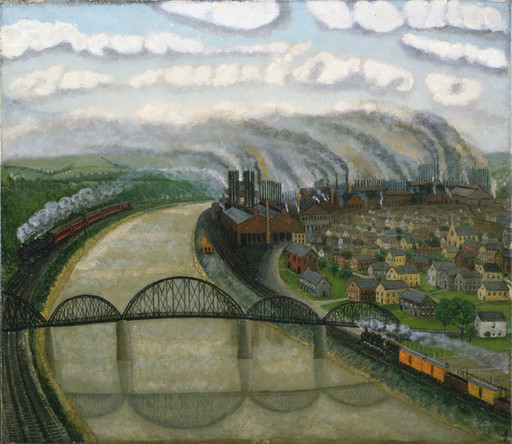


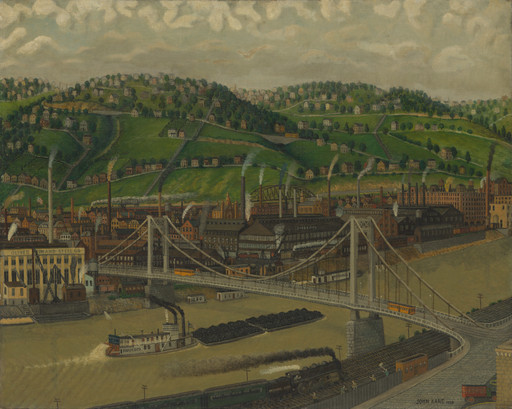
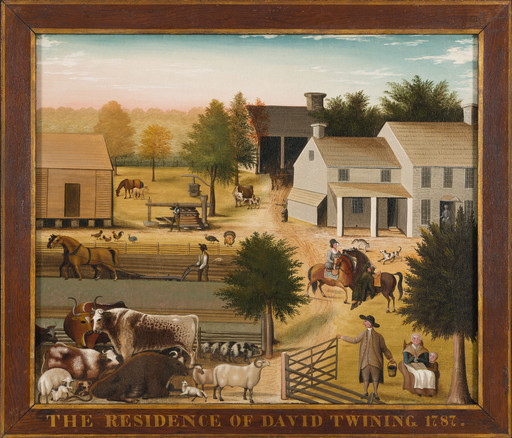
Revisiting the Collection of Abby Aldrich Rockefeller
3 SouthA champion of the avant-garde and a cofounder of MoMA, Abby Aldrich Rockefeller played a pivotal role in recognizing folk art as integral to the artistic traditions of the United States and to a modern and inclusive art history.
Learn more →


From MoMA Design Store


Installation views
We have identified this work in the following photos from our exhibition history.
Licensing
Artwork or archival images
If you would like to reproduce an image of a work of art in MoMA's collection, or an image of a MoMA publication or archival material (including installation views, checklists, and press releases), please contact Art Resource (publication in North America) or Scala Archives (publication in all other geographic locations).
Audio and film clips
MoMA licenses archival audio and select out of copyright film clips from our film collection. At this time, MoMA produced video cannot be licensed by MoMA/Scala. All requests to license archival audio or out of copyright film clips should be addressed to Scala Archives at [email protected]. Motion picture film stills cannot be licensed by MoMA/Scala. For access to motion picture film stills for research purposes, please contact the Film Study Center at [email protected]. For more information about film loans and our Circulating Film and Video Library, please visit Circulating Film and Video Library.
Text from a publication or the archives
If you would like to reproduce text from a MoMA publication, please email [email protected]. If you would like to publish text from MoMA's archival materials, please fill out this permission form and send to [email protected].
Feedback
This record is a work in progress. If you have additional information or spotted an error, please fill out this feedback form.