Not on view
In 1967, Warhol established a print-publishing business, Factory Additions, through which he published a series of screenprint portfolios on his signature subjects. Marilyn Monroe was the first one. He used the same publicity still of the actress that he had previously used for dozens of paintings. Each image here was printed from five screens: one that carried the photographic image and four for different areas of color, sometimes printed off-register. About repetitions Warhol said, “The more you look at the same exact thing, the more the meaning goes away, and the better and emptier you feel."
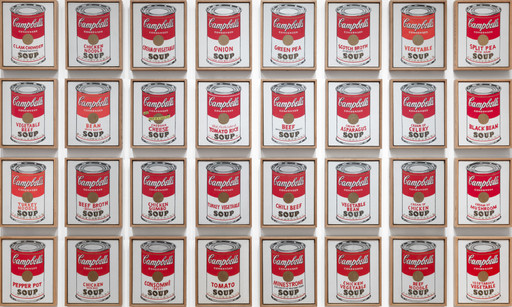
Andy Warhol: Campbell's Soup Cans and Other Works, 1953–1967, April 25–October 18, 2015.
Publication excerpt from Deborah Wye, Artists and Prints: Masterworks from The Museum of Modern Art , New York: The Museum of Modern Art, 2004, p. 162.
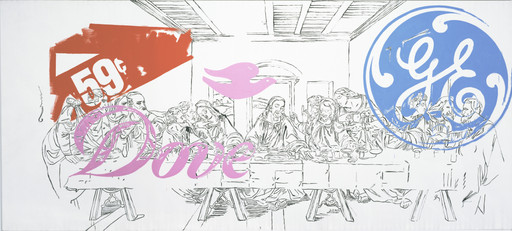
Printmaking, and in particular screenprint, was the basic medium for Andy Warhol's celebrated work on canvas and paper. While a prize-winning commercial artist in the 1950s, he devised a printing process of blotting outline drawings in ink from one surface to another. In a whimsical book of fashionable shoe styles, done at the time he was head of advertising at a shoe company, his blotted drawings were reproduced and then hand-colored by a team of friends.
Although Warhol adopted a bland, detached persona, he was an extremely energetic artist and self-promoter who played a significant role in redirecting the course of art. Rather than deriving his work from subjective personal feelings or idealist visions for abstraction, Warhol embraced popular culture and commercial processes. He eventually set up his own print-publishing company called Factory Additions, issuing portfolios of his signature themes. For Marilyn, he created ten highly variable portraits, exploiting the possibilities in screenprinting for shifting colors and off-register effects. By celebrating the seemingly impervious veneer of glamour and fame, but acknowledging its darker inner complexity, these prints reveal Warhol's subtle grasp of American culture.
Warhol did not participate in the collaborative printshop system established in America in the 1960s, but his work contributed decisively to what has been characterized as a "print boom" at that time. Through the course of his career, he made nearly eight hundred printed images on paper, about half published in traditional editions. He was also a surprisingly experimental printmaker, issuing hundreds of trial proofs and unique variants. The compositions that make up Camouflage, his last portfolio, constitute a playful commentary on abstraction. Through manipulation of scale and color from sheet to sheet, Warhol alters the visual impact of the military fabric used for concealment. In examples on canvas, he also superimposes his face, linking self-portraiture with disguise.
Deborah Wye, Artists and Prints: Masterworks from The Museum of Modern Art, New York: The Museum of Modern Art, 2004, p. 162.
Explore more
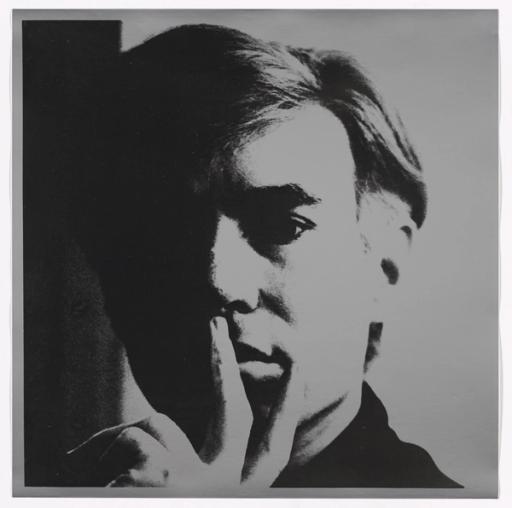
Andy Warhol
American, 1928–1987 287 works onlineTwo exhibitions in 1962 announced Andy Warhol’s dramatic entry into the art world. In July, at the Ferus Gallery in Los Angeles, he exhibited his now-iconic Campbell’s Soup Cans .
Learn more →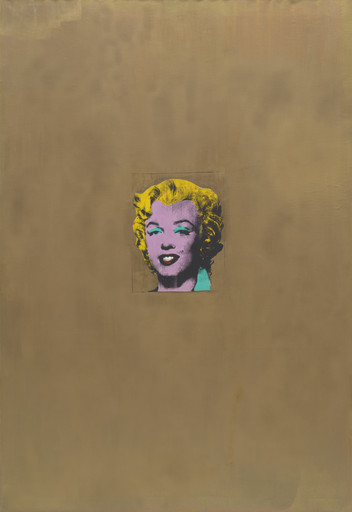
![Andy Warhol. Untitled ([Early Work] Woman)](https://www.moma.org/media/W1siZiIsIjI2ODkwOCJdLFsicCIsImNvbnZlcnQiLCItcXVhbGl0eSA5MCAtcmVzaXplIDUxMng1MTJcdTAwM2UiXV0.jpg?sha=3a19f0596d819514)
Popular culture
Cultural activities, ideas, or products that reflect or target the tastes of a broad swath of a society. Popular culture commonly includes—and is transmitted by— television, music, and film, books, periodicals, and but can even be movement or images circulated through one of those platforms or social media (like a dance on TikTok or a meme on Instagram).
Learn more →

From MoMA Design Store


Installation views
We have identified this work in the following photos from our exhibition history.
Licensing
Artwork or archival images
If you would like to reproduce an image of a work of art in MoMA's collection, or an image of a MoMA publication or archival material (including installation views, checklists, and press releases), please contact Art Resource (publication in North America) or Scala Archives (publication in all other geographic locations).
Audio and film clips
MoMA licenses archival audio and select out of copyright film clips from our film collection. At this time, MoMA produced video cannot be licensed by MoMA/Scala. All requests to license archival audio or out of copyright film clips should be addressed to Scala Archives at [email protected]. Motion picture film stills cannot be licensed by MoMA/Scala. For access to motion picture film stills for research purposes, please contact the Film Study Center at [email protected]. For more information about film loans and our Circulating Film and Video Library, please visit Circulating Film and Video Library.
Text from a publication or the archives
If you would like to reproduce text from a MoMA publication, please email [email protected]. If you would like to publish text from MoMA's archival materials, please fill out this permission form and send to [email protected].
Feedback
This record is a work in progress. If you have additional information or spotted an error, please fill out this feedback form.