Not on view
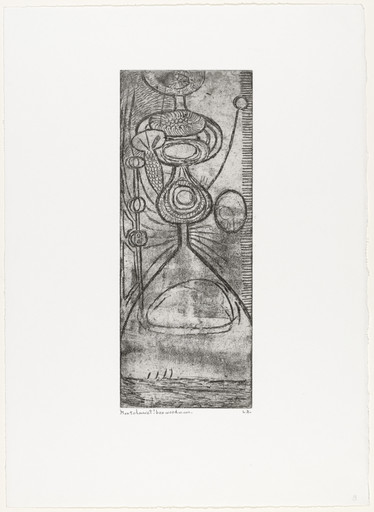
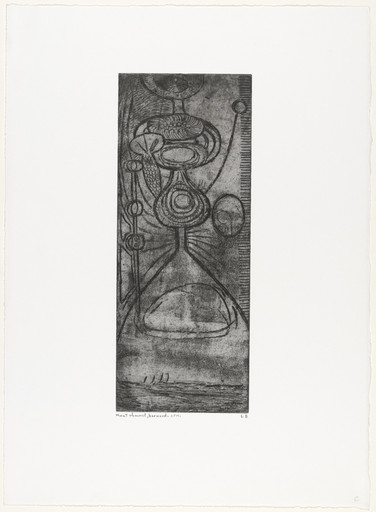
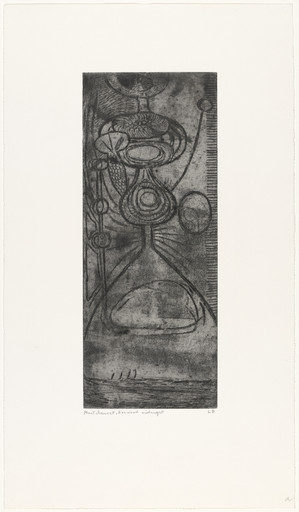
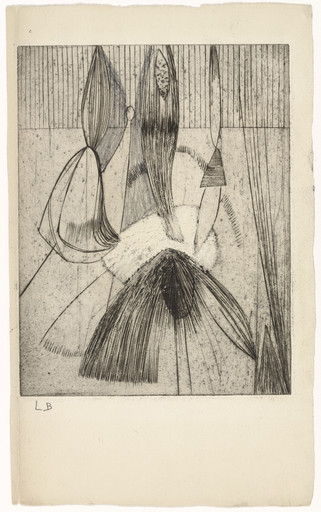
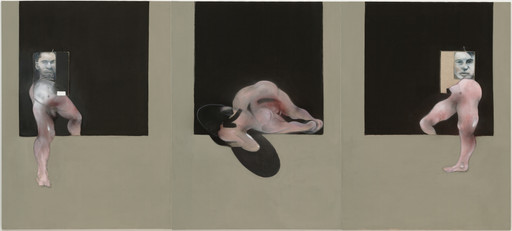
Bourgeois made this three-part print in conjunction with two large-scale Cell sculptures titled Red Room (Parents) and Red Room (Child). Here, a whole family is overcome with hysteria, as evidenced by their rigid, arching bodies. Fraught family relationships, and psychic pain's effects on the body, were among the recurring themes in Bourgeois's art. As she so vividly noted, "The subject of pain is the business I am in."
Louise Bourgeois: An Unfolding Portrait, Sept. 24, 2017-Jan. 28, 2018.
Publication excerpt from Deborah Wye, Artists and Prints: Masterworks from The Museum of Modern Art , New York: The Museum of Modern Art, 2004, p. 222.
Following in the footsteps of her father, Louise Bourgeois developed an early love for printed images and formed a collection of both prints and illustrated books. Her own printmaking began in the late 1930s, after she married and moved to New York from Paris. As a fledging painter and printmaker, she gravitated to Atelier 17, the celebrated workshop established in New York in the 1940s by Stanley William Hayter. She enjoyed the company of fellow Europeans who gathered there in the war years, but also worked on prints at home, using a small press.
After turning to sculpture in the late 1940s, Bourgeois virtually abandoned printmaking until the late 1980s, when her newly found celebrity brought with it numerous invitations to make prints. She began working with Peter Blum Edition and Osiris Editions, both of New York, and also responded to many requests for benefit prints for social causes. This reacquaintance with the medium awakened a natural but dormant inclination to scratch, scrape, and burnish copperplates, and it is the intaglio techniques that she favors, although she makes lithographs intermittently with Judith Solodkin of SOLO Press. For intaglio she has a fertile collaborative relationship with printer Felix Harlan of Harlan & Weaver workshop. Overall, Bourgeois has made some four hundred prints, in a creative process that involves constant revision and overworking with hand additions as her imagery evolves.
The personal themes of loneliness, anxiety, sexual tension, and jealousy have preoccupied Bourgeois since her early years as an artist and continue to find expression in her sculpture, installations, and prints. She has called her ongoing narrative "a drama of the self," and its embodiment in art has been an essential mechanism for controlling her volatile emotions.
Deborah Wye, Artists and Prints: Masterworks from The Museum of Modern Art, New York: The Museum of Modern Art, 2004, p. 222.
Explore more
Louise Bourgeois
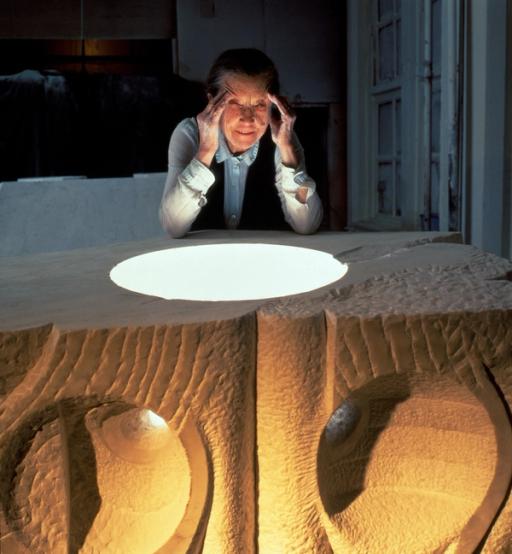
American, born France. 1911–2010 3040 works onlineBorn in Paris in 1911, Louise Bourgeois was raised by parents who ran a tapestry restoration business. A gifted student, she also helped out in the workshop by drawing missing elements in the scenes depicted on the tapestries.
Learn more →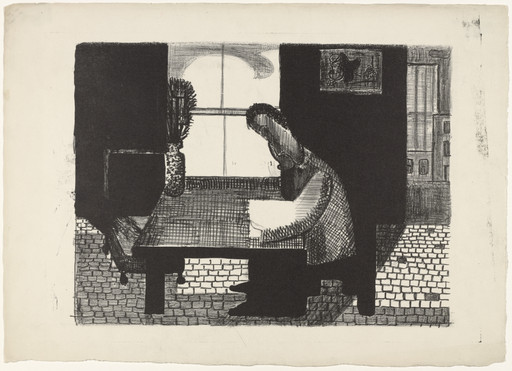
Triptych
A work of art consisting of three sections or panels, usually hinged together.
Learn more →

From MoMA Design Store


Installation views
We have identified this work in the following photos from our exhibition history.
Licensing
Artwork or archival images
If you would like to reproduce an image of a work of art in MoMA's collection, or an image of a MoMA publication or archival material (including installation views, checklists, and press releases), please contact Art Resource (publication in North America) or Scala Archives (publication in all other geographic locations).
Audio and film clips
MoMA licenses archival audio and select out of copyright film clips from our film collection. At this time, MoMA produced video cannot be licensed by MoMA/Scala. All requests to license archival audio or out of copyright film clips should be addressed to Scala Archives at [email protected]. Motion picture film stills cannot be licensed by MoMA/Scala. For access to motion picture film stills for research purposes, please contact the Film Study Center at [email protected]. For more information about film loans and our Circulating Film and Video Library, please visit Circulating Film and Video Library.
Text from a publication or the archives
If you would like to reproduce text from a MoMA publication, please email [email protected]. If you would like to publish text from MoMA's archival materials, please fill out this permission form and send to [email protected].
Feedback
This record is a work in progress. If you have additional information or spotted an error, please fill out this feedback form.